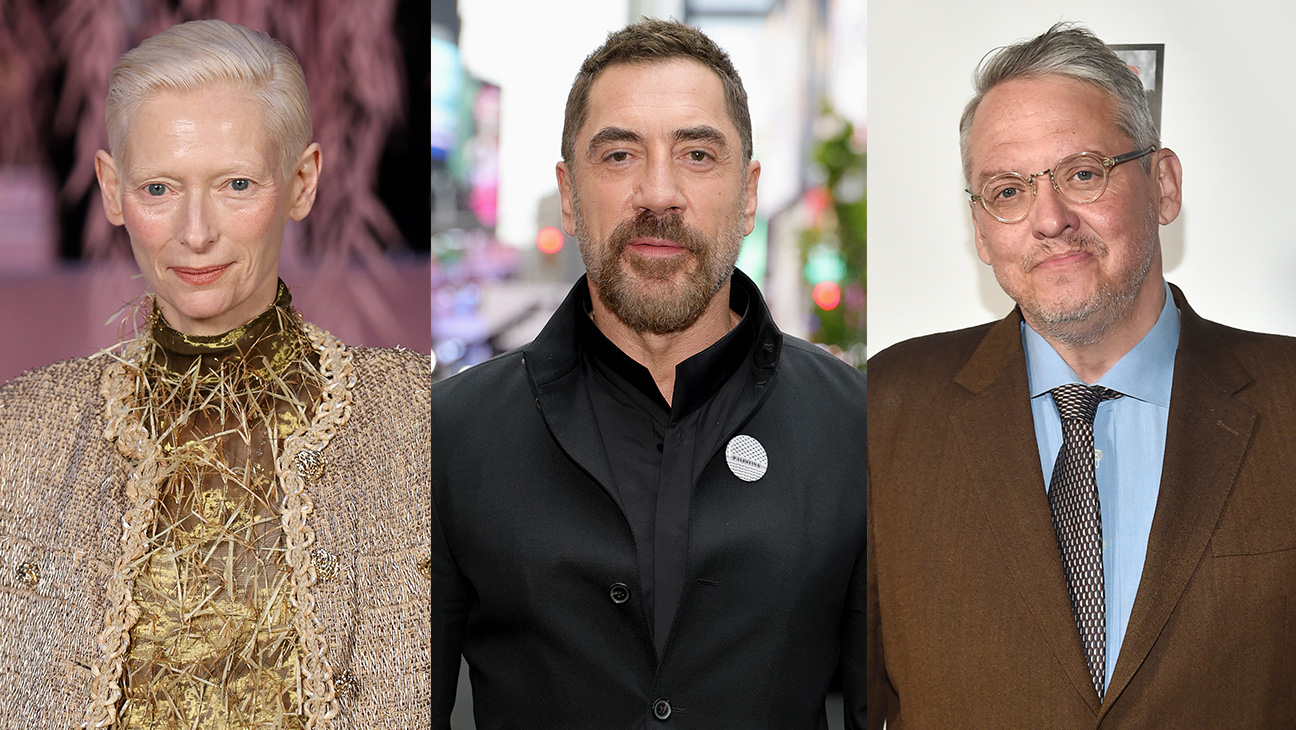
81 artists, including Tilda Swinton, Javier Bardem, Tatiana Maslany, and Adam McKay, have signed an open letter calling out the Berlin International Film Festival for “censoring artists who oppose Israel’s ongoing genocide against Palestinians in Gaza and the German state’s key role in enabling it.”
The letter’s signatures, all Berlin festival alumni, included actors Angeliki Papoulia, Saleh Bakri, Peter Mullan and Tobias Menzies, and such notable directors as Mike Leigh, Nan Goldin, Miguel Gomes, and Avi Mograbi. In it, the group says it expects “the institutions in our industry to refuse complicity in the terrible violence that continues to be waged against Palestinians.”
Berlin festival organizers, the letter argues, should issue a clear statement condemning “Israel’s genocide, crimes against humanity and war crimes against Palestinians,” just as the Berlinale has publicly condemned “atrocities carried out against people in Iran and Ukraine.”
Politics has pushed its way into the center of the Berlinale this year, almost to the exclusion of all other topics, including the films being screened.
In the festival’s opening press conference last Thursday, Berlinale jury president Wim Wenders was asked about Gaza and the support the German government — the festival’s main backer — has given Israel, including weapon sales. Wenders replied that artists “should stay out of politics,” arguing that filmmaking was “the opposite of politics.”
What exactly Wenders meant by filmmaking being “the opposite of politics” is unclear. The German word for politics, Politik, can be strictly defined as “policy.” Some have argued Wenders was suggesting art should not be a political policy statement. Whatever his meaning, his comments set off an online uproar and had an immediate effect. Acclaimed Indian author Arundhati Roy pulled out of a scheduled Berlinale appearance, calling Wenders’ remarks “unconscionable” and “jaw-dropping.”
Attempts by Michelle Yeoh, who received a lifetime achievement Golden Bear honor in Berlin, and Neil Patrick Harris, who presented the Generation title Sunny Dancer, at the festival, to avoid talking politics when asked similar questions were met by similar social media rage.
In the open letter, the signatories said they “fervently disagree” with Wenders that filmmaking is “the opposite of politics,” arguing that “You cannot separate one from the other.”
In response to the online backlash against the festival, Berlinale director Tricia Tuttle put out a statement pushing back on the claims that Berlin was stifling free speech. “Free speech is happening at the Berlinale,” the statement read, continuing, “but increasingly, filmmakers are expected to answer any question put to them. They are criticized if they do not answer. They are criticized if they answer and we do not like what they say. They are criticized if they cannot compress complex thoughts into a brief sound bite when a microphone is placed in front of them when they thought they were speaking about something else.” She added that “artists should not be expected to comment on all broader debates about a festival’s previous or current practices over which they have no control.”
The artists’ open letter claims that the “tide is changing across the international film world,” with many international film festivals endorsing a cultural boycott of Israel, including the Amsterdam documentary festival, Film Fest Gent and the BlackStar Film Festival in the U.S., and that “more than 5,000 film workers, including leading Hollywood and international figures,” have also announced their refusal to work with “complicit Israeli film companies and institutions.”
See the full letter and list of signatories below.
Open Letter to the Berlinale — Feb. 17, 2026
We write as film workers, all of us past and current Berlinale participants, who expect the institutions in our industry to refuse complicity in the terrible violence that continues to be waged against Palestinians. We are dismayed at the Berlinale’s involvement in censoring artists who oppose Israel’s ongoing genocide against Palestinians in Gaza and the German state’s key role in enabling it. As the Palestine Film Institute has stated, the festival has been “policing filmmakers alongside a continued commitment to collaborate with Federal Police on their investigations”.
Last year, filmmakers who spoke out for Palestinian life and liberty from the Berlinale stage reported being aggressively reprimanded by senior festival programmers. One filmmaker was reported to have been investigated by police, and Berlinale leadership falsely implied that the filmmaker’s moving speech – rooted in international law and solidarity – was “discriminatory”. As another filmmaker told Film Workers for Palestine about last year’s festival: “there was a feeling of paranoia in the air, of not being protected and of being persecuted, which I had never felt before at a film festival”. We stand with our colleagues in rejecting this institutional repression and anti-Palestinian racism.
We fervently disagree with the statement made by Berlinale 2026 jury president Wim Wenders that filmmaking is “the opposite of politics”. You cannot separate one from the other. We are deeply concerned that the German state-funded Berlinale is helping put into practice what Irene Khan, the UN Special Rapporteur on Freedom of Expression and Opinion recently condemned as Germany’s misuse of draconian legislation “to restrict advocacy for Palestinian rights, chilling public participation and shrinking discourse in academia and the arts”. This is also what Ai Weiwei recently described as Germany “doing what they did in the 1930s” (agreeing with his interviewer who suggested to him that “it’s the same fascist impulse, just a different target”). All of this at a time when we are learning horrifying new details about the 2,842 Palestinians “evaporated” by Israeli forces using internationally prohibited, U.S.-made thermal and thermobaric weapons. Despite abundant evidence of Israel’s genocidal intent, systematic atrocity crimes and ethnic cleansing, Germany continues to supply Israel with weapons used to exterminate Palestinians in Gaza.
The tide is changing across the international film world. Many international film festivals have endorsed the cultural boycott of apartheid Israel, including the International Documentary Festival Amsterdam, the world’s biggest, as well as BlackStar Film Festival in the U.S., and Film Fest Gent, Belgium’s largest. More than 5,000 film workers, including leading Hollywood and international figures, have also announced their refusal to work with complicit Israeli film companies and institutions.
Yet Berlinale has so far not even met the demands of its community to issue a statement that affirms the Palestinian right to life, dignity, and freedom; condemns the ongoing Israeli genocide of Palestinians; and commits to uphold the right of artists to speak without constraint in support of Palestinian human rights. This is the least it can – and should – do.
As the Palestine Film Institute has said, “we are appalled by Berlinale’s institutional silence on the genocide of Palestinians, and its unwillingness to defend the freedoms of speech and expression of filmmakers”. Just as the festival has made clear statements in the past about atrocities carried out against people in Iran and Ukraine, we call on the Berlinale to fulfil its moral duty and clearly state its opposition to Israel’s genocide, crimes against humanity and war crimes against Palestinians, and completely end its involvement in shielding Israel from criticism and calls for accountability.
Variety was the first to report on the artists’ open letter.
Signed by
Adam McKay
Adèle Haenel
Alan O’Gorman
Alexandra Juhasz
Alexandre Koberidze
Alia Shawkat
Alison Oliver
Alkis Papastathopoulos
Ana Naomi de Sousa
Angeliki Papoulia
Antigoni Rota
Ariane Labed
Artemis Anastasiadou
Ashley McKenzie
Avi Mograbi
Bahija Essoussi
Ben Russell
Bingham Bryant
Blake Williams
Blanche Gardin
Brett Story
Brian Cox
Camilo Restrepo
Carice Van Houten
Charlie Shackleton
Cherien Dabis
Christopher Young
Dali Benssalah
David Osit
Deragh Campbell
Dustin Defa
Eleni Alexandrakis
Elhum Shakerifar
Emilie Deleuze
Eyal Sivan
Fernando Meirelles
Fil Ieropoulos
Geoff Arbourne
Hany Abu Assad
Hind Meddeb
James Benning
Javier Bardem
John Greyson
Jon Jost
Khalid Abdalla
Leah Borromeo
Lukas Dhont
Mahdi Fleifel
Mai Masri
Malika Zouhali-Worrall
Manuel Embalse
Marina Gioti
Marion Schmidt
Merawi Gerima
Miguel Gomes
Mike Leigh
Miranda Pennell
Namir Abdel Messeeh
Nan Goldin
Narimane Mari
Nina Menkes
Pascale Ramonda
Patricia Mazuy
Paul Laverty
Pedro Pimenta
Peter Mullan
Phaedra Vokali
Robert Greene
Saeed Taji Farouky
Saleh Bakri
Samaher Alqadi
Sarah Friedland
Sepideh Farsi
Shirin Neshat
Smaro Papaevangelou
Sofia Georgovassili
Tatiana Maslany
Thodoris Dimitropoulos
Tilda Swinton
Tobias Menzies
Tyler Taormina