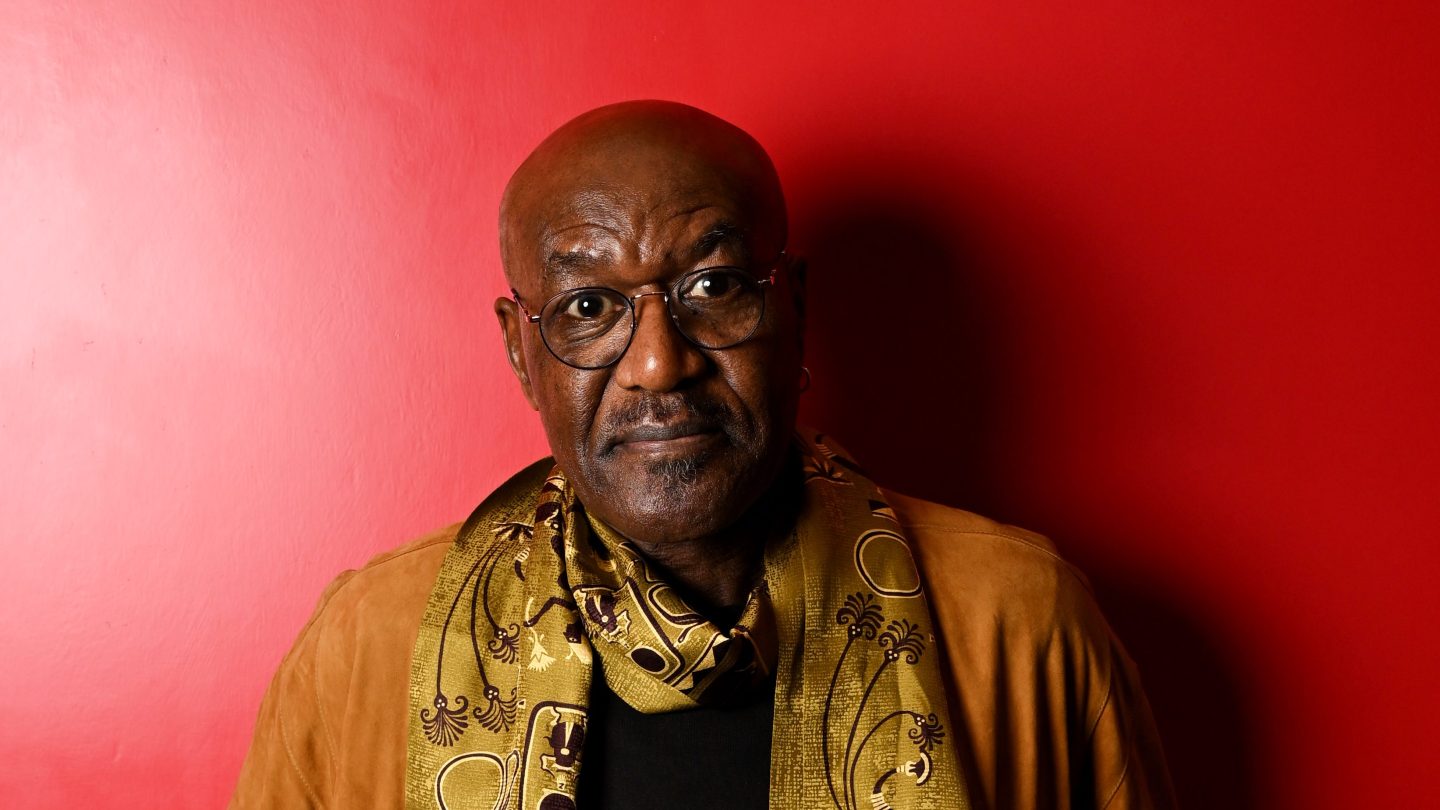
Delroy Lindo had decades of brilliant, acclaimed performances across film and TV under his belt by the time his first true Oscar campaign materialized. The American Conservatory Theater graduate had emerged in the ‘90s with bracing performances in a range of Spike Lee films — 1992’s Malcolm X, 1994’s Crooklyn, and 1995’s Clockers — before reuniting with the Oscar-winning director for 2020’s Da 5 Bloods, a mournful portrait of Vietnam War veterans on the hunt for closure. Lindo’s searing turn as the PTSD-addled Paul won him the New York Film Critics Circle’s best-actor prize and some of the best reviews of his career, and he put himself out there on the campaign trail. Ultimately, the efforts were to no avail: Lindo was not nominated by the Academy (nor his own guild for the SAG Awards), an omission widely considered that year’s big snub.
Five years later, Lindo is taking trips down from his home in Northern California for dinners, panel conversations, and interviews around Los Angeles. He may not be the lead of Ryan Coogler’s Sinners, a major overall awards player toplined by Michael B. Jordan — also contending for his first Oscar nomination — but he’s undeniably part of what made it one of the year’s great cinematic success stories, both at the box office and with critics. He’s a true scene-stealer as Delta Slim, the local music legend enlisted by twins Smoke and Stack (both Jordan) to help them open a juke joint in town. As he did with Da 5 Bloods, Lindo proves that few can nail a monologue like he can — and that’s to say nothing of the soulful musicality he brings to the part. In other words, yeah, he’s back in the running. Sinners is ramping up its own campaign, with Coogler and the cast again making the rounds following its blockbuster spring release — and so Lindo meets me at a hotel bar in Los Angeles a little tentative, sometimes careful with his words, but no less grateful to be in the conversation. When it comes to reflecting on a career that seems to have kicked into a new gear, some 50 years after his big-screen debut, he knows what it’s taken to get here.
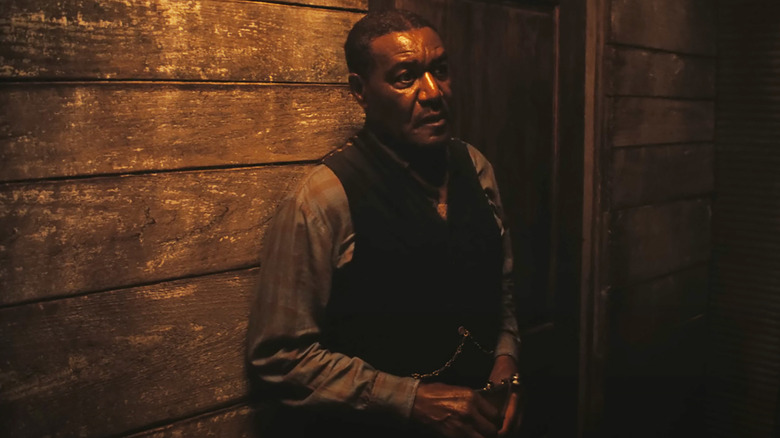
I know you went through a version of this five years ago with Da 5 Bloods. It was the first time you’d done that kind of campaign at least in quite some time, right?
It was the first time I had done it to that extent. It was a deluge of activity, conversation, questions, energy. I had a spotlight shine on me in a way that I had not experienced before. And so from that standpoint, absolutely. I was going to use the word “edifying,” and maybe that is the word, but I learned a lot from that experience. Don’t ask me what. (Laughs)
Well, I’ve got to do my job.
You’ve got to do your job and I’ve got to do my job.
You’ve said you were disappointed by the way that all turned out.
Yeah, yeah. Let me just take a half a step back. Having said that, I’ve never experienced that kind of spotlight on myself for a piece of work that I’ve done. There were a lot of requests made of me in terms of interacting with the press and with the various guilds — the Academy and SAG-AFTRA and BAFTA and all them. There was a laser focus on me, which I didn’t mind at all because that was also a piece of work that I was extremely proud of. When these various requests came in the awards context, I did everything. There were only two requests that I graciously declined.
Knowing how busy it gets, that’s a lot!
That’s a hell of a lot. And to do all of that and have the work be what it was, it wasn’t a question of, “Oh, I did all these interviews, therefore you should give me an award” — no, it was not that. I did that aspect of it on the back of work that I was very proud of. To be “shut out,” and I’m saying that in quotes — I mean, I did win New York Film Critics Circle, but other than that, it was pretty much a “shut out,” quote-unquote — that was profoundly disappointing. I don’t think the film or my work “deserved” that. And I’m saying “deserved” in quotes, too, because nobody is owed anything. That’s a very long-winded answer to say yes, I was disappointed.
I imagine there’s some perspective gained, now that you are back on the trail. How would you assess the significance of a nomination to you, after experiencing something like that? What does it mean to you now?
Here’s the thing: I can share very little, and I’ll tell you why. On many levels, the reality is my addressing that, my responding, is a lose-lose situation. Perhaps it’s an “elephant in the room,” and I’m saying that in quotes also.
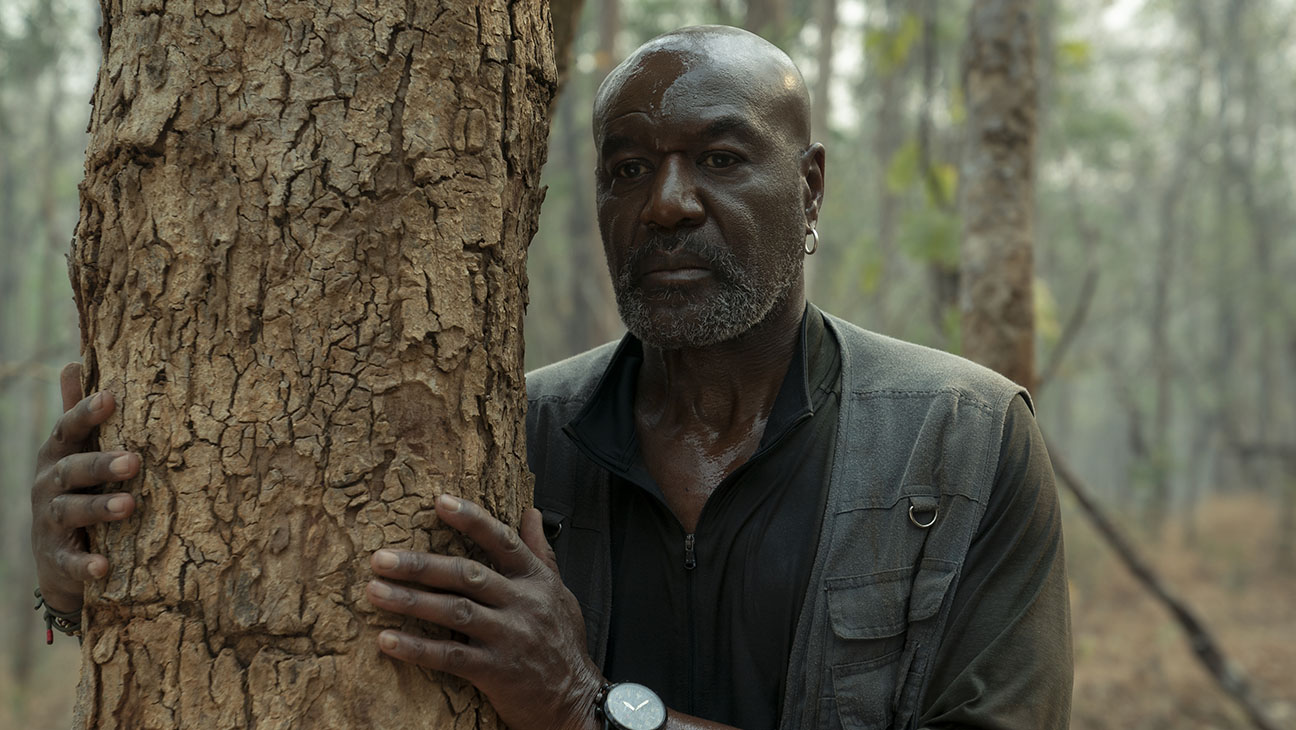
I get it. With Sinners having done as well as it has that commercially, critically — it leads the kind of life that very few films do. It’s rare. I guess I just wonder what it feels like to be a part of that, especially as someone who has been a part of movies like Malcolm X and yes, Da 5 Bloods — even with your career, the scale of the movie alone feels at another level. Does it feel that way to you?
Yes, no question. The only word that came to mind — and it doesn’t adequately describe it — is it’s very special. It is very rare. But that’s such a beautiful thing because I am so proud of the work. Right across the board. Last night we did a panel, myself and some of the actors, and the theme of generosity started to emerge. All of the actors on the stage spoke about it in their own personal ways — the generosity that was on the set, the generosity that existed between the actors, the generosity that Ryan showed each of us in terms of how we communicated. One could take it a step further and say the audience has been incredibly generous in terms of their time and their response to the film. I talked to a woman last night who said she’d seen me film 10 times. Think about that. What an affirmation.
Da 5 Bloods may not have been a cultural event in the way that Malcolm X or Sinners was, but it was certainly special in terms of the audience’s response to my work. So this experience with Sinners is part of that continuum. Man, if you’d have told me when I was in acting school all those years ago, “Yeah, you will have all this,” me being me, I probably would’ve said, “For real? No, I’m not going to have that.” No, I wouldn’t have said that, but I would’ve like, “Really? Well then damn, I’m going to hang in. No matter how the rejection. I’m going nowhere. I’m going to keep working.”
Were there periods where you felt like you didn’t want to hang in?
There were certainly periods of being dispirited. But the subtext of those moments was “hang in.” The subtext of those moments was “keep working, keep trying to find a way to do this,” and I identified them very specifically as such. I have been knocked on my ass, but I never said, “I’m going to stop doing this.”
One time I was on Park Avenue. I used to have a 1968 VW Blue Buggy. I parked my car and I was going somewhere, and this brother on a bike, a bike messenger, passed me as I got out of the car. He looked back and he stopped his bike and he turned around. He said, “Man, you know what I like about you, bro?” I said, “What?” He said, “Don’t nobody ever fuck with you in the movies, man.” And he took off. I interpreted that to mean there was something about the way I carried myself in whatever I had done that resonated for that man.
When I did Cider House Rules, my wife and I were at dinner in a restaurant in Berkeley, California, and I had had a certain amount of trepidation about doing that part. We’d had dinner and we were walking back to our car and I hear, “Mr. Lindo, Mr. Lindo!” and I turn. This white lady comes up to me and she says, “I just want to thank you for The Cider House Rules. That was my story that happened to me.” I interpret that to mean that I had somehow illuminated something in that work. I’m not going to say it healed her, but what I am saying is she was apparently moved to come out of wherever she was and follow me down the street and tell me that.
Or I’ll tell you something really funny, okay? The morning that the nominations were announced, the Da 5 Bloods year, my representatives at that time were on the phone with me. And I thought they were joking. “No, man, it didn’t happen.” I thought they were kidding. There was no punchline forthcoming. Later on that day to get a COVID shot, and Spike and I were on the phone and…we commiserated for a minute and Spike said, “It hurts, but you’ve got to keep working.” So now I’m answering a question that you asked me 20 minutes ago. I’m saying: Work, work, work, work. That’s what I would tell any young actor, or any actor who would’ve experienced that kind of a disappointment. You’ve got a couple of choices: Maybe you can go home and get in a fetal position. That’s not an option. You can say, “Fuck this, I’m done.” That’s not an option. What’s the option? Working.
You were talking earlier about the generosity that you had all collectively experienced in making Sinners. What does that do for you as an actor?
It’s another building block. It’s a piece of strength, a component that is really solid, that one can stand on and say, “I’m a part of that. I’m genuinely a part of that.” Nobody can take that away — not awards, not lack of awards. It’s foundational.
You’ve talked about seeing a cut of the movie where parts of your big monologue were cut pretty significantly — and the way that it ultimately came back together was in part because a lot of people pointed out that it was a big missing component of the film. That’s a real level of community support.
I didn’t know it at the time. I mean, when I saw the first cut, it was diminished, and my Chain Gang stuff was not in it — that had been cut. Ryan said, “What did you think?” I said, “…Can we talk, bro?”
He had to have known, though.
I’m sure he did. Otherwise he wouldn’t have turned me. So we sat and we talked, and I said, first of all, the Chain Gang is part of [Delta Slim’s] origin story. That’s got to be in there. And it’s all of a piece. I was able to articulate it to Ryan, and how it directly addresses the [character’s] self-medicating. Ryan’s a really smart man and thank God it was reinserted. That’s also been majorly affirming that the monologue in the car has resonated for audiences. The fact that I had that conversation with him, and then after the fact found out that some of the other actors had also said something — because we didn’t gang up or whatever; they had all individually on their own said something very similar — it says a lot. It says a hell of a lot. It was entirely organic. And that’s Ryan. Being the leader of the project and the tone that he sets, and then him being the creative spirit that has brought all of us together.
And it speaks to the fact that everyone felt like they could communicate with him like that. I know that’s not true for every director.
It absolutely is not. Generally, I’ve had good relationships with directors, but this was absolutely special. I’d say, “Hey, Ryan…” and he’d say, “Anything, anything, anything, anything.” He was that open. We all had dinner the Saturday night before I was to start filming, and Ryan shared some things with me — not obsequious whatsoever, just some things about what Malcolm X had meant to him, going to see it as a little fella with his dad. What can I say, man? Affirmation upon affirmation upon affirmation. When it results in creating a piece of work together that we then present out to the audience and the audience goes nuts for it? Yeah. What’s not to love?
For whatever else happens with Sinners, it does sound like a project that’s led you to some reflection.
It’s such a rollercoaster. There are peaks and valleys in any given industry, ups and downs, and to be able to sit here and look back on some of the experiences — even the moments of dispirit — it feels almost wholesome. It’s meaningful. To look back with pride and say, “ I did all that, and it’s going pretty well.” I say that with the knowledge, knock on wood, that things can change. Things can change in a heartbeat. But thus far it’s okay. It’s alright. Maybe a little better than alright. I’ll tell you something else: I have this particular perspective because I recognize that none of this is promised, none of it. I’m just remembering a couple actors that I knew in New York at the beginning of my career, very talented, and they just didn’t make it. They’re people who just fell through the cracks. Talented. I say with the perspective of somebody who knows, that didn’t happen to me.