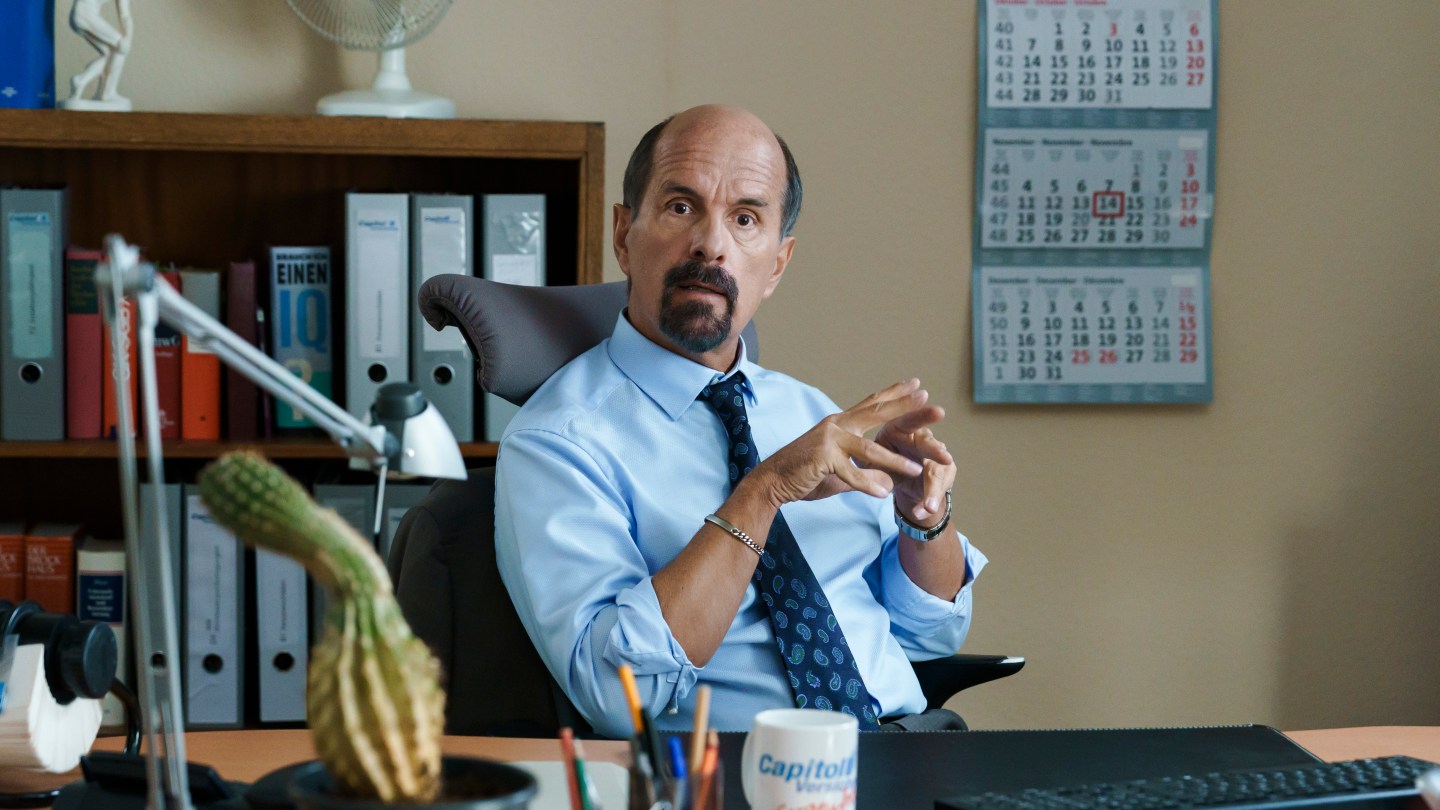
How to explain the enduring appeal of Stromberg?
The German mockumentary sitcom, inspired by The Office, has outlived both the original BBC series and the Steve Carell-led U.S. spin-off, and remains a cultural force in Germany. This weekend, a new Stromberg feature hits German theaters, marking the return of Christoph Maria Herbst as Bernd Stromberg, the terminally insecure, politically incorrect (former) deputy head of claims settlement at insurance company Capitol Versicherung AG.
Stromberg 2 – Wieder alles wie immer (Everything as Usual Again) rolls out as sly counter-programming to the holiday tentpoles (Zoomania 2, Wicked: For Good, the upcoming Avatar 3) expected to dominate the German box office. Amazon Prime Video, which is backing the film with Banijay Media and Pro7, is betting that audiences — many of whom weren’t even born when Stromberg first aired — will happily indulge in a bit of fremdschämen (“second-hand embarrassment”) as the world’s worst middle manager tramples his way through awkward office politics.
They could be right. Two decades on, Stromberg is enjoying a full Gen Z revival. Nowhere is this clearer than online, where Herbst has become a meme as social media users seize on parallels between his fictional character’s cringey, politically incorrect demeanor and that of Germany’s real-life Chancellor, Friedrich Merz.
On TikTok and Instagram, the hashtag mash-up “Strommerz” has become a sub-genre, remixing news clips of Merz with the Stromberg theme and classic office reaction shots. Many use AI to sync Herbst’s voice — delivering some idiotic or sexist aside — to Merz’s image.
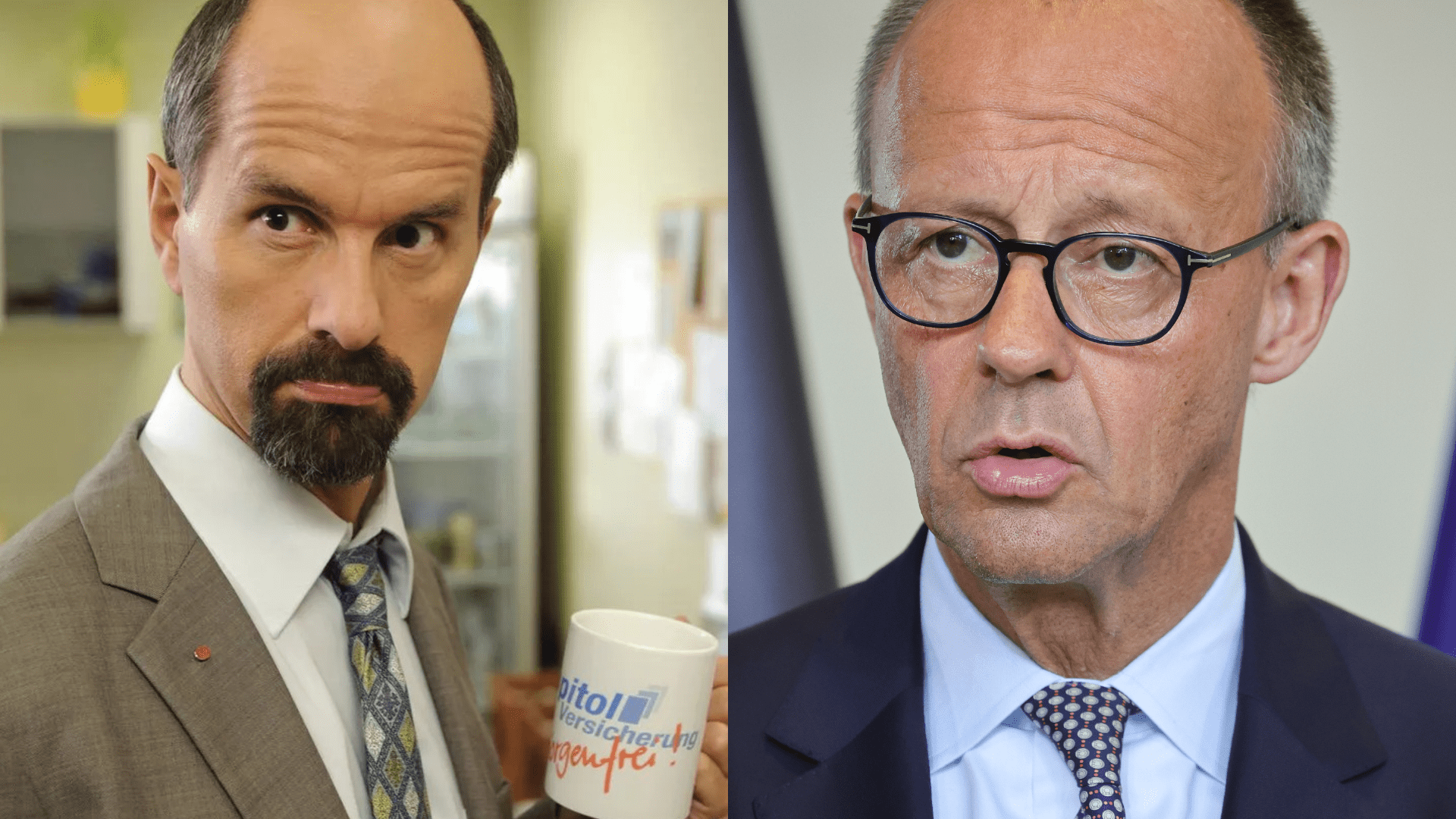
The Chancellor has supplied plenty of “Stromberg-isms” of his own. In one now-infamous Bundestag elevator clip, Merz greets a Green party colleague with, “With us, things are moving up,” then adds the elevator will be “a bit heavier” with her aboard. Cue awkward laughter from Merz’s entourage. “Stromberg couldn’t have come up with a better line than that,” said Herbst this week.
Speaking to The Hollywood Reporter on the set of the new film earlier this year, the German actor said donning the Stromberg goatee a dozen years after the series wrapped, and a decade after the first Stromberg film, felt like coming home.
“It’s just insanely fun to play this character,” he says. “And it’s been like a family reunion, reconnecting with the cast and crew. Even the guy behind the camera is the same as back then.”
For creator Ralf Husmann, the revival was sparked by a pandemic-era rediscovery of the show online.
“It started during COVID, when younger people were finding it on YouTube,” he says. “Then after COVID, we showed the first film again at the Cologne Comedy Festival, and suddenly, there were all these 18-year-olds in the cinema reciting entire Stromberg dialogues.”
Herbst admits his biggest fear was that, in a post-#MeToo, post-woke era, Husmann might soften the edges of Germany’s most inappropriate boss.
“I was really scared Ralf would betray the character, given everything that’s happened in society,” he says. “That would have been a catastrophe. It would have completely discredited Stromberg. And it wouldn’t have been funny anymore.”
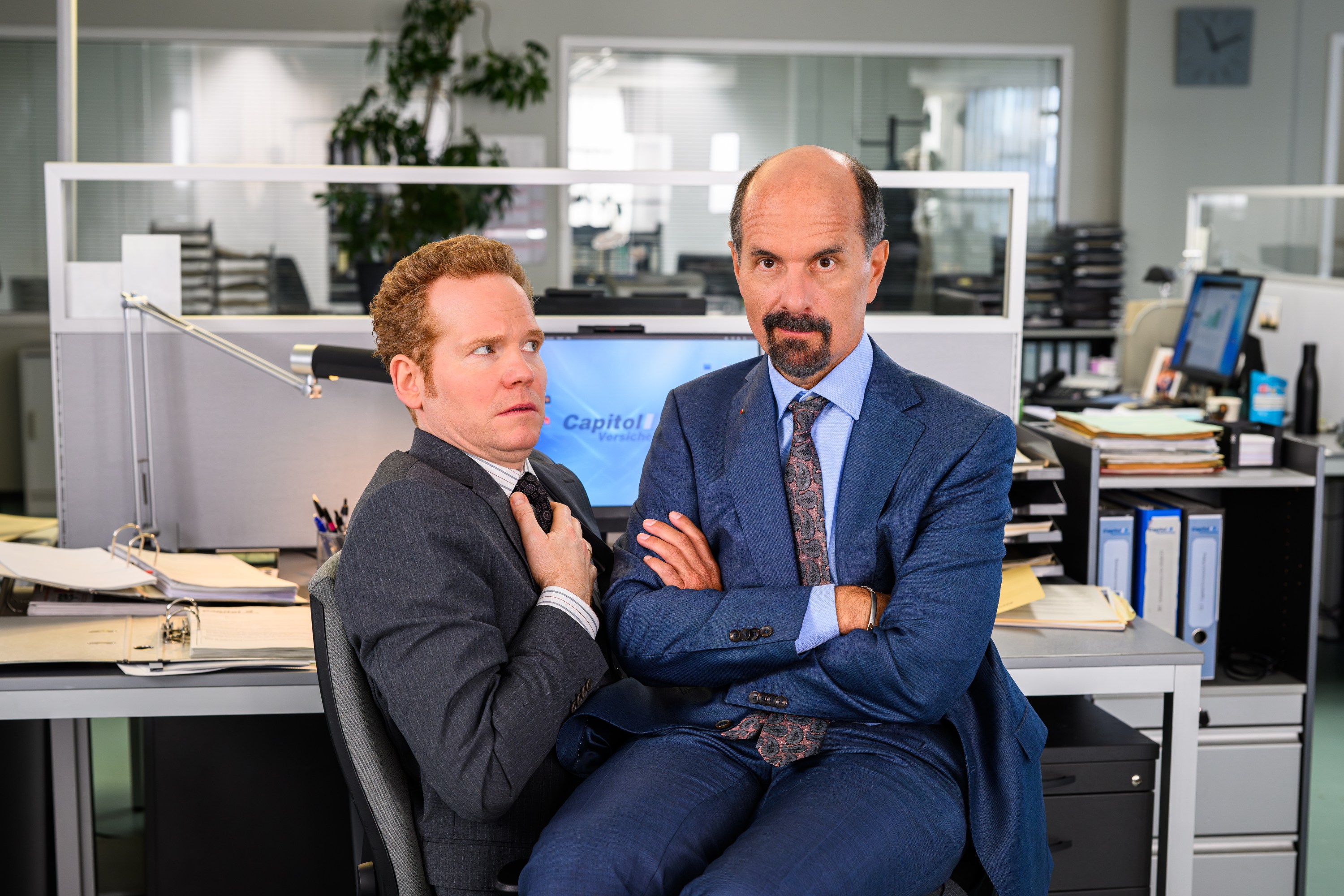
Instead, the new film leans into what has always made Stromberg both horrifying and liberating: his total lack of self-censorship.
“People love Stromberg because he doesn’t censor himself,” Herbst says. “We watch him slowly form his thoughts while he’s speaking. He suddenly remembers the camera is there and just talks. He says and does things we barely dare to think these days, even after a beer, or a crate of beer.”
Despite TheOffice DNA and the “inspired by” credit (which Pro7 added only after the BBC threatened legal action), Stromberg is its own, distinctively German beast.
“When we started, the term ‘mockumentary’ didn’t even exist in German,” Herbst recalls. “I can still barely pronounce it. I deliberately didn’t watch The Office to avoid doing a Ricky Gervais impression. This is our own, very German figure, not a translation of the British one.”
“In the beginning, the idea was just to adapt the original scripts,” adds Husmann. “I always said: That makes no sense. Working life in Germany is different from that in England, Spain, or France. We don’t have Red Nose Day in offices here. You know the two thinnest books in the world? Great British cuisine and the big book of German humor,” he quips. “If you want to make people laugh here, you have to do it differently.”
Where the BBC and NBC series mined social embarrassment and kitchen-sink realism, Stromberg pushed things darker and more grotesque: suicide attempts, heart attacks, brutal corporate backstabbing.
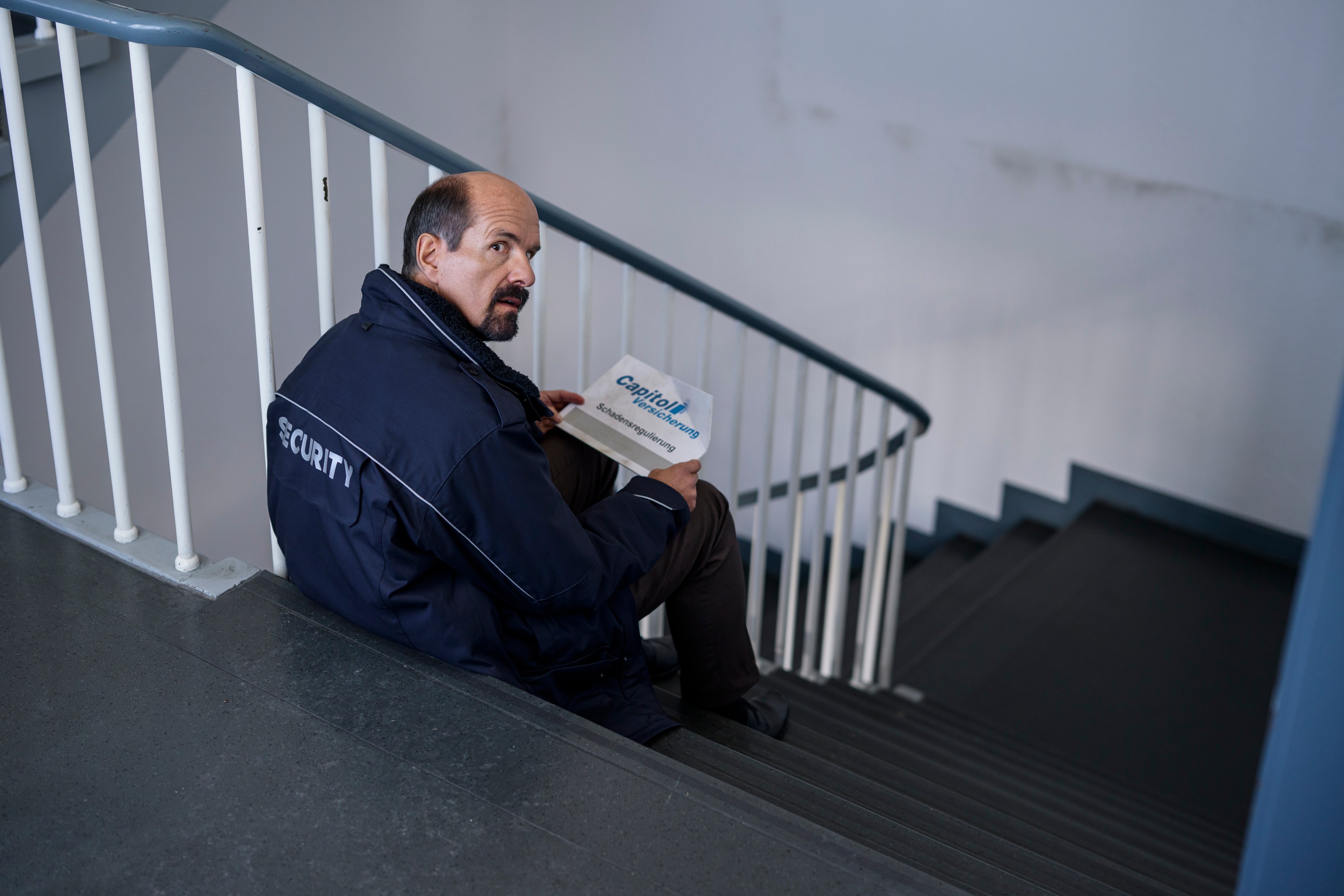
Off-screen, the franchise has also been quietly innovative. Long before “fan engagement” became a buzzword, Husmann and Cologne-based producer Brainpool crowdfunded Stromberg – Der Film in 2011, raising $1.3 million. When it hit cinemas in 2014, it topped the local box office for two weeks, grossing $14.6 million.
“From the beginning, this was a show that survived because the fans refused to let it die,” Husmann says. “The TV ratings were never great. The DVDs kept it alive. Then YouTube and Netflix. Then the crowdfunding. Now Amazon.”
The new film, produced by MadeFor Film with Prime Video and SevenPictures, follows the same logic on a bigger scale. Amazon is co-financing Stromberg 2 as part of a package that gives the streamer rights to the new movie and the full back catalog of Stromberg episodes, with a free-TV window on Pro7 to follow — a textbook example of a global platform mining a local evergreen and using theatrical to turbocharge streaming.
Whether audiences still have the appetite for Bernd Stromberg’s brand of “endemic” office bullying — in an age of HR trainings, diversity workshops and LinkedIn mindfulness posts — remains to be seen. But the memes, the elevator clips, and the sold-out nostalgia screenings suggest the appetite hasn’t gone away.
And if history is any guide, Germany’s most politically incorrect middle manager may be returning to a world that suits him better than ever. Right now, everyone is waiting to hear what Stromberg will say next.