Taking its English-language title from a Sonic Youth song, Little Trouble Girls is, from its first provocative image to its final, affectionate close-up, an intoxicating communion of the earthly and the angelic.
Focusing on an introverted student who joins her school’s choir and falls under the spell of a more adventurous girl, director Urška Djukić deftly mashes up the female sacred and edge-of-17 precociousness. She begins the movie with a lingering close-up of a medieval artist’s rendering of Christ’s wound, a vulval illustration if ever there was one, and a fitting opening spark for this unpredictable drama. With superb performances across the board, particularly from her two young leads, and an adventurous use of visual and aural elements, Djukić has conjured an alluring fusion of spiritual awakening and adolescent confusion.
Little Trouble Girls
Sensuous and exquisitely unpredictable.
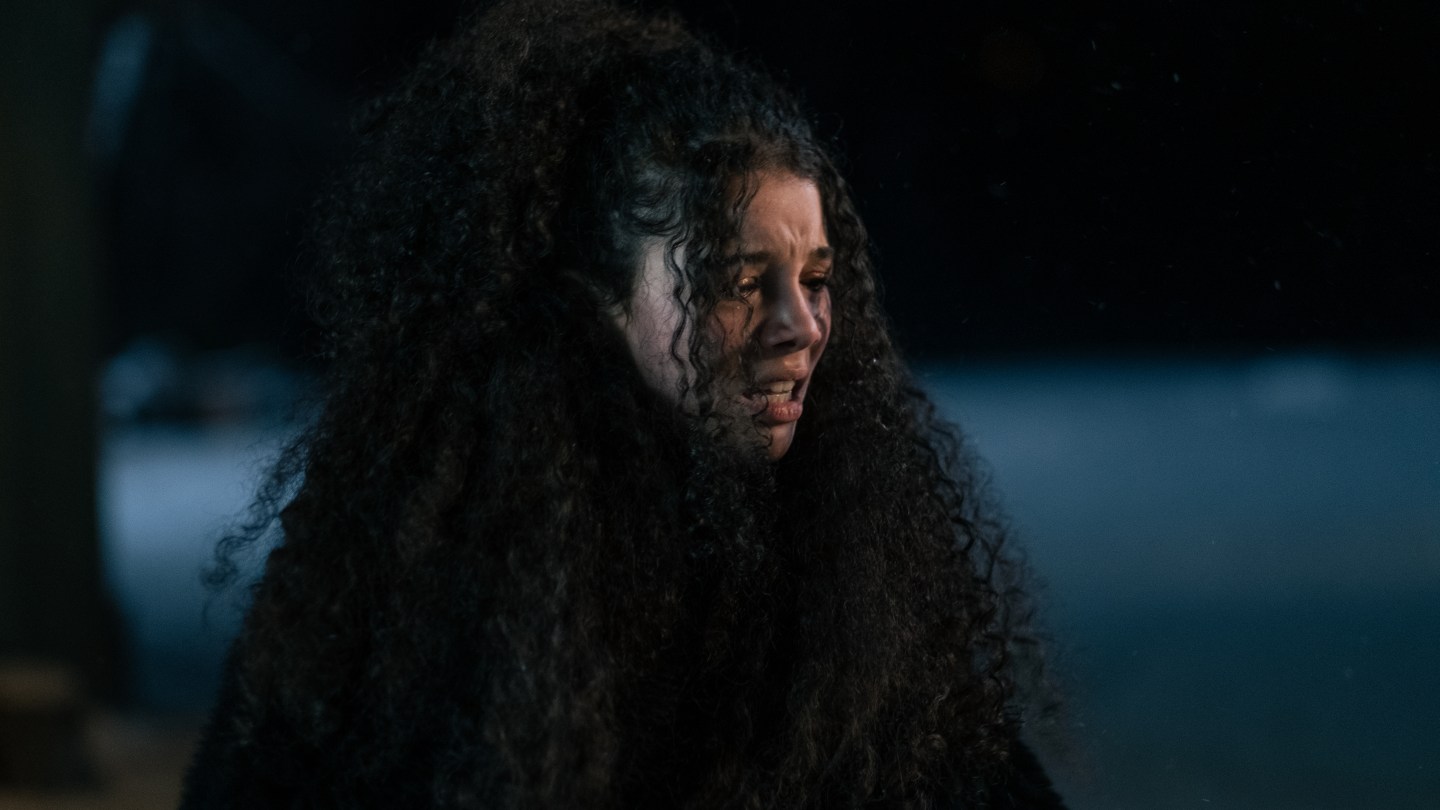
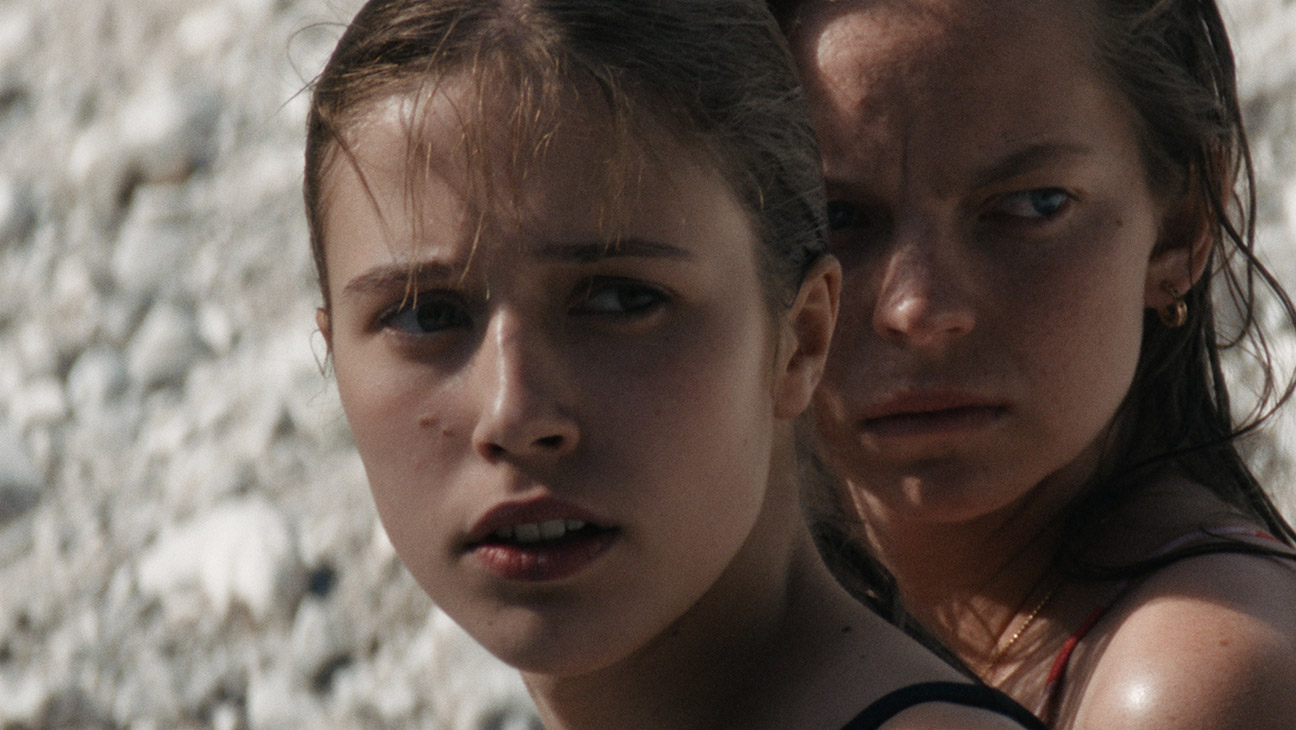
Jara Sofija Ostan plays 16-year-old Lucia, who has a sad, faraway gaze and, on her first day in the girls’ choir at her Catholic school, a tentative demeanor. Notwithstanding the dweeby conductor (Saša Tabaković), there’s a rarefied air in the rehearsal room, and Lucia is attuned to it. But the discovery that leaves her mesmerized is Ana-Maria (Mina Švajger), a fellow alto in red lipstick who arrives in a swirl of alpha-girl self-confidence. Lucia’s mother (Nataša Burger), who’s attentive and caring but strict in the way that unhappy people tend to be, forbids her to use makeup. She wants her daughter to step out of her shell, but only so far.
Most of the film takes place during the choir’s three-day intensive rehearsal at an Ursuline convent across the Slovenian border, in Cividale del Friuli, Italy. The bus ride there draws Lucia deeper into Ana-Maria’s fold, a clique whose other members are Klara (Staša Popović) and Uršula (Mateja Strle). They’re practiced hands at this annual weekend excursion, but Lucia is fascinated everywhere she looks: the unfamiliar countryside, the Devil’s Bridge, the naked man (Mattia Cason) sunbathing on the shores of the river.
He turns out to be one of the construction workers renovating the convent. The noise of their machinery in the courtyard is an annoyance to the conductor. For the girls, though, the men add an element of intrigue to the cloistered setting. Noting a handsome dark-haired laborer and Lucia’s focus on him, Ana-Maria impulsively commits a flirty prank that leads to a pivotal scene between the two girls, an exchange that touches on sin and mischief with the deft mix of concision and physical oomph that defines the screenplay by Djukić and Maria Bohr.
Over the brief but transformative hours of the trip, Ana-Maria’s inviting warmth gives way to something taunting, and her playful smile takes on a witchy cast, Lev Predan Kowarski’s camera alert to the shifting moods. However welcoming they are at first, Ana-Maria and her minions gradually reveal their mean-girl proclivities. If nothing else, they don’t get Lucia. “You’re looking at the olive tree?” Klara asks with a condescending smirk when she catches her daydreaming out the window of their dorm room. A nighttime game of truth or dare unfolds as an opportunity for the three friends to grill the inexperienced Lucia, and the sequence culminates in a moment as sublime as it is startling — for the girls and the audience alike.
Later, a conversation with a nun (Saša Pavček) about celibacy and commitment to God provokes derisive disbelief from Ana-Maria and awakens a new awareness in Lucia, an appreciation of life’s nonphysical aspects. At the same time, the trip’s profusion of sensory stimulation leaves her hot and bothered, and unsure whether she’s sexually attracted to her new friend or being seduced.
Through the observant eyes of her awkward yet graceful protagonist, Djukić weaves a story in which nothing earth-shattering happens but every moment is loaded with elemental power and possibility. The director and her DP capture the summer light as it bathes the characters but also through bold montages of flowers in vibrant bloom, the close-ups alive with sexual energy and female symbolism. The choir’s voices, entwined and transcendent in renderings of Bach and Slovenian folk tunes, are another blossoming. (The onscreen performers did all the singing for the film, under the direction of Jasna Žitnik.) Whispered reveries are another element of the sound design, and are mostly indecipherable (or untranslated) except for the repeated phrase “Sound is light,” a declaration of the synesthesia that subtly infuses the movie.
Even as Djukić celebrates the girls’ united voices, Little Trouble Girls is ultimately about a sensitive soul finding a different kind of harmony, one that doesn’t require conformity. During one rehearsal, the conductor grows belligerent as he taunts a distracted Lucia. “Where are you?” he demands. At this moment, the grown man and the adolescent girl each have unspoken reasons that have nothing to do with the music. It’s a psychologically brutal scene, and one that leads into the film’s exquisite crescendo and grounded resolution, sequences that make clear that wherever Lucia is, it’s someplace the conductor, Ana-Maria and Klara could never imagine.