There’s a particular poignancy to seeing children grow up onscreen, through the compressed language of film — whether in intermittent chapters over decades, as in Michael Apted’s landmark Up documentary series, or within the dramatic framework of a feature, à la Richard Linklater’s Boyhood. Directors Itab Azzam and Jack MacInnes have made a nonfiction film that might be called Girlhood.
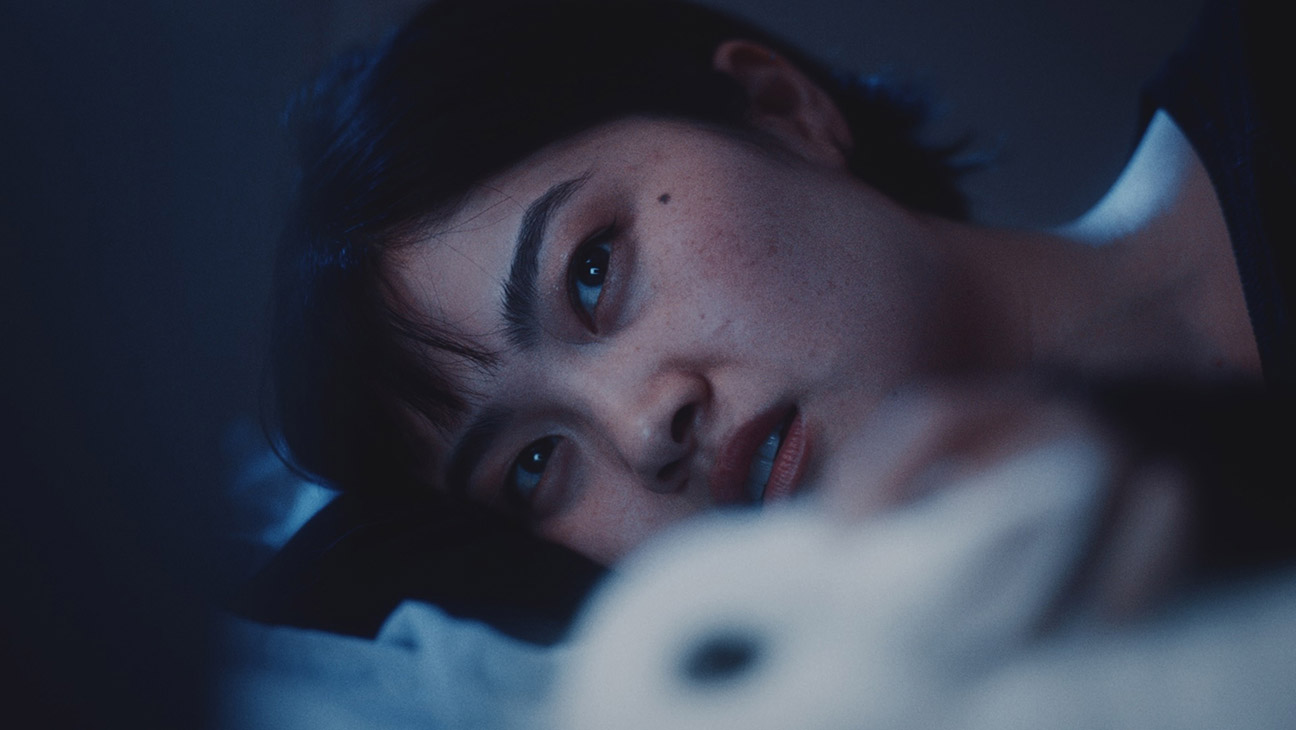
Their doc centers on Israa, first encountered in 2015 as an 11-year-old dynamo, vibrant and sensitive, and it follows her over the next decade of her life. Beyond the usual growing pains and adolescent joys and push-pull with grown-ups, Israa’s story involves the fallout of war, the experience of exile, and the enigma of cultural identity as something both bedrock and fluid. A distillation of formative years for Israa and turning points for her family, One in a Million feels both ultra-specific and universal.
One in a Million
Abounding in strong emotion, sharp insight and personal charm.
It’s clear why the filmmakers were drawn to Israa when they met her in a busy street market in Izmir, Turkey, where she was helping her father, Tarek, sell cigarettes and gadgets. The coastal city was the first stop for the Syrian girl and her extended family on their way to a hoped-for new start in Germany. (The husband-and-wife directors had left Syria, Azzam’s native country, a few years earlier, when the civil war began in 2011.)
Spirited and charismatic, 11-year-old Israa gives the filmmakers a tour of the bustling square where she and Tarek spend many long evening hours, earning money so the family can buy passage on a smuggler’s boat to Europe. The strong and tender bond between father and daughter, captured in vérité footage and side-by-side studio interviews, is one of the delights of the film’s early sections, making later developments between them all the more awful.
One in a Million is a largely impressionistic portrait of the family’s experience, rich in sensory detail and emotion rather than the day-to-day nitty-gritty. No timeline is specified for the family’s odyssey from Turkey, which unfolds in a series of key moments, some exceptionally trying and others pure elation. The journey begins with a treacherous nighttime ride across the Aegean to Greece, in a large dinghy with other refugees. “If anything bad happens to us, you’ll have to tell our story,” Tarek says to the filmmakers, affecting a certain philosophical lightness, although he’s separately expressed his torment over the risks they’re taking.
The ensuing trek by foot through several countries ends with a warm welcome in Germany, particularly notable in this moment of heightened ethnocentrism, hysteria over immigration and demonization of the Other. Speaking of the reception his family received — they were among a million refugees to arrive in that country in 2015 — Tarek says, “History will write that Germany did the right thing.”
As to the underlying geopolitics, the filmmakers maintain a basic, headline-level approach, focusing on how policies and war-making are experienced by their subjects. It was after a shell hit the balcony of the family’s home in Aleppo that they left their homeland.
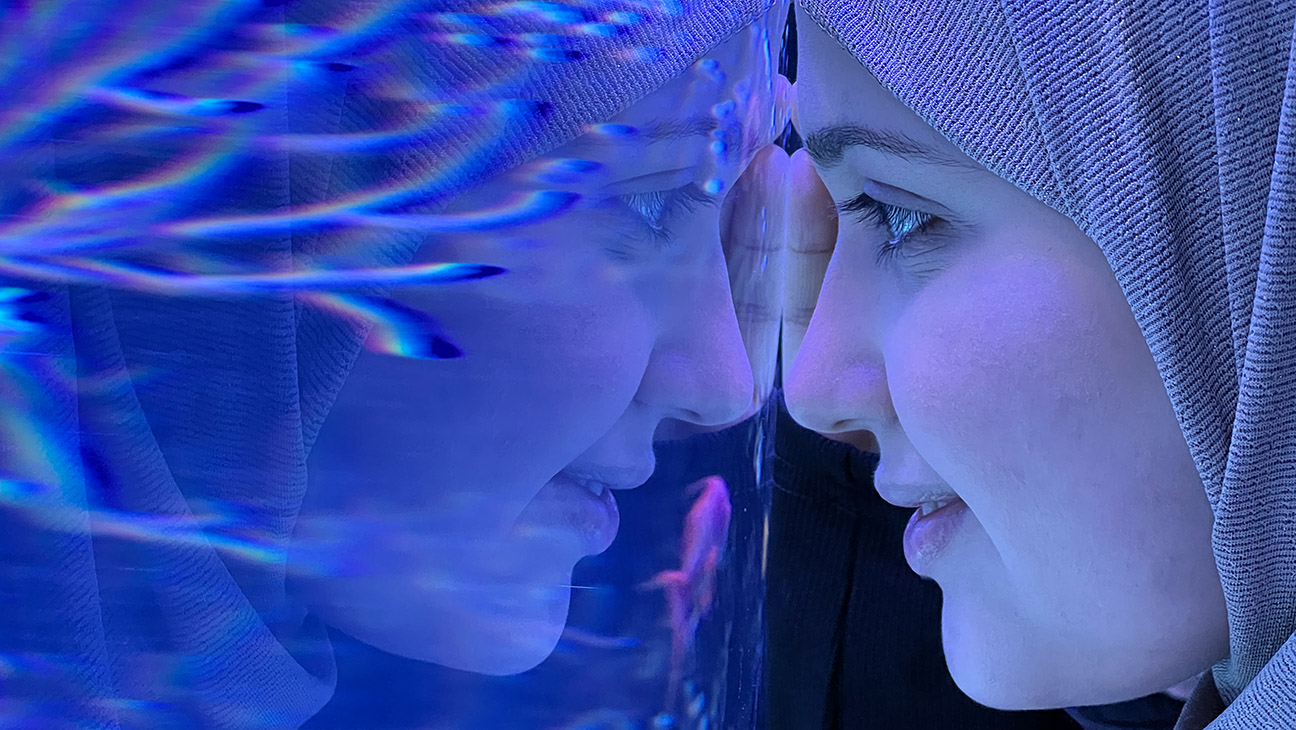
Most of Israa’s extended family — a grandfather, young uncles, and three siblings, among them a disabled sister who uses a wheelchair — are background figures in the film. Even Israa’s mother, Nisreen, is at first at the edges of the action, perhaps in keeping with traditional gender roles, perhaps out of shyness or a reluctance to participate in the documentary. This changes, gradually but dramatically, as her family settles into its new life in Cologne. It’s likely that she’s inspired in part by Israa, who thrives in school and quickly becomes not just fluent in German but a thoroughly Western adolescent, a Justin Bieber fangirl who rolls her eyes at her father’s preference for speaking Arabic. “It doesn’t suit me,” she says of her first hijab, and promptly removes it.
Nearly halfway through the film, Nisreen steps forward for a studio interview to tell her life story — how she hadn’t the opportunity to go to school, and wed young in an arranged marriage. The difficult journey from Syria was also, paradoxically, her first taste of freedom. As moving as it is to see Israa grow up, it’s Nisreen’s transformation that is the most striking progression in the documentary, given the acquiescent figure she appeared to be in the early stretches.
Her newfound sense of self also signals a rupture in the family. It becomes increasingly apparent that Tarek’s embrace of the democracy and freedom he sees in Germany doesn’t apply on the homefront. It’s heartbreaking to witness how someone so caring transforms from hero to villain. And redemption, when it arrives, feels like balm in this story of people finding their way in a world they never expected to inhabit.
The doc is bookended with Israa’s visit to Aleppo as a young wife and mother. Amid the destruction and rubble, she traces the paths to familiar places. But she also wonders, after 10 years as a European, if this is where she belongs — a revelation not unlike the moment, as a wide-eyed tween in Germany for the first time, she wrapped her head around the idea that now, in this place, she was the foreigner.