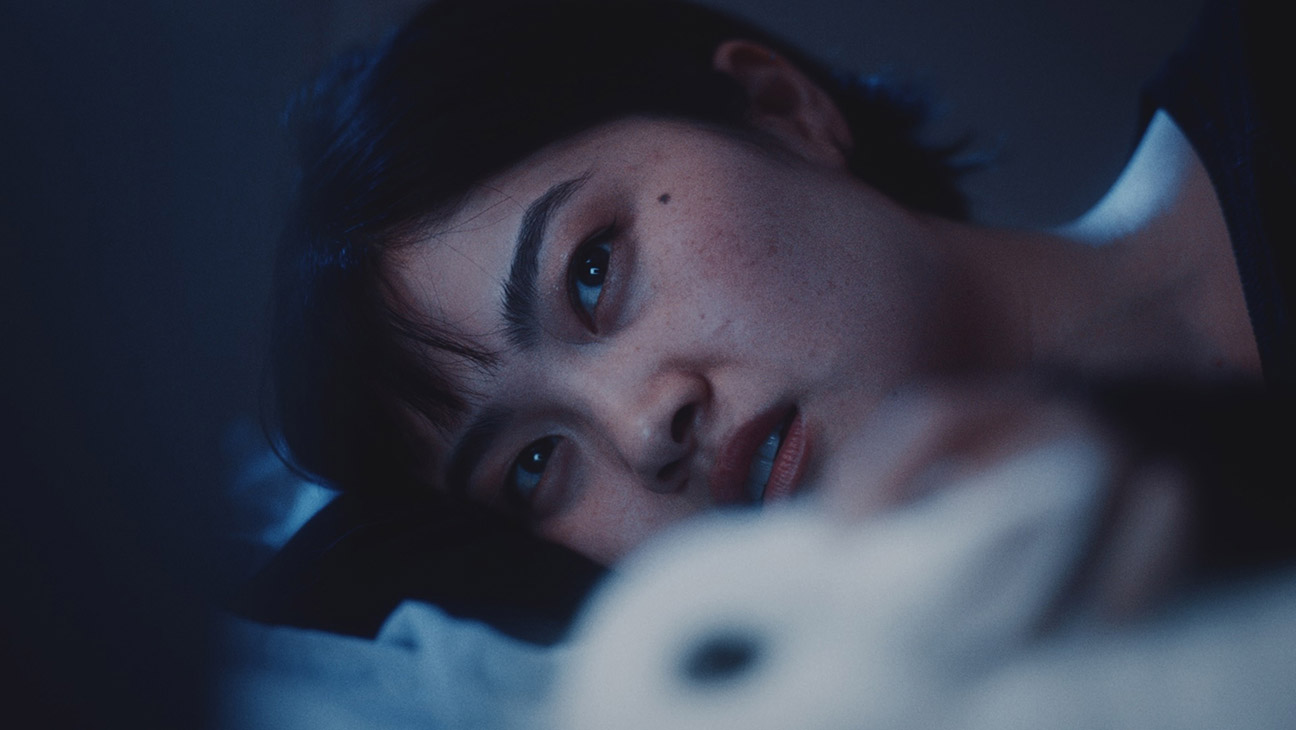
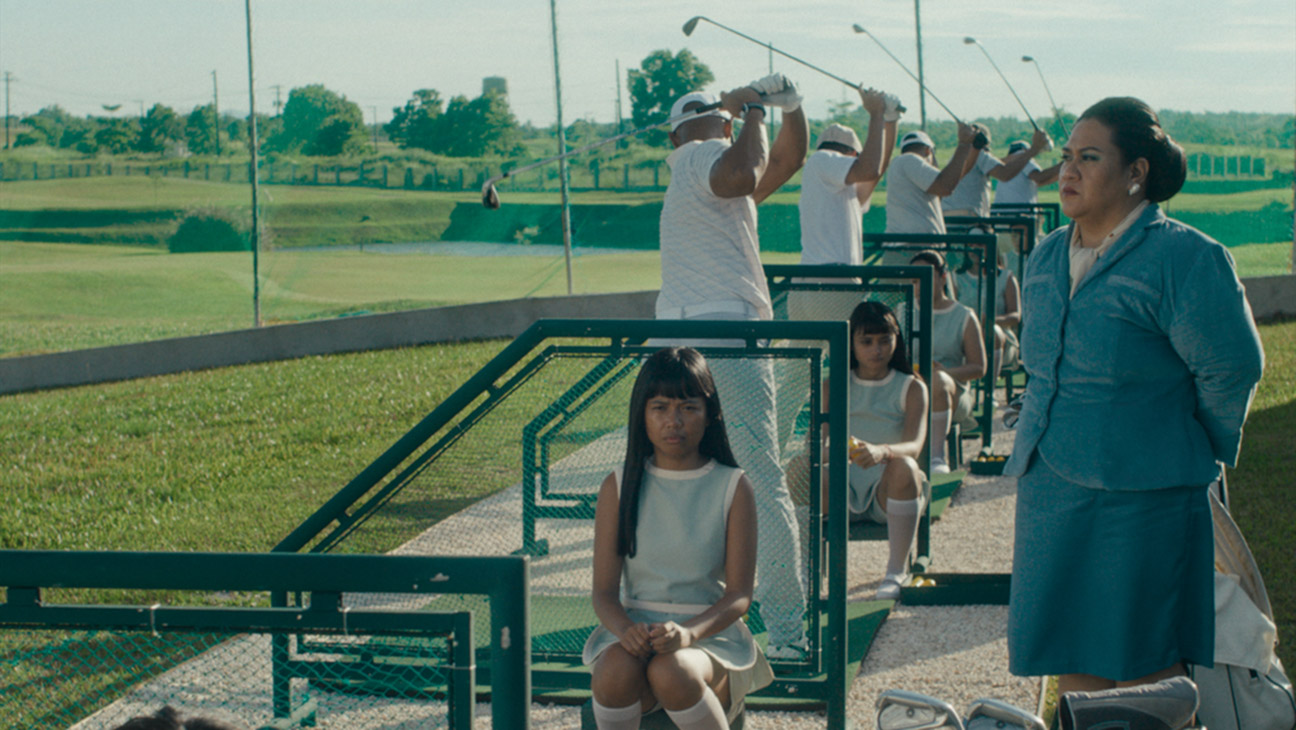
In the sweltering heat of the Philippines, 17-year-old Isabel (Jorrybell Agoto) begins a new job that serves as the perfect metaphor for her country’s gaping class divide. Employed as a “tee-girl” at a country club catering to wolfish businessmen and wealthy Chinese tourists, Isabel is paid (presumably very little) to sit all day long at a driving range, placing golf balls on a tee so that the golfers don’t have to do it themselves.
That scene is just one of many bleakly absurd moments in writer-director Rafael Manuel’s feature debut, Filipiñana, which he adapted from his 2021 award-winning short of the same title. A grim portrait of a country whose resources, both human and natural, are being plundered by a handful of elites, the film is set on a golf course whose predominantly female staff serves, and gets harassed by, a bunch of rich and powerful male clients who see no harm in exploiting them.
Filipiñana
Class warfare on the green.
As depressing as that sounds, there’s also a darkly comic, visually inventive side to Manuel’s minimalist narrative, which sits somewhere between Michael Haneke and David Lynch. For instance, the above-mentioned tee-girls are synchronized to look like they’re in a Busby Berkeley musical number, crouched below a half-dozen men in white polos all swinging their golf clubs in unison.
Other set-pieces involve guests dancing in step to an orchestra playing a traditional Filipino ballad; an impromptu karaoke performance by the club’s strange owner, Dr. Palanca (Teroy Guzman); and a scene where golf balls are compared to an old man’s testicles. Isabel and her fellow workers are treated like slaves but they nonetheless display a shrewd sense of humor, doing their jobs with dignity and a certain degree of fatalism.
Filipiñana takes place during one, long, unbearably hot and humid day in which not all that much happens. Viewers looking for thrills or suspense should look elsewhere: This is a film that can be as languid as playing a full 18-holes on those stifling fairways. Manuel captures most scenes from a fixed camera, which yields some lovely compositions (courtesy of cinematographer Xenia Patricia) but also moments of dramatic dead air. And yet his movie slowly and cinematically builds into a scathing account of inequality, showing how women like Isabel are condemned to work in a place whose atmosphere is closer to that of a colonial plantation than a cushy country club.
The bare-bones plot follows the first-time employee as she learns the ropes of her new job, which at one point involves her trying to return a lost golf club to the illusive Dr. Palanca. (In one of the film’s only tense scenes, it looks as if she might murder her boss with the five-iron.) A few other characters appear, including an American girl, Clara (Carmen Castellanos), accompanying her uncle from hole to hole and discussing the possibility of moving to the Philippines. But it’s clear the class divide troubles her — as does her rags-to-riches uncle’s blatant disregard for the very exploitation he’s now a part of.
Manuel reveals a keen eye for visual discomfort: A giant slice of strawberry cake on a plate looks both tempting and disgusting, sitting untouched before an indifferent club member. Meanwhile tee-girls like Isabel are fed meager rations of rice and fish that they share in a balmy overcrowded canteen.
There’s a White Lotus vibe to Filipiñana that’s both subtler and more brazen than the HBO series, in which the rich kill each other off while the poor who service them tend to wind up in better circumstances. There is no such salvation for Isabel and the other workers, whether they’re caddies or tee-girls. At best they can steal a moment in the shade and eat a mango that’s fallen off a tree, even if the act may cost them their livelihoods.
Executive produced by Jia Zhang-ke, whose influence can be seen in the artful way Manuel captures a paradise rotten on the inside (Jia’s 2004 theme park drama, The World, especially comes to mind here), Filipiñana could have benefited from a little more story and a little less contemplation. But some of its images remain embedded in the memory, such as one of caddies roaming a tropical forest, looking for high society golf balls that have fallen into the rough.