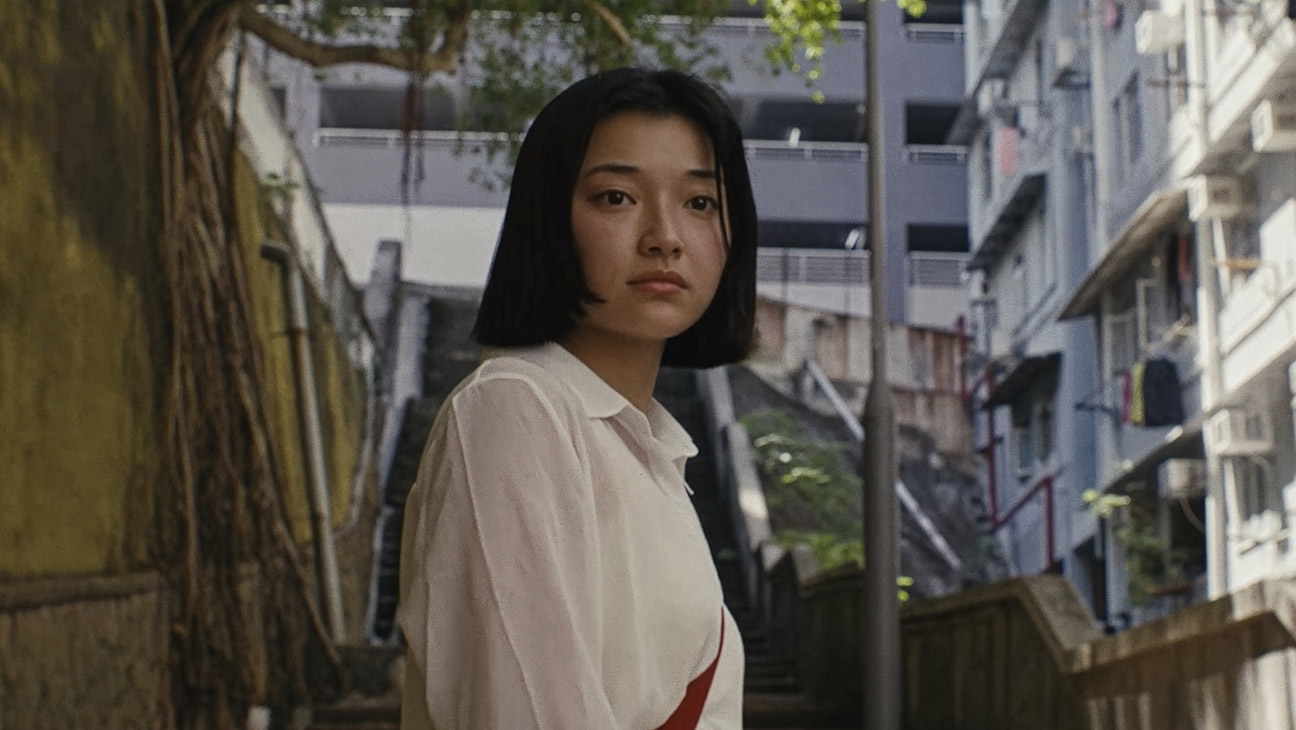

Walking around Tehran on a beautiful summer evening, a young couple stops to join a crowd gathered around a lively street music performance. “This country is so full of artists,” Hanna (Hana Mana) and Ali (Farzad Karen) remark to each other. “Let’s see if they let it stay like this.”
Theirs is no idle musing. Hanna and Ali are part of the city’s illicit art scene, putting on performances without the required governmental sign-off and its constraints. The Friend’s House Is Here, directed by Hossein Keshavarz and Maryam Ataei, is itself a product of those same pressures, shot underground and smuggled across the border amid Iran’s recent protests and crackdowns, just weeks before its Sundance debut. Yet the film’s predominant mood is one not of despair but of defiance, placing its faith in the enduring powers of friendship and creativity.
The Friend’s House Is Here
Joy and creativity as defiance.
The movie opens with a staging of the troupe’s latest project, an experimental play written and directed by Hanna’s best friend, Pari (Mahshad Bahram). In it, a fictionalized version of Pari rushes around looking for Hanna, who seems to have disappeared in a government crackdown. But at the cast afterparty in Pari and Hanna’s charmingly cozy apartment, the vibe is all merriment — pals toasting each other over drinks, oohing and ahhing over Pari’s tahdig, flirting on couches deep into the evening.
Hanna and Pari’s bond is the beating heart of The Friend’s House Is Here (so named in homage to Abbas Kiarostami’s Where Is the Friend’s House?). Bahram and Mana share an easy and intimate chemistry, and long stretches are devoted to simply watching their characters enjoy each other’s company, whether they’re sharing cigarettes out on the balcony or going on shopping sprees at the local mall. (While there, they laugh off of an older woman scolding, “Young ladies! Have shame, wear your hijab” — a reminder that the freedoms these young women have claimed for themselves are not taken for granted by everyone around them.)
Keshavarz and Ataei favor long takes that let the actors fall into the rhythms of life, but these scenes are cut together so that they run by in a blur — as if compiled by someone frantic to get it all down, to not lose a single precious memory of these happy days.
Not that even those days were ever without their annoyances or disappointments. Within the friendship, Pari is the conscientious one, and Hanna the flake who can’t be bothered to call the landlord about getting the AC fixed. Hanna’s budding romance with Ali occupies more and more of her attention, and her impending plans to leave the country promise to pull the women apart even further. But things take a much more serious turn when their artistic activity attracts the disapproving eye of the government.
The sequence where an agent approaches after a performance is the tensest the picture has to offer, made all the more unsettling by how amiably things start. He arrives in the friendly guise of a fellow theater lover, showering the cast with thoughtful praise before gradually steering the conversation toward a veiled threat. “Underground is not a good place,” he says, his tone still so mild he could be commenting on the weather. “Under the ground, it’s dark and cold.”
The camera in The Friend’s House Is Here generally keeps its distance, to an extent that can even be alienating — I watched it on a big theatrical screen, and there were still times it took me a minute to realize which character I was watching, let alone what they were doing and why. Here, though, it slowly starts to push in, so that as the trap makes itself clear, the walls close in around the scene.
The aftermath is unsurprisingly chaotic, even by the standards of a period the characters describe over and over as “uncertain”: a ransacked home, panicked phone calls, desperate attempts to scrape together cash. The film keeps vague the details of what exactly happened after the agent’s visit, and of how the issue was ultimately “resolved.” It’s a choice that makes the narrative’s sequence of events feel abrupt, even random — just as we’re adjusting to one new reality, we’re launched without warning or fanfare into a new one.
But it also comes off as a screw-you to the powers that be, preserving the dignity of those targeted while refusing to play into the government’s self-aggrandizement of its own power. Just because the threat is real and menacing, doesn’t mean we’re obligated to give oxygen to its brutal and self-justifying mechanics. Just because the devastation it wreaks is enormous, doesn’t mean we’re entitled to the most painful moments of those suffering underneath it.
Instead, The Friend’s House Is Here chooses to emphasize love, courage, community. It zeroes in on the sacrifices its characters make for each other, the community that builds around them, the resilience that keeps them going in the face of fear and oppression.
During that same summer street performance, Ali and Hanna make another observation to one another: “Whenever they shut one place down, people find somewhere else to get together.” Whatever the circumstances, the movie reminds us, art finds a way.