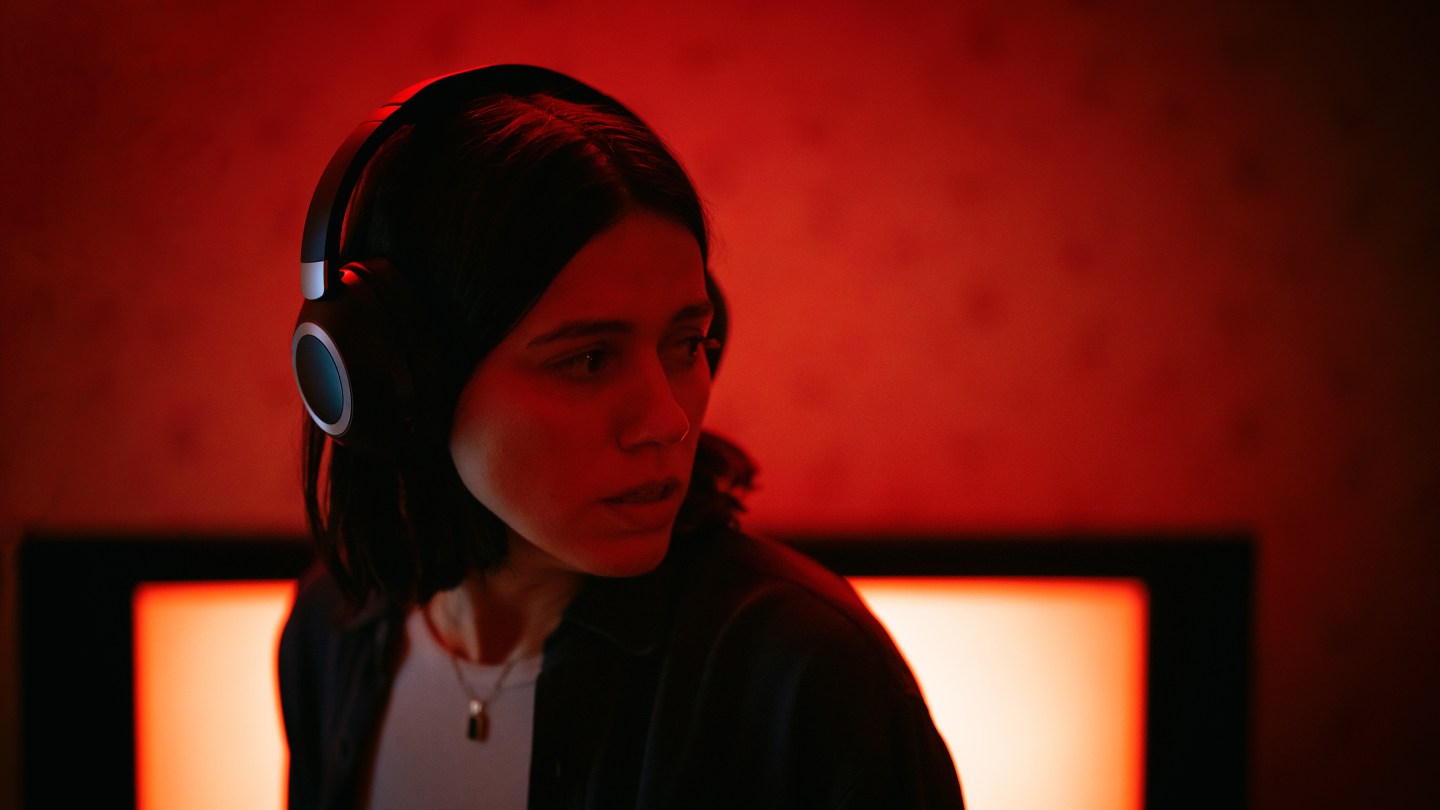
Did Hereditary ruin horror movies? Artful and dreadfully compelling as that film is, Ari Aster’s most enduring work to date (from 2018) has had a significant, and increasingly deleterious, effect on the genre. In the years since Hereditary made its cultural mark, we have seen myriad imitators angling for the same elegant shocks, attempting to do the Aster thing of stripping grief down to its starkest terror and evoking (and sometimes inventing) their own obscure ancient demons.
Last October saw perhaps the nadir of this trend in the form of Shelby Oaks, which shifts from a Blair Witch-y found-footage pastiche to a shockingly unabashed Hereditary rip-off. Now there is another flagrant Hereditary borrower: Undertone, a gloomy, conceit-heavy picture that loses itself in its influences. Or, perhaps, never knew itself at all.
Undertone
Another limp attempt to remaster Ari Aster.
Written and directed by debut filmmaker Ian Tuason, Undertone (which first premiered last summer at Fantasia Fest) begins in humble, more original fashion. A 30something Canadian woman, Evy (Nina Kiri), is alone in a house save for her dying, comatose mother, wheezing toward death in an upstairs bedroom. Evy’s only real connection to the outside world is her podcast partner, Justin (the voice of White Lotus star Adam DiMarco), with whom she records in the wee hours. Their podcast, called The Undertone, is all about spooky ephemera, cursed internet memes and mysterious footage and the like. It is loosely established that Evy is the skeptical Scully to Justin’s credulous Mulder, but Evy has a hard time explaining away the mysterious sounds encountered in a series of audio clips sent to the podcast by an anonymous email address.
Here, Tuason creates lots of unsettling suggestion. There is something frighteningly tantalizing about ominous messages hidden in the fuzz of background noise, a ghost in the machine working its way into Evy’s subconscious. As Evy leans in closer to her computer and turns up the volume, Undertone effectively conjures a mood of creeping unease, as if Evy is opening a small but important door to terrors unknown. What is really happening in these clips, in which a man sets out to record his girlfriend talking in her sleep? Are there really sinister voices whispering dark things, or is it all just a trick of the mind?
Tuason sustains his film on that eeriness for a decent stretch. But as he sloppily adds plot developments— a perhaps unwanted pregnancy, a possible relapse into alcoholism — Undertone begins to sag under its portentous weight. Is this a movie about grieving a parent? Or is it about the uncertainties of motherhood? Is it both? Is it neither? Undertone begins to flail wildly, Tuason perhaps hoping his hastily prepared stew of horror-movie cliché will cover up its confusion of themes.
As answers to the film’s big questions begin arriving in slapdash fashion, one loses patience for Tuason’s evasive, cluttered storytelling. Wouldn’t you know it, there’s an old demon involved. And Evy’s mother starts making a creepy death rattle sound, used in almost exactly the same way as the infamous tongue pop in Hereditary. Bone-deep sadness becomes hideous horror yet again. Toni Colette might as well show up to say hi.
The film becomes so frustratingly derivative that all its other flaws, perhaps once forgivable, are cast into much harsher light. The film’s depiction of the podcast recording process is ludicrous. (Unless there are real podcasts that record for maybe 5 minutes at a time in the middle of the night?) Its limp attempts to explain Evy’s isolation — yes, she has a boyfriend who is back at their shared apartment nearby, but he’s a jerk and won’t come visit while she cares for her mom — grow flimsier as the demon stalks closer to this comically dim-lit home.
To be fair to Hereditary’s legacy, there is plenty of The Conjuring series in here as well, echoes of its vengeful spirits and imperiled children. What there is precious little of in Undertone is Tuason’s own ideas. Horror is an iterative genre; there is ample room for multiple demon movies, ghost movies, whatever. But simply grafting a xeroxed collage of other films onto a sizzle reel for one’s nifty camera technique is not exactly expanding on foundational lore. Undertone makes one yearn for an official moratorium on its many reappropriated tropes, so that aspiring horror directors might finally be once again inspired to find new scary stories to tell in novel ways. Because if I hear one more tongue click or throat rattle coming from down a dark hallway, I might finally scream.