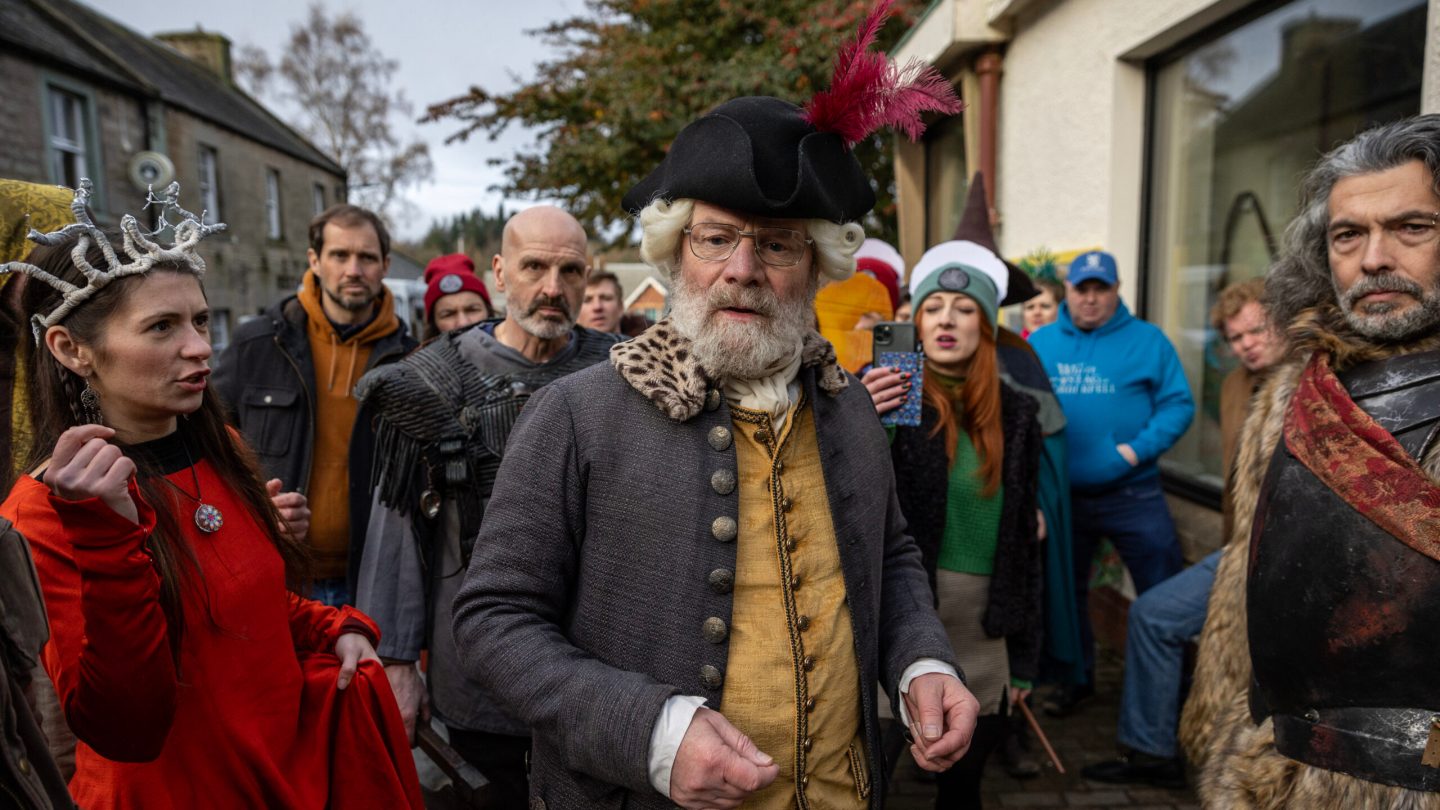
Where does fact end, and fantasy and fiction start? How do we use histories and stories to craft our identities? The Fall of Sir Douglas Weatherford, the fiction feature debut of writer-director Seán Dunn (short films British by the Grace of God, Kingdom Come), explores those questions with a gusto for costumes and cosplay and healthy helpings of irony and black humor. If that fan-favorite – and fictitious! – fantasy series The White Stag of Emberfell does not feel familiar to you, you likely haven’t even heard of such blockbuster series and movies as Game of Thrones and The Lord of the Rings.
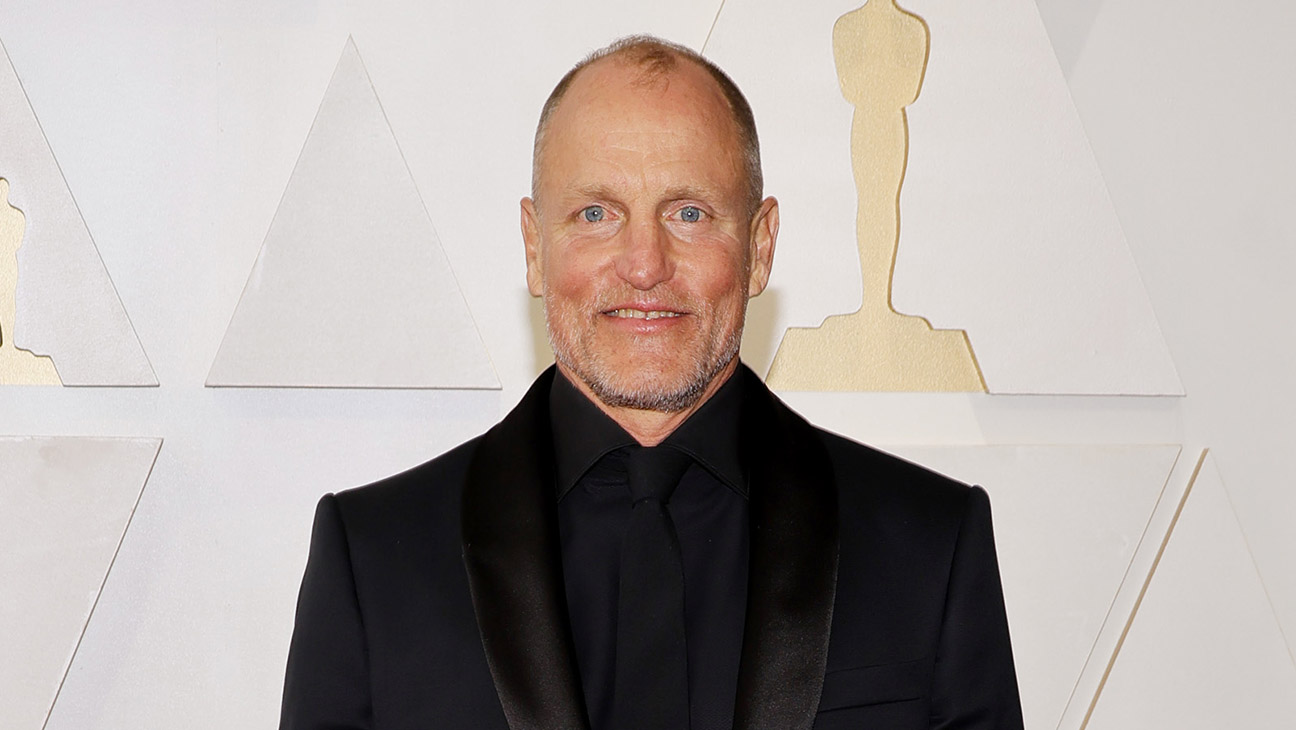
The movie, starring Peter Mullan (My Name Is Joe, Braveheart, Trainspotting), world premieres at the 55th edition of the International Film Festival Rotterdam (IFFR) on Friday, Jan. 30 in the fest’s Big Screen Competition program. Also featuring in the cast are Gayle Rankin, Jakob Oftebro, Sid Sagar, and Lewis MacDougall.
Dunn, born in Scotland, sets The Fall of Sir Douglas Weatherford in – yes! – a Scottish village – namely, the fictitious Arberloch – where local mythology, built around Sir Douglas Weatherford, an 18th-century inventor and philosopher, is suddenly eclipsed by the fantasy show, which descends on the place to shoot scenes in the local area, bringing with it flamboyantly dressed cosplaying fans.
That pulls the rug, woven from history and myths, from under the feet of Kenneth (Mullan), who works as a tour guide at the visitors’ center dedicated to the town’s most famous son. He does so dressed up as none other than Sir Douglas himself. Sir Douglas is actually, he keeps telling even those who won’t listen, a very distant relative. But now, fantasy creatures and TV fiction overshadow, overshadow the myth of Sir Douglas. Kenneth’s world begins to collapse as he realizes that the world has moved on – and without him.
IFFR calls The Fall of Sir Douglas Weatherford “a darkly comic study of ageing, identity and the fictions we cling to when everything around us shifts.”
Mubi will release the film theatrically in the U.K. and Ireland. Charades is handling international sales on the movie by Ossian Pictures, Forensic Films, amd Come Into the Fold. The project was developed with BBC Film and co-financed by the BFI Film Fund, BBC Scotland and Screen Scotland. The producers are Alex Polunin, Scott Macaulay, and Jennifer Monks. David Gallego handled cinematography, Shakti Bhagchandani the editing, and the production design is courtesy of Jamie Morgan Lapsley. The Fall of Sir Douglas Weatherford features music by Gazelle Twin.
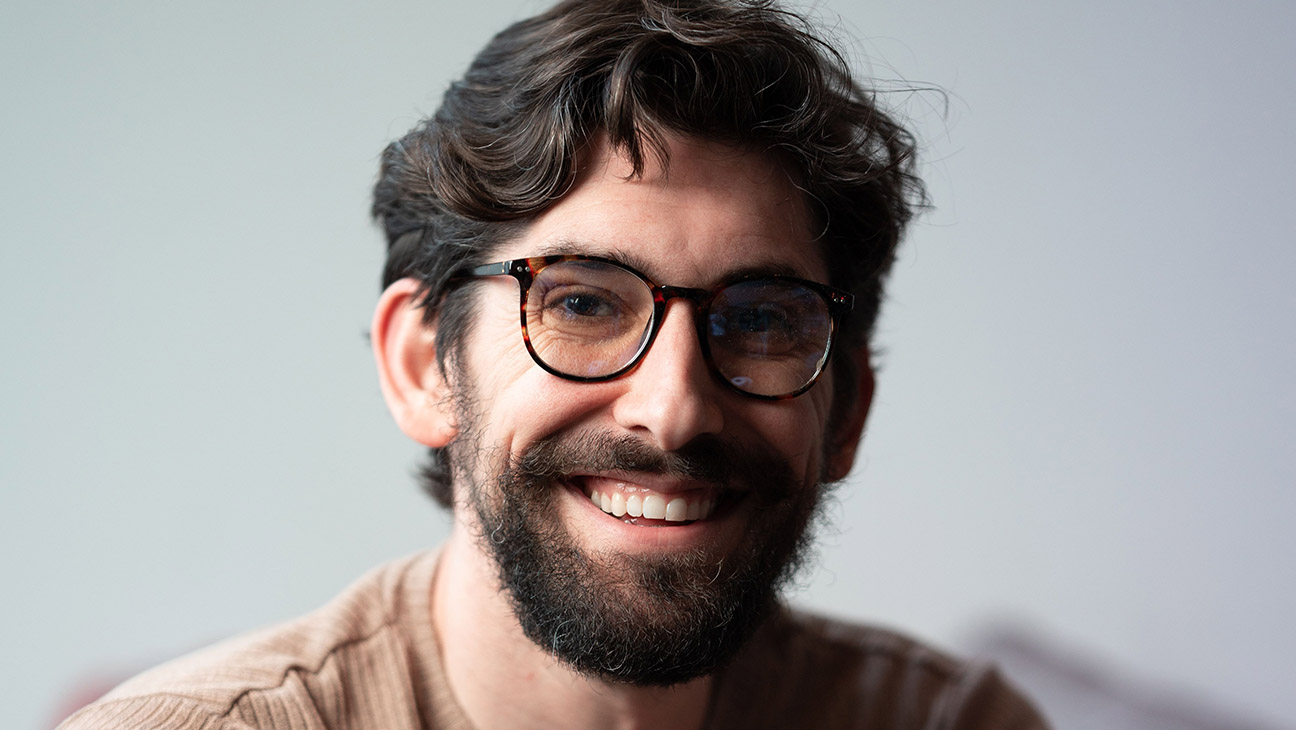
THR talked to Dunn about why he wanted to dissect where fact-based narratives blur into fiction-based identities, the joy of working with Scottish star Mullan, his take on GoT and LOTR, and what’s next for him.
The inspiration for movies isn’t always easy to pin down for filmmakers, but in this case, Dunn remembers the exact moment. “I can exactly pinpoint, weirdly, the moment, which isn’t really that common for me,” he shares. “This came from taking my wife to Edinburgh for the first time to visit. She’s from Dubai. We ended up in one of the historic graveyards, and there were these tourists around a gravestone, who lit matches and started an incantation of sorts. When they left, Dunn and his wife saw the engraving on the tombstone: Thomas Riddle.
“My wife, who’s a Harry Potter fan, knew exactly what it was,” Dunn recalls. “I don’t know Harry Potter, but she does. And she’s like: ‘That’s about Voldemort.’ And I was like: ‘Oh, that’s weird.’ This was a real guy. And I thought it was interesting that this guy had a history that has basically been erased and replaced by this fantasy.”
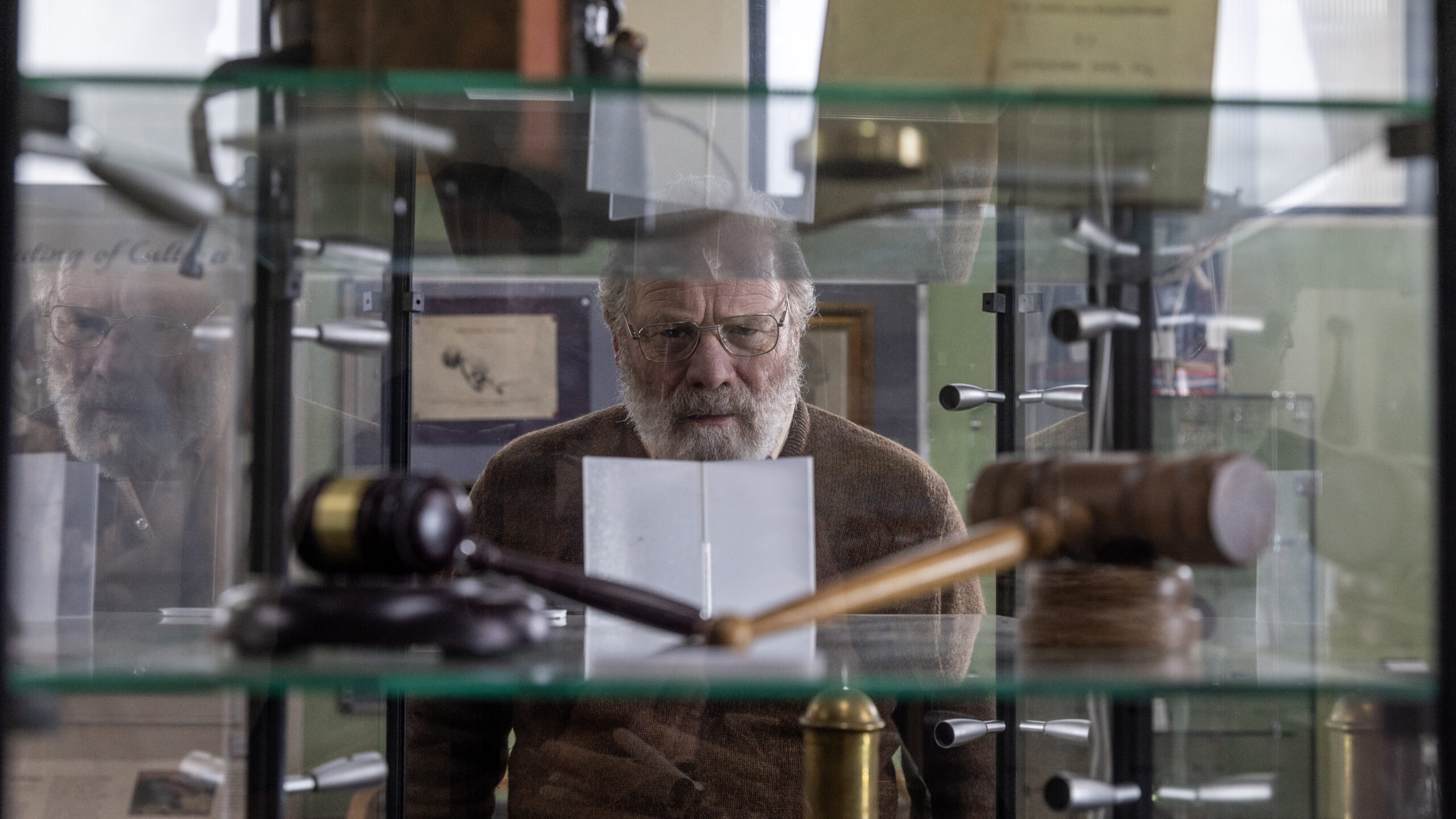
There was another layer to the experience. It turned out that the man in the grave was a captain in the British Army who died in Trinidad when Great Britain “took over Trinidad, basically as part of the empire, so there’s this piece of uncomfortable truth, part of our history, that’s been replaced,” Dunn highlights. “He will forever be Voldemort now, and people won’t really read the fact that he was part of a conquest and British imperialism in Trinidad. So, that was interesting to me, the juxtaposition of those two things. What is fantasy, and what are the stories we tell ourselves? And history is a fantasy as well, in its own way.”
About Scotland’s history, Dunn shares how it often gets viewed through its relationship with England. “We’re a smaller nation, neighbored by a larger, more powerful nation, and we see ourselves as being conquered culturally, but our national identity is tied up in egalitarianism and the [theme] of, ‘We are not like them. We didn’t do those imperialist things or anything like that’,” he says. “We tell ourselves that we are working-class, and we care about the common man. But when you travel around, there are Scottish names, such as street names. So, of course, we did participate in conquests. But it doesn’t really fit our national identity.”
Concludes the filmmaker: “There were things that I grew up believing about Scotland, about certain figures in Scotland who, I was told, were heroes. And then that went under the microscope at some point, leading [me to] view them in different ways, which is also not always a comfortable thing.”
Dunn is very happy to have Mullan as the star that the film is anchored by. “He’s a really cool guy. I feel really lucky and fortunate that he agreed to do it,” the director tells THR. “He’s such a great, great actor. Ken Loach’s My Name Is Joe was the first film of his that I saw as an undergrad. And, like everybody, I was blown away by that performance.”
What was it like to work with Mullan, who has experience with fantasy thanks to his role as the dwarf King Durin III in the Prime series The Lord of the Rings: The Rings of Power. “He likes to improvise a lot, which was fun,” Dunn shares. “He has ideas that are always better than what I’d written. And because he’s Scottish and has personal experience of these kinds of TV shows, he really understands it all as well.”
By the way, is Dunn a Game of Thrones devotee? “I’m not a big fan. When I was a teenager, I really liked The Lord of the Rings,” he tells THR. “I watched the first season of Game of Thrones, but I’m not a massive fan, and I was never into Harry Potter. My perspective on it was more from a lot of people coming to Edinburgh dressed up. There are a lot of shops that are Harry Potter related and seen. While I am not a massive fan, I do find it interesting.”
What he found “absurd” and “fascinating” was how, for example, in Northern Ireland, after the production of Game of Thrones there, “they do location tours and stuff like that,” the filmmaker highlights. “I was more interested in the sociological aspect. Natives are welcoming this and absorbing it as part of their own to do tourism and more.”
The White Stag of Emberfell, the fantasy series that he made up for The Fall of Sir Douglas Weatherford, plays on how, even with his basic knowledge of such franchises, Dunn noticed how they can “often be kind of generic.” But he wanted to be respectful to fantasy fans. “The film is poking a little bit of fun, but it’s not meant to be mean-spirited,” he emphasizes.
Dunn also thought up the historic character of Sir Douglas, so you won’t find entries on him in history books or blogs. “Like the fantasy TV show, he’s an amalgam of multiple things,” the creative tells THR. “In Scotland, we’re proud of our inventions, because during the Scottish Enlightenment, we had an outpouring of ideas and creations in the 18th century. So, he is an Adam Smith, David Hume kind of guy, but completely made up.”
The challenges for Kenneth start when he needs to dig a bit deeper. “He’s so confident and sure that his beliefs are the right beliefs, and he has never been challenged,” says Dunn. “Just the fact of them being challenged a little bit throws him into this existential crisis. He’s lost.”
Viewers may well be familiar with that feeling, with the director mentioning the “culturally tumultuous past decade with a lot of shifting things, a lot of perspectives changing, and a lot of things being challenged.” And he offers: “You can have an opinion on the virtues of that, but I felt like we could be in danger of potentially losing our humanity.”
Does Dunn have new projects or ideas lined up? He shares that he has been writitng during a long editing process for The Fall of Sir Douglas Weatherford, including pickup shots. “I did have time. I’ve written a couple of things,” he tells THR. “One is set in the late 19th century. That one may be a bit ambitious, budget-wise. It’s about another man going through a breakdown, with identity and guilt [playing a role]. Another one is set at the Y2k turn of the millennium and has a character who thinks he is being watched by a satellite and gets involved in a conspiracy group in the Netherlands. So, yes, I’ve been thinking about and writing a couple of ideas. I’m just trying to be creative and keep the juices flowing.