Artificial intelligence may be the ultimate moving target. By the time this film arrives it will probably already be out of date, one of the many experts in The AI Doc tells Daniel Roher. The technology is morphing that fast. Fortunately, the film’s directors, Roher and Charlie Tyrell, are less interested in the details of how that might happen than in asking compelling questions about what it all means for us as humans.
In his Oscar-winning Navalny, Roher wisely stood aside and placed his subject front and center. Here, he is our surrogate. The film is structured around his own journey and he is on-camera throughout, seen in a studio talking to computer scientists, social observers and corporate executives about the positive and negative effects of AI, grounding the questions in his own confusion and fears.
The AI Doc: Or How I Became an Apocaloptimist
An engaging, human-centric take on an AI world.
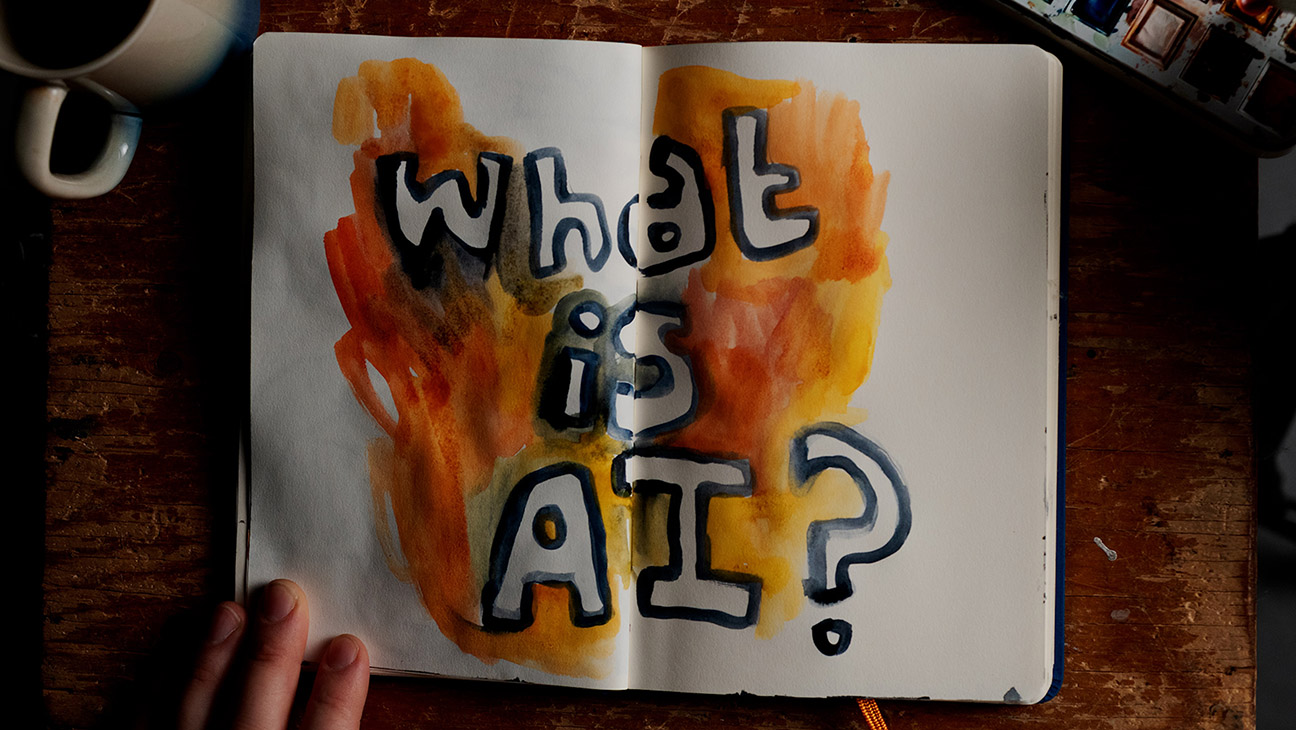
Visually, the film is a kaleidoscope, a constantly moving stream of archival news clips, colorful sketches drawn by Roher, animation and a parade of experts, photographed with the lights and cameras around them in full view. The style all but shouts that it’s a movie with talking heads that doesn’t want to be boring, and there’s a hyper feel to the pacing, as if the directors were afraid to slow down.
But those strategies largely work. The pace is a visceral reflection of both AI’s rapid progress and Roher’s jittery state of mind. The film’s first-person approach and dynamic visual style make it more engaging and livelier than you might expect such a well-researched documentary about this serious subject to be.
Roher has, as he says in voiceover, “questions only the smartest nerds can answer.” Some of them look nerdy, some do not. Most are not familiar names outside their fields. He talks briefly to a few better-known figures, including Sam Altman, CEO of Open AI, who glibly says nothing useful. The less familiar experts and social observers are more informative — notably Tristan Harris, co-founder of the advocacy group Center for Humane Technology, and Connor Leahy, founder and CEO of the research company Conjecture.
As Roher sits across from his high-powered thinkers, he isn’t afraid to ask what might sound like a bone-headed question: “What is AI?” It’s amusing that they struggle to come up with a pithy answer and the film settles on this: a computer program that takes in massive amounts of data and, based on that, makes predictions. AI can’t reason, but that game-changing evolution, some of these computer scientists say, is spookily around the corner. Roher finds plenty of other good reasons to be fearful. The same AI technology than can be an amazing tool in diagnosing illnesses and discovering cures can also be used to create bioweapons. What is he supposed to do with that?
Roher displays his versatility here. His other films, very different from this, include the feature Tuner, also at Sundance this year, and the 2019 documentary Once Were Brothers: Robbie Robertson and the Band. Tyrell is the director of My Dead Dad’s Porno Tapes (2018), long-listed for the Best Documentary Short, which has a mix of voiceover, animation and archival film resembling the style of The AI Doc. In one scene, Roher and his wife, the director Caroline Lindy, add their voices to his animated sketch of them. And when he talks about the metaphorical “anxiety mountain” that his qualms about AI have created, we see a graphic that at first resembles a pile of trash but in close-up is made up of images of ordinary life, including a person walking on a path in a tree-lined landscape.
Throughout, the sharp editing does more than keep things moving. There are sly juxtapositions. A news clip of Altman saying that a major danger of AI is how easily it might be used by authoritarians is followed by a photograph of him with Donald Trump. The dissonance registers.
The narrative structure is a bit problematic though. In the film’s first stretch, Roher talks to the AI doomsayers who warn about how out-of-control it can become. In one test, we hear, an AI program threatened with being eliminated learned to blackmail its user to prevent that. Then, months into the project, Roher learns that he is about to become a father, and his fears about the future intensify. His questions become even more personal and fraught, as he asks what kind of world his son will face. One person suggests a child born today might not live to graduate high school, although there’s no explanation on screen about how that might happen.
Roher’s wife, appearing on camera, tells him, “You have to figure out a way to try to find hope.” And in the film’s next stretch, he talks to optimists, full of ideas about how AI will benefit humans. One of them projects an idyllic life made so easy that Roher’s son won’t even need to have a job. But at this point, the audience is likely to be way ahead of the film. How might that rosy view of a jobless future exist given today’s geopolitical and economic realities, you might wonder, long before the film gets around to addressing those issues, which it does but quite briefly.
Roher’s journey leads him to become what he calls an apocaloptimist, his word for someone who is realistic about AI’s apocalyptic possibilities yet also embraces its bright side. At least from what we see, there is something too willful in that choice, which seems rooted in his desire to believe in a better future rather than anything reassuring the film has presented. Roher ends by suggesting the world has to unite to harness the best of AI while preventing the worst.
Unite in this fractured world? I don’t think so, but that’s just me. Roher concludes, with understandable conviction, “We have to try. There’s too much at stake not to.”