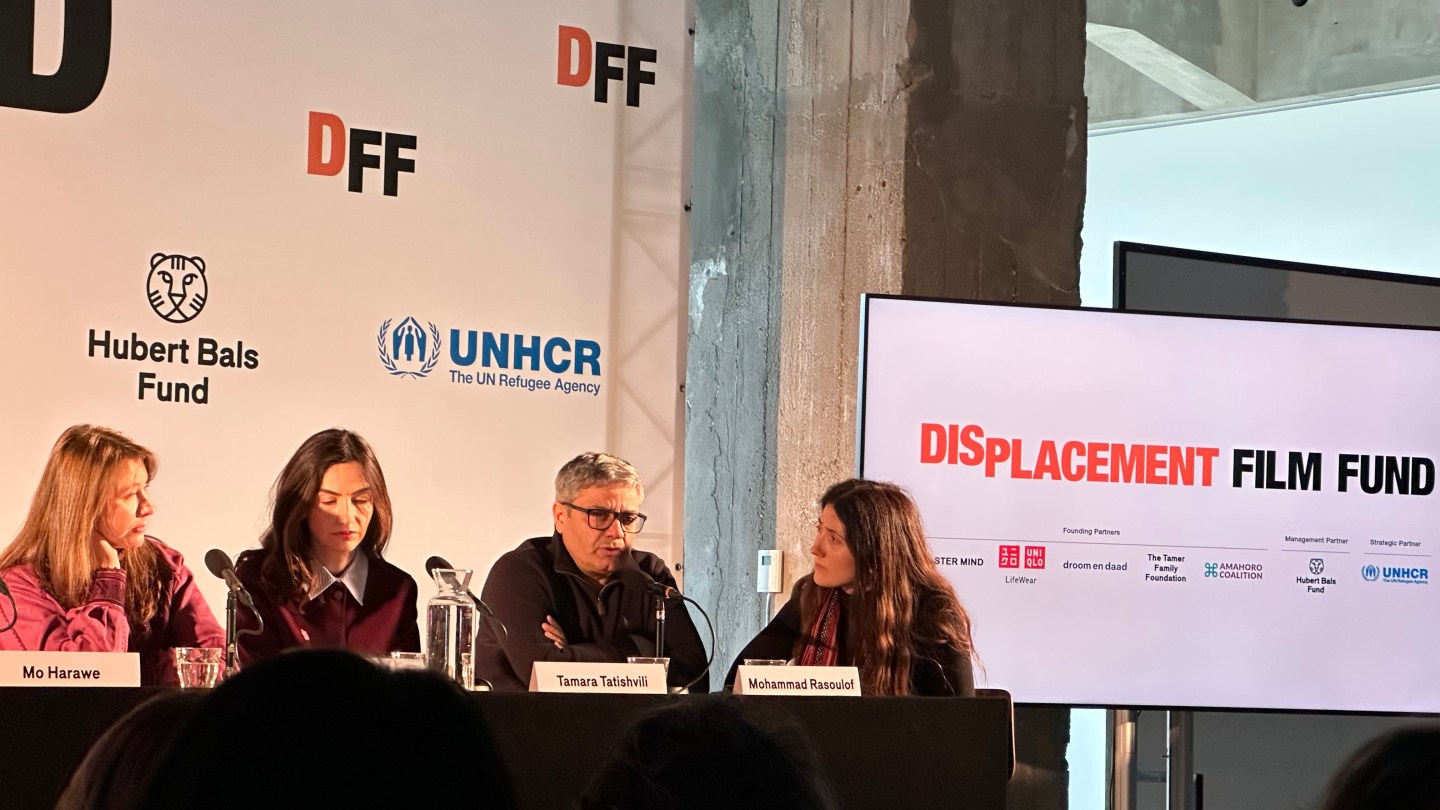
Iranian auteur Mohammad Rasoulof (The Seed of the Sacred Fig, There Is No Evil) was visibly emotional when he addressed the violent crackdown against protests in his homeland in Rotterdam on Friday.
“I’d like to take the opportunity to condole [with] the people of Iran about the mass murder that the Islamic Republic has committed and express my sense of deep shared grief with them,” the filmmaker said.
Rasoulof made the comment, via an interpreter, during a press conference in the Dutch port city following the world premieres of the first five short films made by him, as well as directors from Syria, Afghanistan, Somalia and Ukraine, with grants of €100,000 ($120,000) each from the Displacement Film Fund. The scheme was unveiled last year by Cate Blanchett and the International Film Festival Rotterdam (IFFR)’s Hubert Bals Fund.
The fund-supported short, which Rasoulof wrote and directed, is the 39-minute-long Sense of Water, which stars Ali Nourani and Behnush Najibi. It tells the story of an Iranian writer in exile who tries to come to terms with a foreign language, namely German. In it, he must rediscover love, anger, joy and sorrow to be able to write again.
The protagonist’s journey echoes Rasoulof’s personal journey. In 2024, Rasoulof had to flee his home country to evade an eight-year prison sentence. Sacred Fig won a special jury award at the 2024 Cannes Film Festival and was in the running for the best international feature Oscar, submitted by his new home, Germany.
“Since leaving Iran and coming to Europe, it was an open question for me, but also somehow uncharted territory, how it would be to work to make a film as a filmmaker in exile, in a new culture that I did not know very well,” he shared. “I didn’t know if it was at all possible to create a connection between my past and my culture and the split second I was living in, the present, and tell a story that would be interesting for an audience anywhere in the world.”
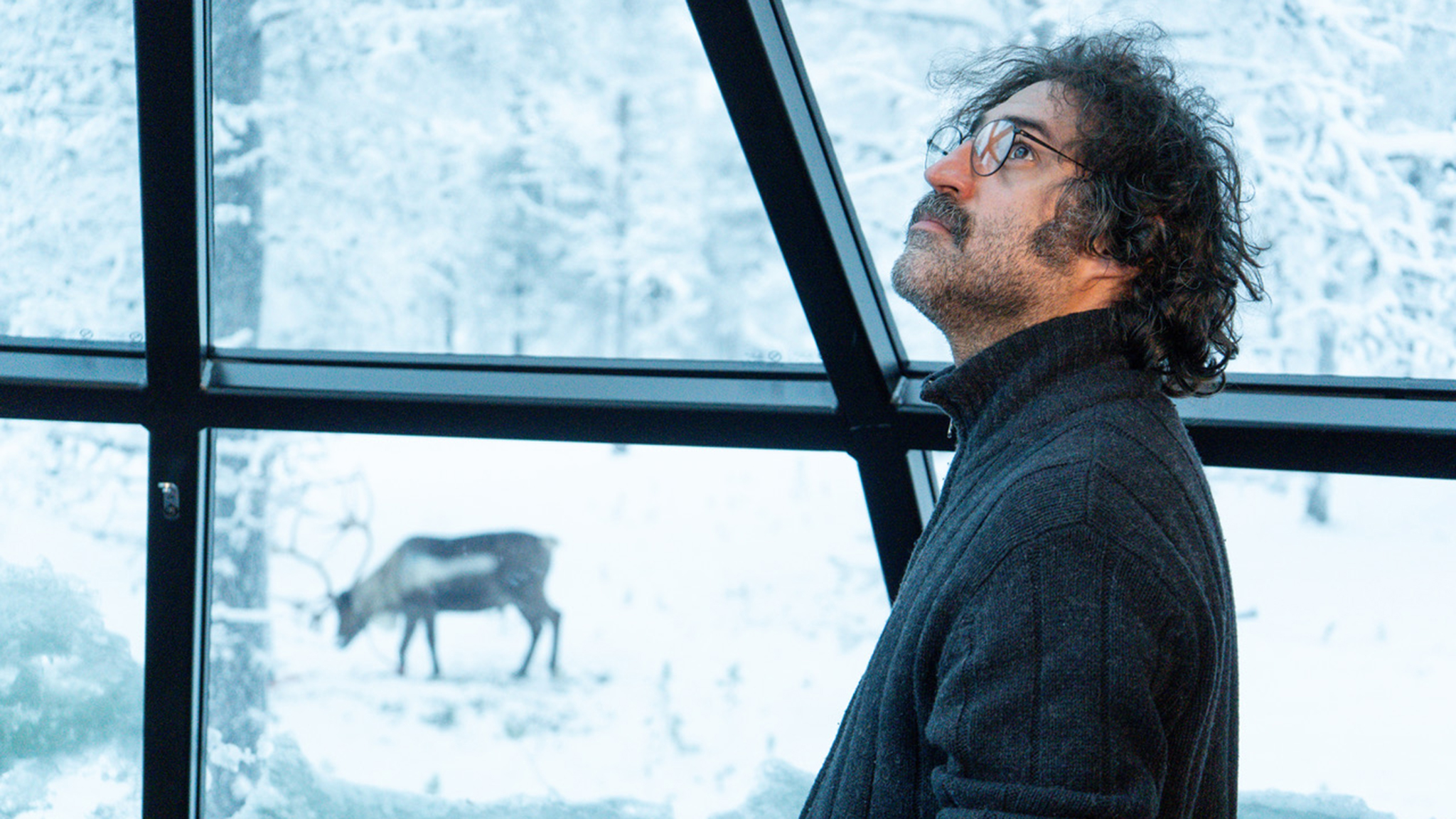
Rasoulof said his focus shifted to the emotional weight of language itself. “What I really started monitoring and researching was the emotional value of words and the distance — the gap between understanding a word and feeling it. I really wanted to share this feeling with everyone in the world who is living in a similar condition and show them that, yes, we can break the wall of language and pass from understanding the meaning of a word to experiencing the feeling of a word in a foreign language.”
Rasoulof closed his remarks by shifting the focus back to Iran, telling the Rotterdam crowd: “Nonetheless, I did feel that some things are more important, higher, beyond words and feelings, [namely] what is happening in my country at the moment.”