Gore Verbinski has been in director’s jail for most of the past decade, following the back-to-back bombs of The Lone Ranger and A Cure for Wellness. But anyone with fond memories of the retro slapstick antics of his under-appreciated 1997 debut, Mouse Hunt, the sleek suspense and scares of his U.S. remake of J-horror insta-classic The Ring or even the helter-skelter energy of his Pirates of the Caribbean franchise starter should be happy to welcome him back.
Good Luck, Have Fun, Don’t Die doesn’t quite deliver on the sardonic promise of its catchy title, but its appealing cast and Verbinski’s flair for kinetic action set pieces make it a reasonably entertaining entry in the canon of gonzo sci-fi comedies fueled by existential dread about the dystopian techno-dominant reality we’re already trapped in. What holds the film back most — aside from its indulgent run time of two-and-a-quarter hours — is a script by Matthew Robinson that’s only occasionally as funny or fresh as it should be.
Good Luck, Have Fun, Don’t Die
Time-out from screen time.
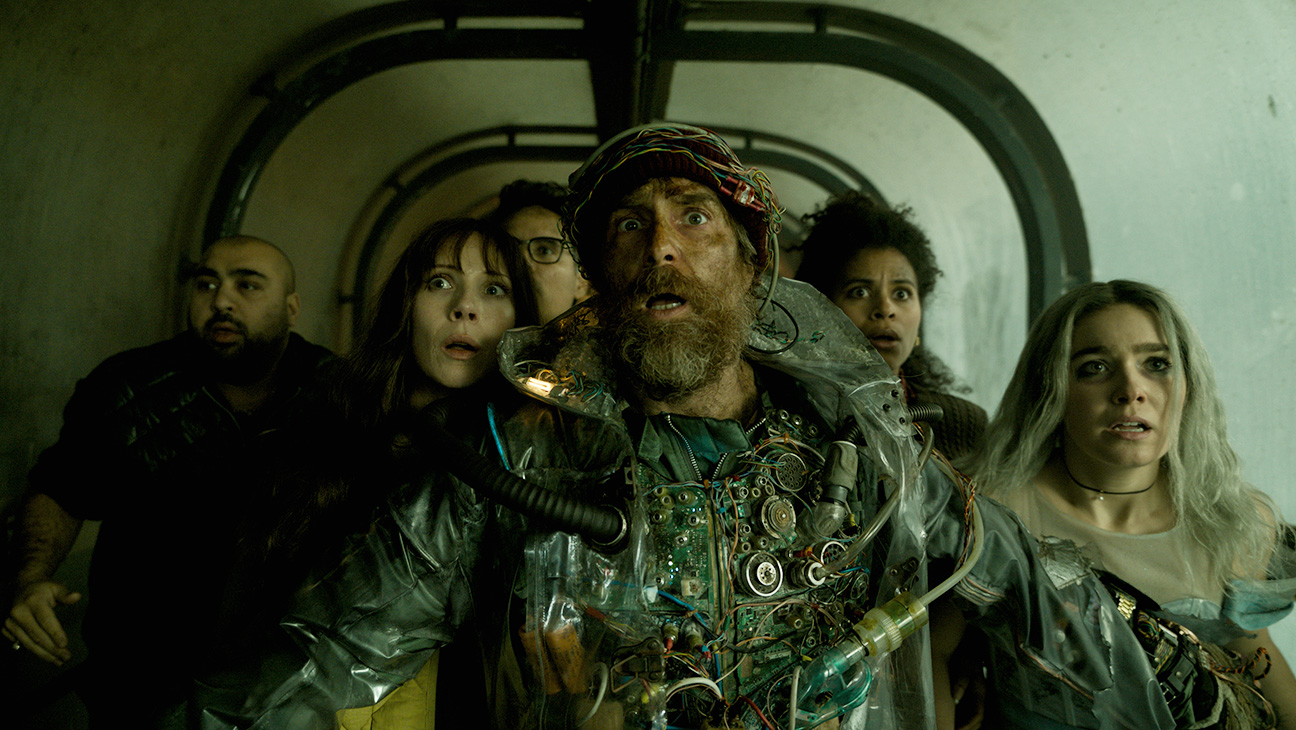
In a role tailor-made for his earnest goofball charms, Sam Rockwell plays an unnamed man who steps into the Norms diner on La Cienega Boulevard. one night and announces to customers and staff: “This is not a robbery. I’m from the future and all of this is going to go horribly wrong.”
Leaking water from his DIY apocalyptic survival suit, the time traveler holds the bored Angelenos’ attention for hardly a minute before they return to their phones, immersed in cat videos, gay hookup apps and videogames. But he’s been through this scenario 117 times before and has developed sufficient command to make himself heard as he informs them that social media and selfie culture have robbed them of their dignity, turning them into children. He also has his finger poised over what he claims is the detonator to a bomb strapped to his chest.
Before the situation becomes irreversible, he must assemble the exact configuration of people from the diner needed to save humanity. While the multiple previous attempts have given him an advantage, the odds remain steep and he’s up-front with his team of volunteers and reluctant draftees that some of them will not make it to the end of the mission. But he warns the rest of the Norms crowd that all of them who stay will perish.
If that doomsday scenario sounds like the set-up for a video survival game, that’s more or less what it is — with a protagonist that might be legit or bonkers — though Verbinski and Robinson expand the parameters by detouring into backstories of the key recruits.
Future Dude has relived this night often enough to eliminate dead weights who will be of no use, so he welcomes a new face in Susan (Juno Temple), a sad-eyed single mom who’s the first to step forward; her commitment to the cause, even before she fully understands it, will become clear a little later.
Another volunteer who also wants in, Ingrid (Haley Lu Richardson), is a bedraggled punk wearing a ratty princess costume for reasons also to be disclosed. The post-apocalyptic recruiter rejects her negative energy but when some Cholula hot sauce leaps off a table and an accidental spin-the-bottle turn points right to Ingrid, he allows her to join the group.
The rest are mostly people talked into being a part of the humanity rescue team before they know what’s happening — disillusioned high school teachers Mark (Michael Peña) and Janet (Zazie Beetz); blowhard Uber driver Scott (Asim Chaudhry); assistant scoutmaster Bob (Daniel Barnett); and confused diner customer Marie (Georgia Goodman), who just wanted a slice of pie.
At least one of them won’t even make it out of Norms, let alone to the crucial destination in time to carry out the plan, with obstacles including trigger-happy cops, masked mercenaries, a homeless man wielding a whopping big knife and various other algorithmic aberrations. One of the latter is a giant man-eating, glitter-pissing cat-centaur crossbreed, but don’t even ask.
As disarming as Rockwell is with his wry balance of doofus, savant and wise-ass, and as capable as Verbinski is at keeping the brushes with death coming at a sustained pace, the movie feels most original in its flashbacks.
The first is to Mark and Janet four days earlier, when he’s thrust into the nightmare of substitute-teaching 11th grade English at the same school where she works. Faculty are constantly taking sabbaticals for stress management, including the principal. Mark sees why when his students barely look up from their phones while scoffing at his plan to teach Anna Karenina. But when he discovers that the entire class is mesmerized by the same shuffle of images, he makes the mistake of touching one student’s screen, which has scary school-wide repercussions.
Next is Susan, who arrives at her son’s school in an emotional state when word of a shooting gets out. But soon after, she’s disturbed to discover that kids lost to gun violence — including the shooters — are being cloned and reunited with their families, often to be eliminated again in the next school shooting. The physical replication is exact, though the glitchy personalities are a work in progress.
The discount rate for a clone with ads (like a Disney+/Hulu bundle!) is a nice touch, but while satirizing the ubiquity of school shootings might be the screenplay’s ballsiest move, Robinson rarely goes beyond the obvious in terms of social commentary. Hearing the mothers of murdered offspring (or their clones) complain about the traffic after they got the call from the school should be more chilling.
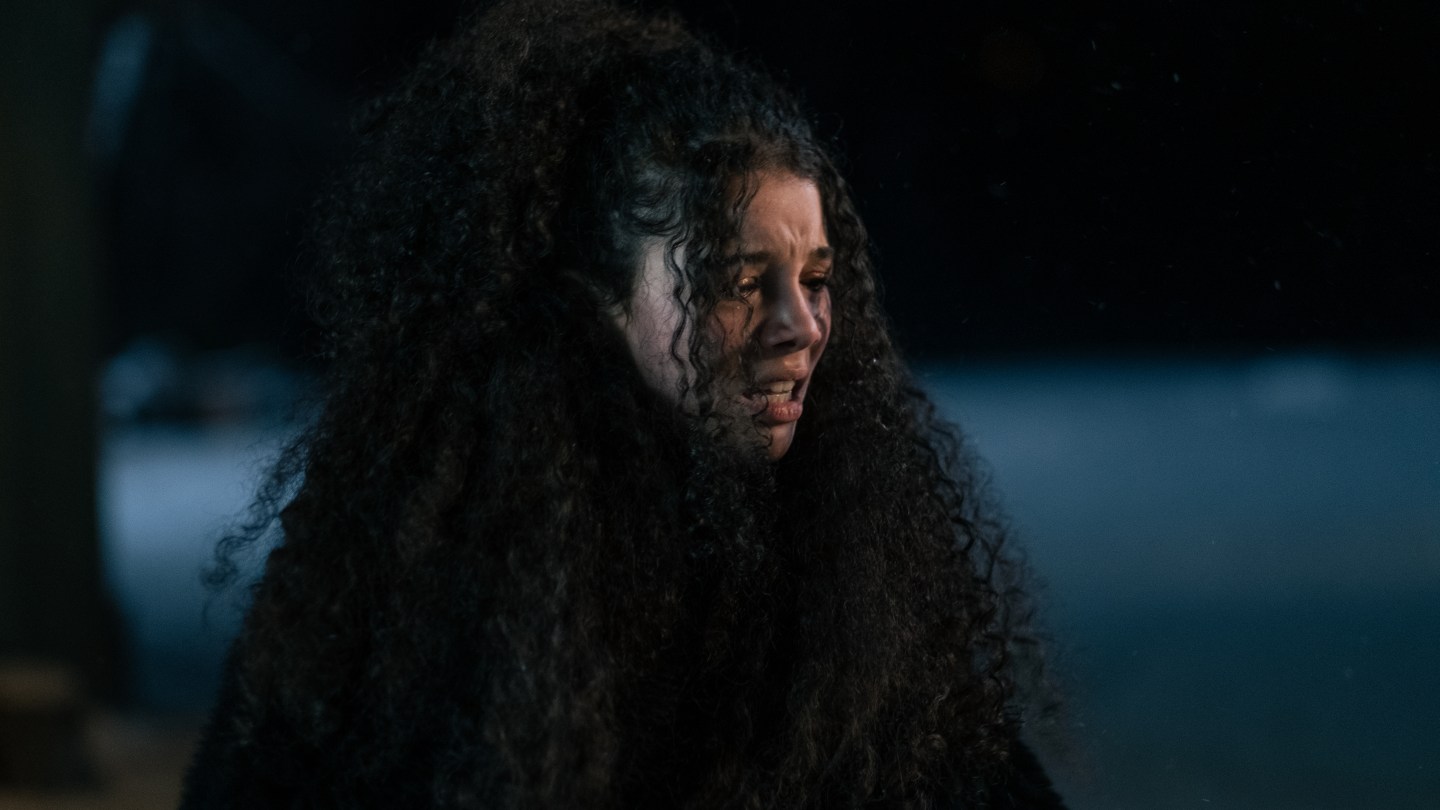
Ingrid is arguably the character having the most difficulties with the contemporary world, where the princess getup is part of her job. Prone to nosebleeds, she’s allergic to cellphones, Wi-Fi and other personal devices. She seems to find an escape from her anxieties when she meets sweet pizza-delivery stoner Tim (Tom Taylor) and they make a tech-free home together — until a mysterious parcel arrives containing a VR headset, which gives Tim the idea that there might be preferable realities to choose from.
The man from the future drives his dwindling crew onward to face the final challenge, involving yet another sickly-looking child (Artie Wilkinson-Hunt) who’s had way too much screen time and now holds the fate of the world in his keyboard-friendly fingertips.
The familiarity of that trope and the accompanying maze of coding in toxic tech culture movies makes the final act a bit pedestrian, even with the big reveal of a surprise connection between two key characters. But Verbinski juices it up with some cool menace in snake-like cables and a vicious army of robotic toys, which might be the director’s winking homage to Barbarella. Or about 800 other sci-fi and horror movies. The vibe and verve are like Scott Pilgrim vs. the World meets Repo Man, but the material needed an extra punch-up at script stage.
With lots of nifty camerawork and interesting framing, DP James Whitaker’s visuals lean into the bleak grubbiness of a world in which everyone is too glued to their personal screens to look around them. And Geoff Zanelli’s score ranges effectively from ominous electronica to fun orchestral bombast. (Don’t be surprised to find yourself shout-singing along to the title in the raucous end credits theme.)
Rockwell as always brings welcome eccentricity, but he’s let down by dialogue without much spark. That leaves room for some of the supporting performers to be more memorable — notably Temple, who makes the personal stake of Susan’s investment quietly affecting, and Richardson, whose character is the most aware that no fix is going to permanently hold off the AI threat. Ingrid’s angry cry of “Fuck you, future!” is a rousing moment. Beetz is shockingly underused, but it’s good to see Peña getting to play some low-key comedy.
The movie’s point is that there’s nothing scarier than reality, and any supposedly happy alternative that technology can provide is not real. The script spells out the enticement of AI offering “constant distractions, memorable characters, challenges and obstacles to overcome, exciting stakes that matter and a satisfying ending.” But the reminder that it’s all a lie needed to be delivered with sharper teeth instead of tame video game plotting and vague allusions to the dreaded multiverse.