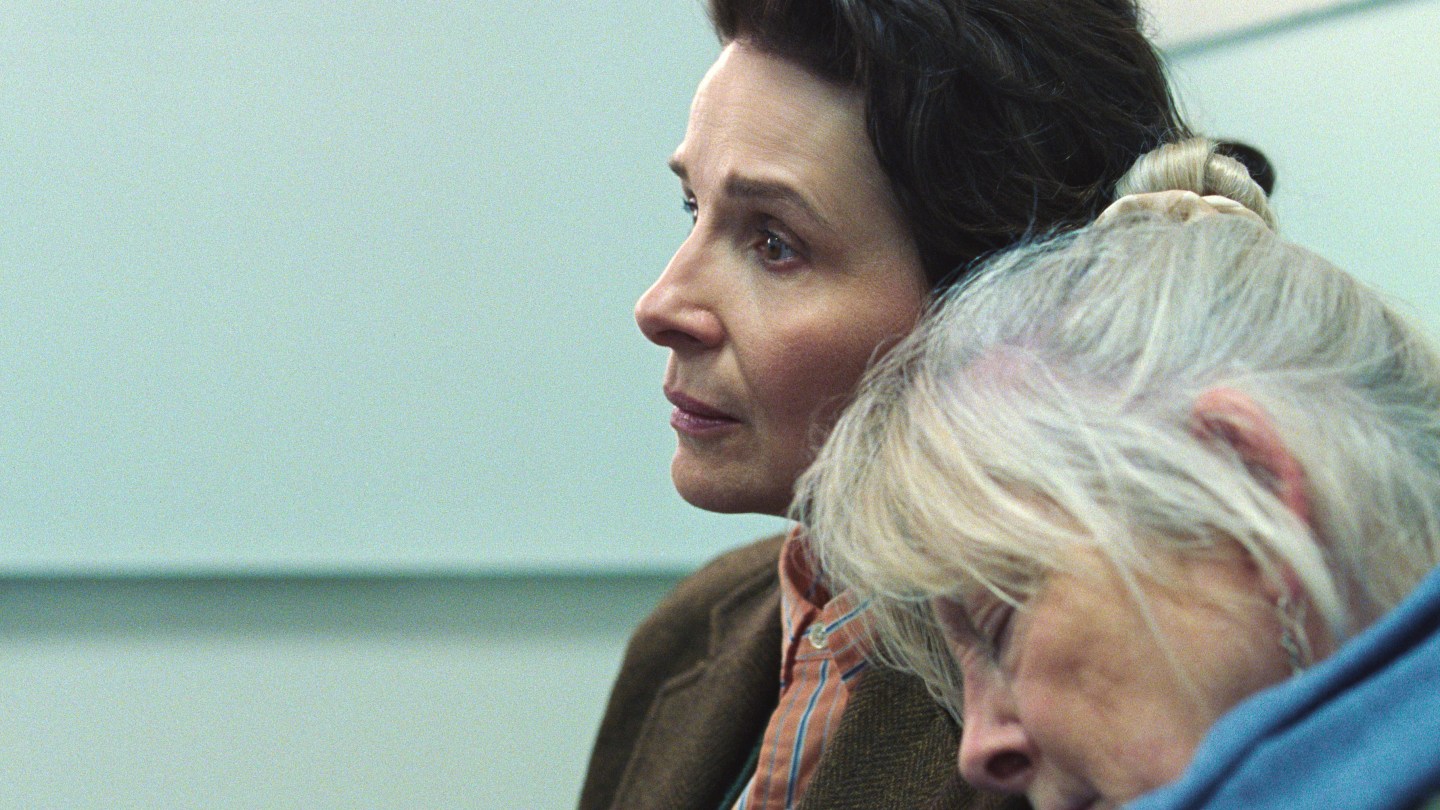
Juliette Binoche has spent four decades embodying the restless intelligence of French and European cinema, moving effortlessly between auteurs and emotional registers.
From the feral, ecstatic intensity of the homeless, fiercely romantic painter Michèle in Leos Carax’ The Lovers on the Bridge (1991), to the raw, grief-stricken interiority of the widowed Julie in Krzysztof Kieślowski’s Three Colors: Blue (1993); from the mysteriously mercurial Elle in Abbas Kiarostami’s Certified Copy, to the deeply sensual but cautiously restrained 19th-century cook Eugénie in Anh Hung Tran’s The Taste of Things (2023), Binoche as constantly redefined screen femininity on her own terms.
If her turns in Hollywood productions have been more slight, more soufflé than cassoulet, they remain delectable. She is effortless charm as the confiseur tempting self-denying puritans in Chocolat (2000), or as the sweet and saintly nurse comforting the war-scarred in The English Patient (1996) — the role that won Binoche the Oscar.
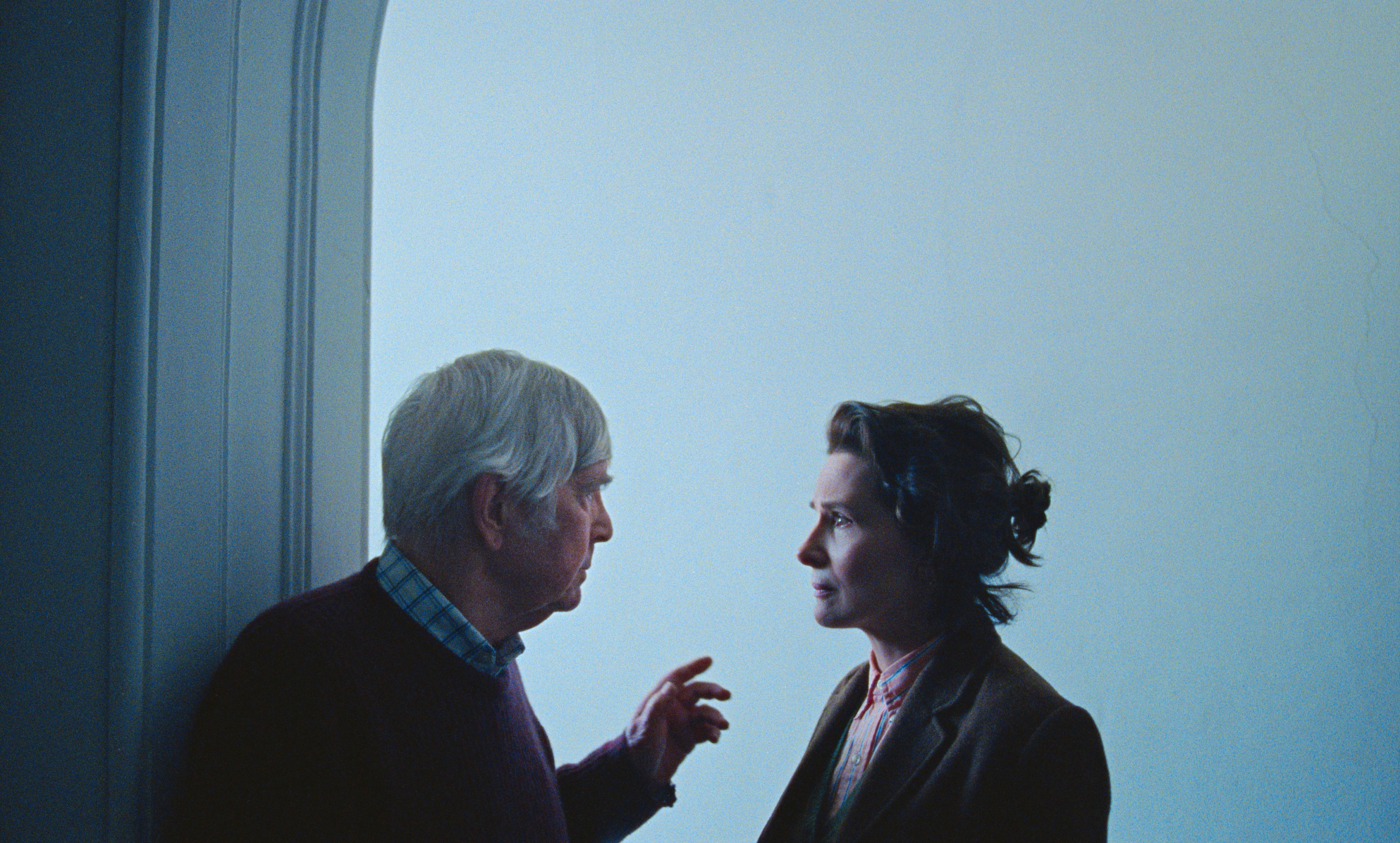
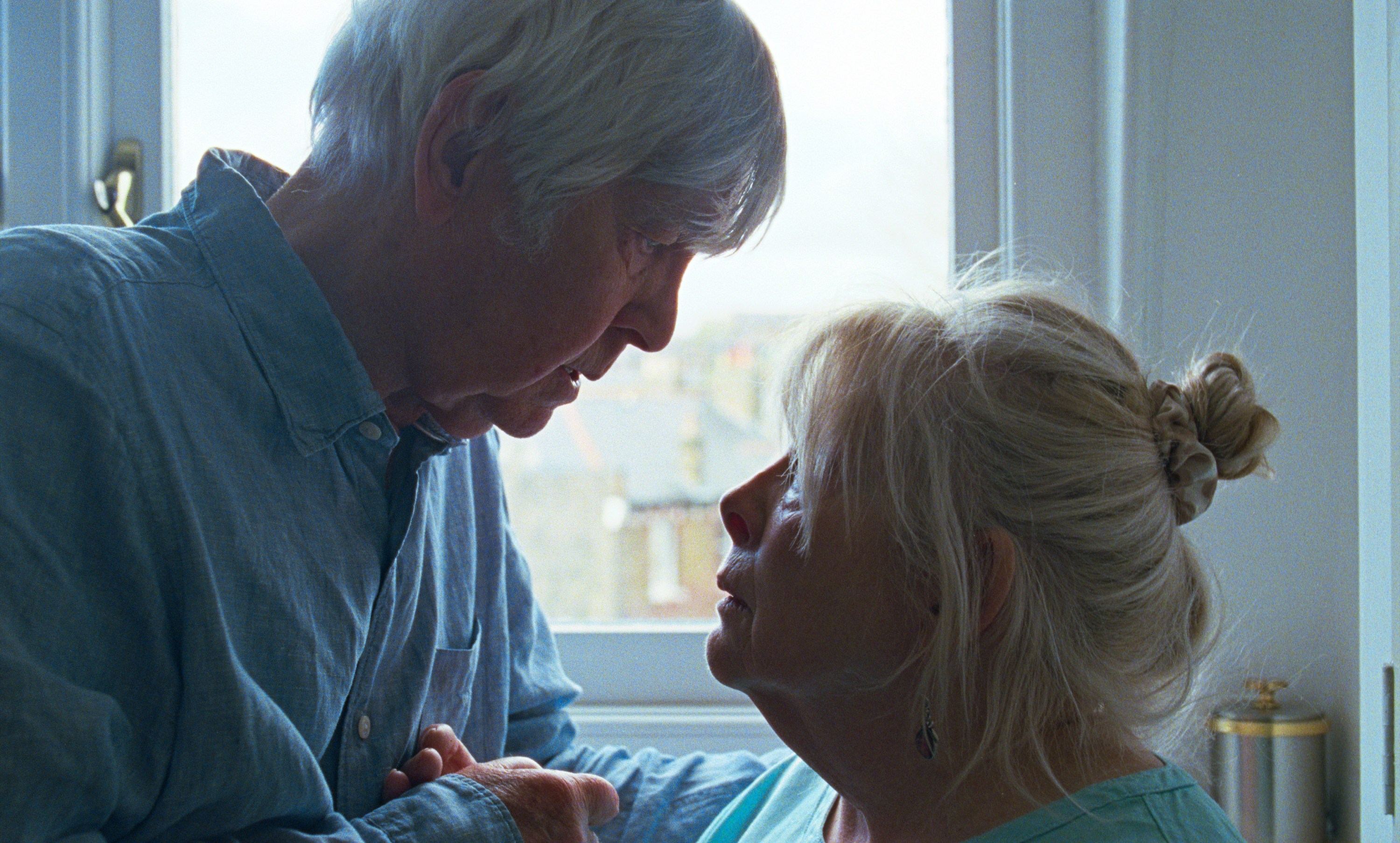
Queen at Sea is something quite different. Binoche plays a quite ordinary woman caught in the quite familiar squeeze of midlife. She is caught between parenthood — as a newly-single mum raising a teenage daughter [Bridgerton‘s Florence Hunt] just discovering her sexuality — and caring for a mother [Anna Calder-Marshall] ravaged by Alzheimer’s, whose husband, her stepfather [Tom Courtney] may be abusing her.
The film finds the Parisian icon navigating council houses, care homes and the unglamorous logistics of social services in contemporary London. It’s as if Binoche wandered onto a Ken Loach set by mistake.
But Queen at Sea quickly reveals itself to be stranger and more unsettling than its surface suggests. Director Lance Hammer, returning with his second feature since his 2008 Sundance breakout Ballast, uses the familiar scaffolding of kitchen-sink realism to probe far murkier terrain: The moral fog surrounding illness, aging and family obligation.
Speaking to The Hollywood Reporter ahead of Queen at Sea‘s competition premiere in Berlin, Binoche discussed aging, bonding with her screen mother over Wuthering Heights, and the importance of European cinema in a world on fire.
How did you get involved in this film and what drew you to this story?
When I spoke with Lance, he was very open about sharing his story and evolving the story together. And the story evolved as we talked and the script evolved. He really wanted to have a collective experience and with his actors.
What I said to Lance was that the story interests me because I remember periods of in my life where I was in between raising the young generation, who are coming out of the house to live their lives, and the parents going downwards, with less mobility, less independence. There’s this middle-aged time as as a human being, where you’re in the middle of these two totally different sides and you don’t know how to deal with it. That’s what happened to me. Lance was interested in that.
I think it’s a quite modern story. With Alzheimer’s, a lot of people have this illness. It’s quite surprising how much this illness has become part of becoming old now.
How did Lance’s original idea and original script evolve as you developed it together?
I don’t remember much from the first draft of the script except that it touched something in me. I shared that with Lance, through emails, and he wanted me to share personal stories and be inspired by them.
What I loved about the story is when you are in this position, and feel responsible for your parent, you make decisions that, in the end, can be the worst decisions. [My character] makes a choice, which she thinks is for the good of her mother. She is pointing out something that doesn’t work and trying to get help. But that suddenly puts her and her mother into this whole system, this social care system, and she loses control. This system, that supposed to take care of people and protect them, all of a sudden becomes a nightmare.
What I liked was that the film pushes questions but doesn’t have answers. It makes you wonder: Where is the solution to this illness within this system? Particularly for people who are a little independent but not totally independent. There’s this in-between time that is so hard, because that’s the time where you can have accidents where things can go out of control.
Our perspective of the characters changes dramatically throughout the film, particularly Tom Courtney, playing your character’s stepfather. In the first 10-15 minutes, he feels like the villain, taking advantage of your mother’s illness. By the end, we’re completely on his side.
That’s also the movement of my character. At the end, I love him. But that’s the transformation my character goes through as well. That’s what I liked about Lance – he’s able to show the complexity of a situation and of characters. Like how my character deals with her own guilt towards how she treats her mother. Even at the end, when you think it’s going to be ok, that things are stabilized, he turns it again into a whole different story.
Your character also changes quite dramatically throughout the film.
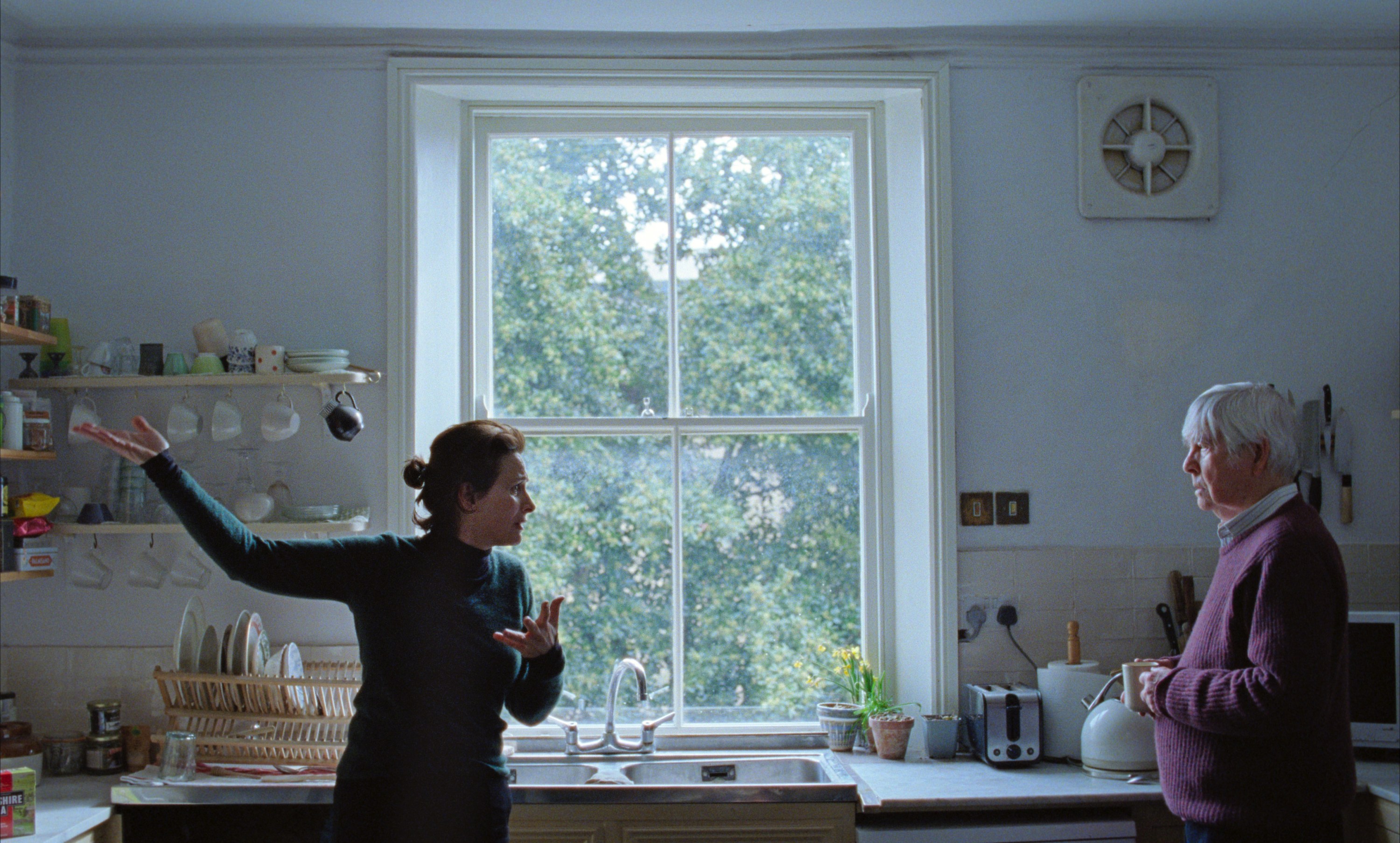
In the beginning, she wants to be in control. She thinks she knows what is good and bad and where to draw the line. Then, bit by bit, she is humbled by what happens. The situation wobbles. She’s also worried about her daughter, who is getting romantically involved and talking about having sex. And my character is worried she’ll get pregnant.
My character thinks she is in control and bit by bit, she understands she’s not. She realizes the decisions she’s made for her mother were not the right ones and, in the end, she feels humbled and more fragile.
You shot entirely on location, right? That is an actual house in London, those are actual care homes, and so on?
Yes, the special thing about this film was that we had two full weeks of rehearsals before we started. In the house and other locations where we shot. All the social and health care workers in the film are real people, they are acting their actual jobs. So we asked them a lot of questions and they gave us a lot of information. We went to every single place where we needed to shoot.
Lance’s way of dealing with rehearsals and the shooting was very accurate. He really wanted to be precise and truthful. And he had to adapt his script, because what he wrote it with the U.S. health care system in mind and the English system is very different.
What was it like working with Tom Courtney and Anna Calder-Marshall, who plays your mum?
It was a joy. We’d have our lunches together. We’d stay alone in the house, when everyone else would go away for lunch at catering, and we’d talk. I knew Tom because I had seen a film with him, 45 Years (2015)a while back, so I was aware of him. Though I hadn’t seen his great body of work in the theater, where he has an enormous presence. Anna and I both played in Wuthering Heights movies, so we giggled about that and exchanged stories. She shot her film [directed by Robert Fuest and co-starring Timothy Dalton] in the 1970s and mine was, oh I can’t remember, sometime in the late 80s [Peter Kosminsky’s version, co-starring Ralph Fiennes, was released in 1992].
Were you aware of Florence Hunt, who plays your daughter, before the film?
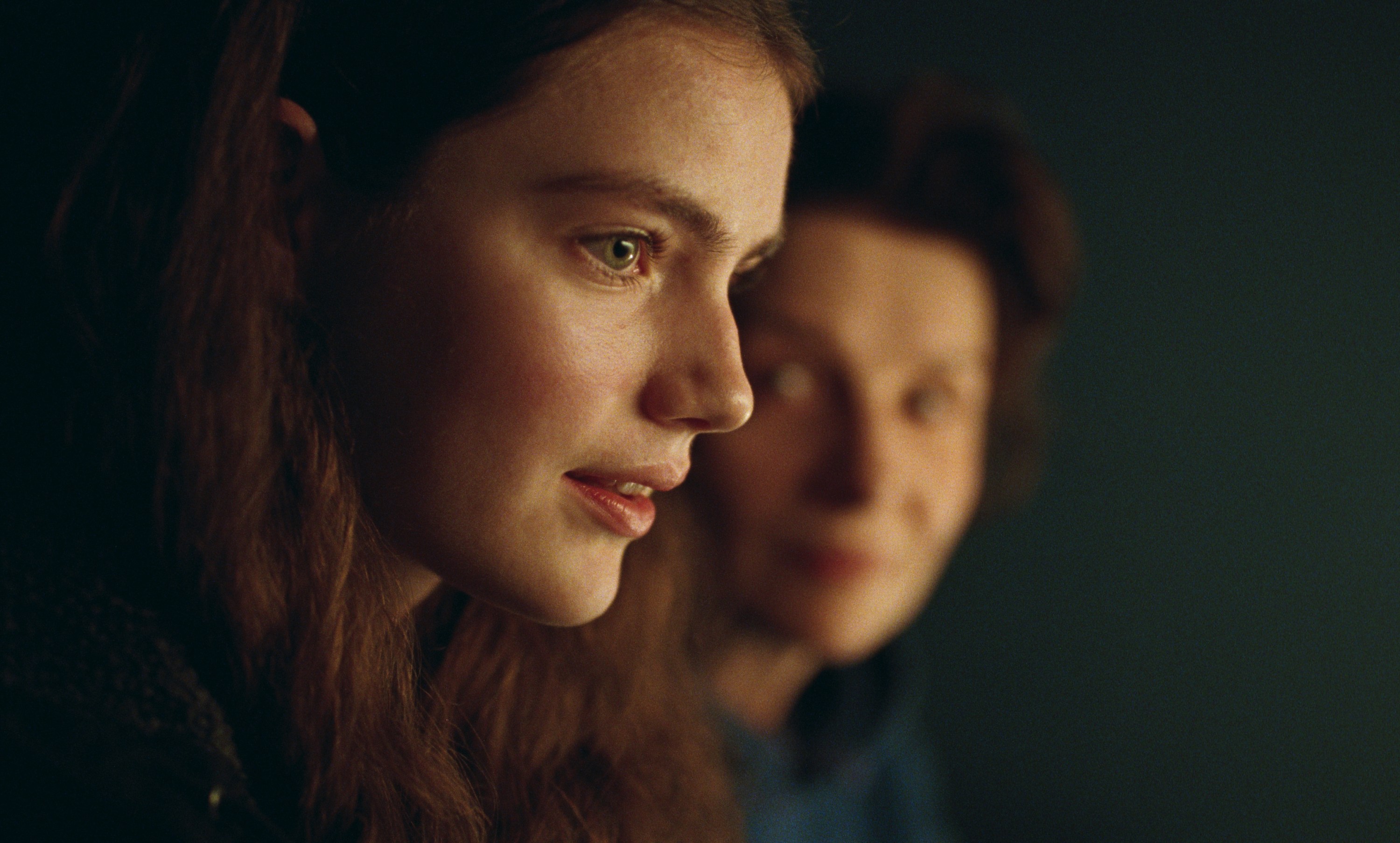
No, I didn’t know her before. What I felt with Florence was she’s an actress with a very genuine way of being. There was no trying to prove something or forcing something. It was beautiful to watch. Also, her relationship in the film with her boyfriend. Lance really wanted to shoot that differently, to draw out the differences between that relationship and that of Tom and Anna’s. With all of the actors, despite their different styles, it was always about being truthful in the moment. That’s something that never changed.
You’re the president of the European Film Academy. This film was a U.S.-U.K. Co-production and even though it’s directed by an American, it feels very European. I can’t imagine a film like this being made in the U.S. studio system.
Making arthouse films, creating art in cinema, is always difficult because you have to have courage, you have to be patient, and you have to fight. You have to believe, and to convince others, that this film needs to exist in the world. There’s an element of resistance that is very important.
For bigger films, in the studio system, because you need to get your money back, people take fewer risks. Then there is the whole factory of people — those who do the special effects, who have a very specific way of shooting. It’s a different world.
I admire Lance, because he mainly produces himself. He chose the places he wanted to shoot and the set design. He decided, with the DP, where to put the camera and how to move it. You felt that every detail was essential. It was so important to him. He rehearsed everything before we shot. So while there’s a danger in the story, in the themes maybe, at the same time, he’s very controlled, very exact. I think he wanted something fragile in the acting, the feeling that at any moment, these people could break.
European cinema is having a bit of a moment. At the Oscars this year, you have European films nominated across almost every category, films as radically different as Joachim Trier’s Norwegian melodrama Sentimental Value, Yorgos Lanthimos’s paranoid sci-fi satire Bugonia and Jafar Panahi’s Iranian-French thriller It Was Just an Accident.
The strength of the European cinema, I think, is in uniting our differences. I was the president of the Cannes festival jury last year. Most of the films we awarded prizes to were European — Sentimental Value, Sirat, It Was Just an Accident, Sound of Falling — and you can see how different they are. You can’t say one is better than the other, because they’re so different. They are all expressions of an internal vision with a lot of people working together with love and care and need and fire.
I have the wonderful hope that European cinema will get more recognition, that the European Film Academy and the European Film Awards will get more attention. In France, for example, the awards aren’t well known yet. Probably that’s why the European Film Academy chose me to be president, to shake the French tree a bit, to make people aware of what’s happening in Europe.
Because I feel Europe is important. Given what’s happening, politically, in the world, Europe is becoming even more important. And cinema is a symbol of Europe of how we can unite through differences. That’s huge and it’s key. With everyone retreating into their own egotism, Europe has to show we can grow together because of our differences. I think that’s very symbolic. And very powerful.
Robert de Niro said something in a speech. I’m going to mix up the exact words, but he said the difference between actors and politicians is that actors try to say the truth and politicians lie. That made me feel good. Because as actors, as filmmakers, we don’t always succeed, but at least we are trying to be truthful.