
There’s a broad diasporic element to this film in terms of representing people from various regions of Brazil. Where did you start with casting?
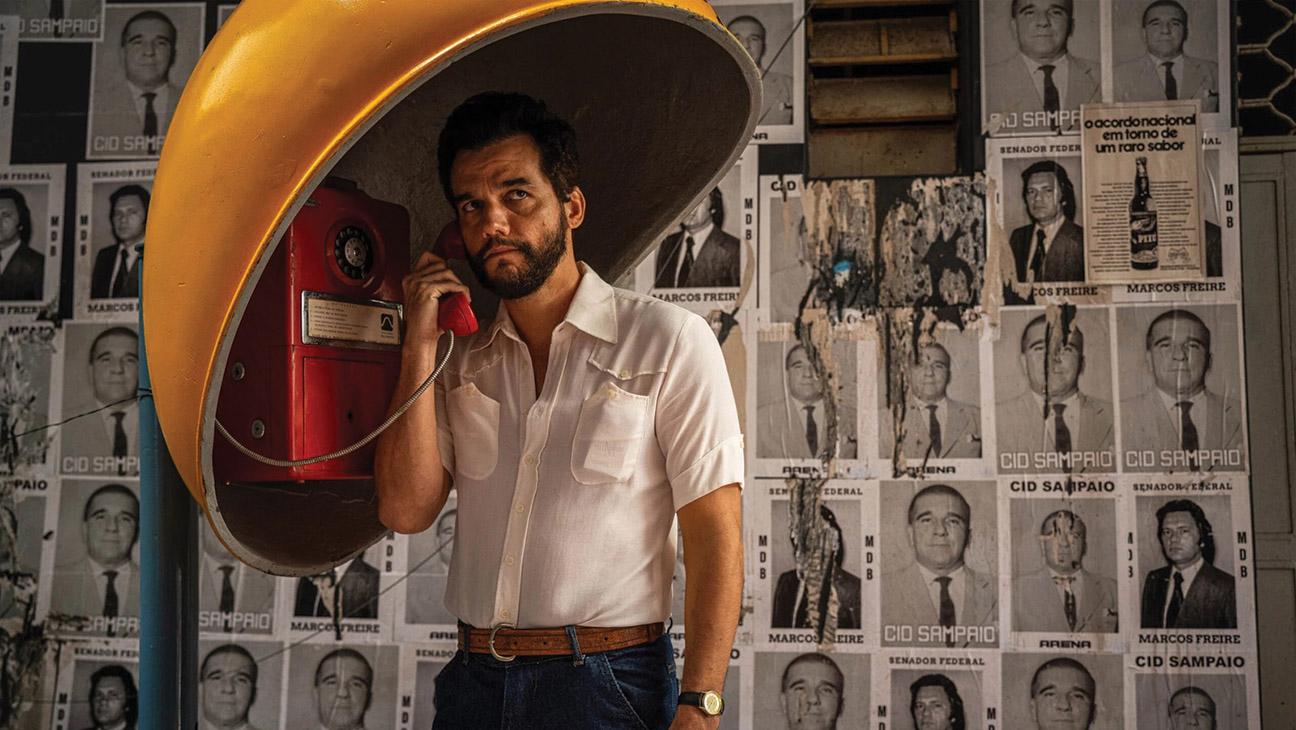
Because the script is so rich in its descriptions, I could feel where people were coming from and who they’re supposed to be. But it’s very rare to do a movie with so many different [identities]. Every character has a dramatic function; they’re making a social commentary. The film is marked with class issues because Brazil in the ’70s had even more inequality than we have now. Kleber [Mendonça Filho, the director] is very radical because he didn’t want to create a clean vibe of the ’70s. In The Secret Agent, there’s this dirty vibe that’s very similar to the ’70s, using the material from his research. It’s like Taxi Driver. Kleber was inspired by that energy, atmosphere, aesthetic.
Did this film being a period piece make casting more challenging?
Absolutely. The thing people told me while I was in the U.S. was, “I love the casting because some of the characters are so imperfect.” Nowadays, [everyone’s] trying to become more perfect. We tried to cast people who would create this human landscape of people who seem real.
Is it true that for a lot of the actors, this is their first role?
It’s less than people think. People think many of them are nonprofessional actors, but they are. They just don’t look like people that we usually see in this kind of picture.
Which role was hardest to cast?
The police chief [Euclides] was a difficult character to cast because there’s something about a 60-year-old guy that used to be poor while he was young but now has this small power position. He’s very corrupt and ambitious, and sometimes even brutal and clever. It’s easy to cast a very obvious person to play this role, but Robério [Diógenes], he has charm. It was interesting to see how this repulsive character was played by this funny and charismatic guy. Sometimes the most difficult thing is to not do the obvious thing, to find a new interpretation for something that’s been done a lot.
This story first appeared in a February stand-alone issue of The Hollywood Reporter magazine. To receive the magazine, click here to subscribe.