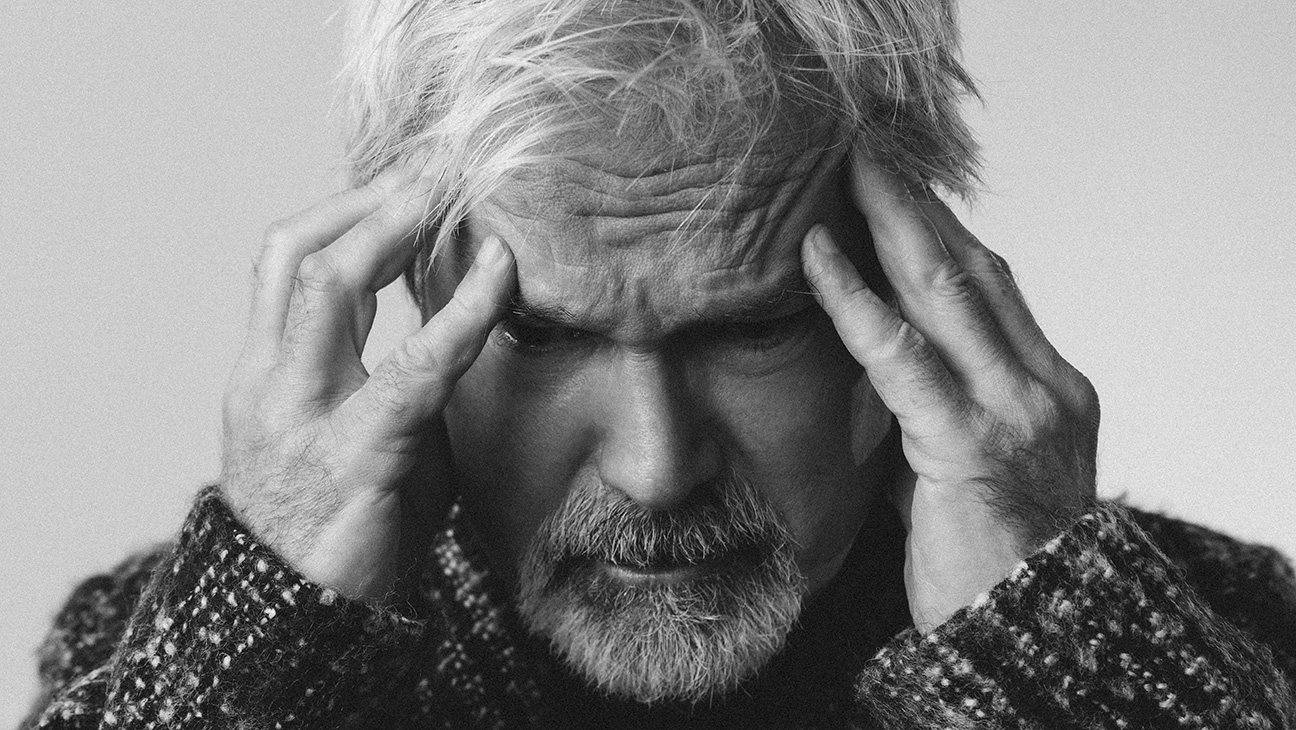
Gore Verbinski has only returned to the big screen after a decade away from directing huge blockbusters like The Pirates of the Caribbean franchise and Lone Ranger.
Now with his first-ever indie pic, the sci-fi comedy Good Luck, Have Fun, Don’t Die, artificial Intelligence has the world’s future on the line when Sam Rockwell, playing The Man From the Future, walks into a Norms diner in Los Angeles one night to ask customers to join him on a journey to save the world from an AI apocalypse.
The diners, much like the audience during the opening scene for director Verbinski’s ambitious satire on this existential threat to humanity, have no idea how this madman raging against the AI machine in an LA eatery would save the world.
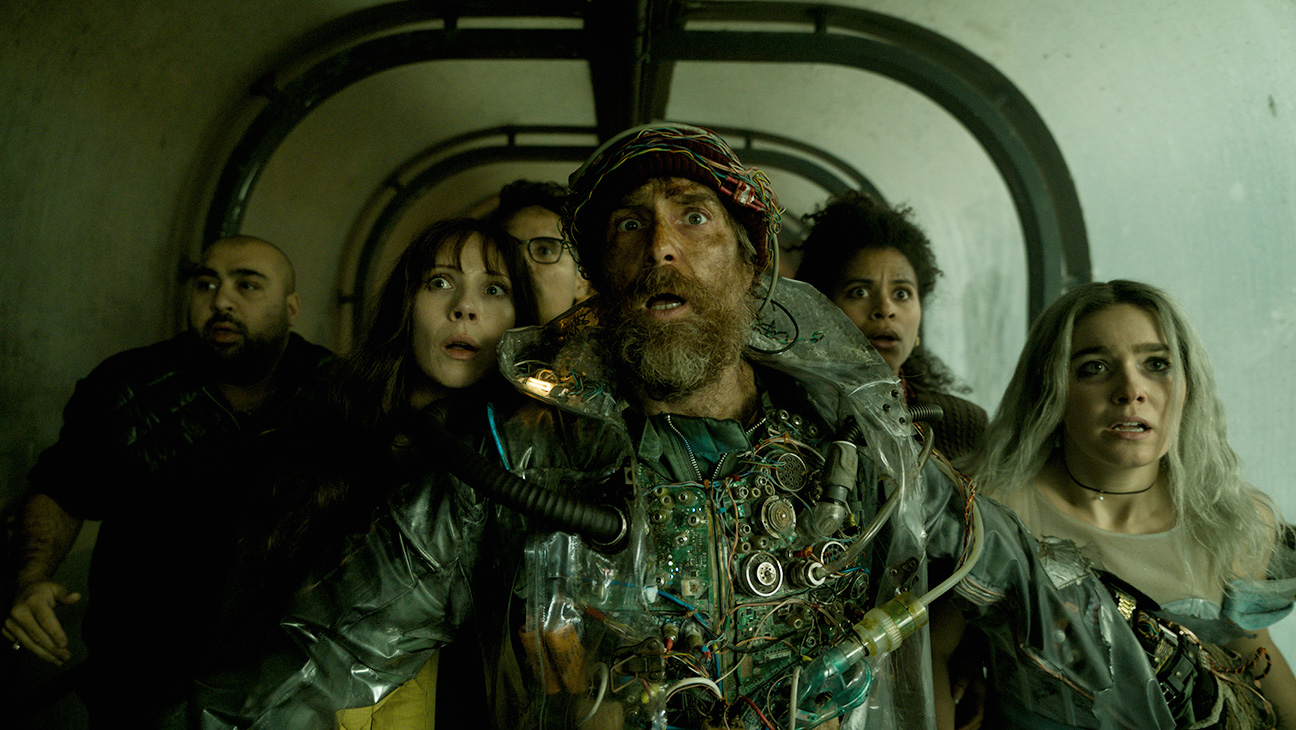
“When you look at this man (Rockwell) coming into Norms, claiming to be from the future, looking like he might have crawled out of a dumpster — that could happen at Norms tomorrow. And yet by the end of that monologue, he’s convincing the patrons to come with him,” Verbinki tells The Hollywood Reporter ahead of a European premiere for his comedic roller coaster ride at the Berlin Film Festival.
What follows is Rockwell and his merry band of misfits on a madcap romp through a dystopian landscape for a showdown with the future’s artificial nemesis. Good Luck, Have Fun, Don’t Die, based on a screenplay by Matthew Robinson, also stars Haley Lu Richardson, Juno Temple, Zazie Beetz and Michael Pena and is produced by Constantine and Briarcliff Entertainment.
Ahead of a Feb. 13 theatrical release, Verbinski talked to THR about his big screen return, the perils and promises of AI running and destroying our lives, and whether women will save the world: “I would say fuck yes. And I think my mom would agree,” he declares.
After being away for a decade with a movie release, how does it feel to be back?
It’s not like I ever stopped, just because there’s not been a film released in that time. I’ve been working daily on music and lyrics for a big animated musical, and breaking down character design and visual effects for an adaptation of a George RR Martin short story called Sand Kings. We’ve been mapping out an eight-episode adaptation of Alfred Bester’s The Stars My Destination. We’ve been crafting an Edward Gorey story, The Gashlycrumb Tinies, among several other completely original ideas. We have a nice little Bauhaus over here at Blind Wink in Pasadena. And I enjoy coming in every day and tinkering and making things, art and music. But when I agree to do a film, I know I’m going to open a vein and leave it all on the field. And I I will do that for any of the things that I’m passionate about, but not always for something that comes in from a studio or an agency. So Matthew’s (Robinson) script was an exception. I just felt it felt urgent and mad and reckless and something I wanted to fully invest in.
When first reading Robinson’s screenplay, were you concerned with opening a movie with a long monologue?
I love it when people ask me, what is the film based on? And I get to say a script. It’s like such a rare and wondrous thing. When I first read Matthew’s script in 2020, it had been kicking around for a while. You normally don’t start a movie with an 11-page opening monologue. I like doing things I’m not sure how to do. And it sort of grabbed me. And I’ve always been curious, and there’s a cost to curiosity that I’m sort of willing to embrace. I love burned fingers, but I’m still drawn to the light, and I think that opening monologue grabbed me right away.
The film is timely in tackling artificial intelligence. How hard was it to be current in portraying AI as an evolving technology from script to screen?
Matthew and I did a bit of work from 2020 to 2022, mostly in the second half, really solidifying The Man From the Future’s backstory and addressing when he initially wrote (the screenplay) in 2017, his version of AI. We clearly had to make it more relevant to the AI that’s in our life right now, that’s happening.
How do you personally feel about AI: friend or foe?
I could go on and on about my feelings about AI. Look, in our in our story, the future is so fucked up, it didn’t send us Arnold Schwarzenegger. It sent us Sam Rockwell. That’s kind of the state of affairs in our future: you want a hero, and all the heroes are dead. Sorry, this is who we got. And I love that. I love the rogue. I’m just a fan of that type of character. But getting back to your AI question, I think it has to do with what is our particular future. I don’t think our AI is some Skynet, Hal 2000. It’s not a clinical killing machine. I was always fascinated with this idea that it’s going to be much worse. It’s going to want us to like it. It’s sort of been tasked with trying to keep us engaged. And our worst attributes are sort of being hardwired into its source code. There’s also a little bit of what are we doing to it, right? We’re plotting and prodding and poking and adjusting the sycophantic nature of it. We’re adjusting, we’re playing with it. And we haven’t even seen 30 of these AI agents. We haven’t seen them exist. We haven’t seen them become sentient and learned, oh, maybe we shouldn’t do those things at the moment of they’re becoming fully formed. It’s going to have mommy issues.
Given that peril, should governments regulate AI?
I don’t think as a director, I’m in the position to preach. I have a lot of opinions, and I would share them with you over a cocktail. I like a lot of opinions, and I like to hear other people’s opinions about AI. I’m concerned with why it’s coming after storytelling and music and things like that. These are things that I need to do as a human. Don’t breathe for me. Don’t take away things that are essential to my being. Cure cancer, send DNA through a black hole, stable fusion? Go for it. There are a lot of things I think it can be helpful with. But I also think it’s ingesting everything from the internet and then spitting stuff back out so quickly, that it’s starting to drink its own piss. And you get this sort of two-degree course correction that makes me want to desperately buy an Encyclopedia Britannica that’s pre-AI, just to be able to go, hey, we used to know this shit.
The film’s title, Good Luck, Have Fun, Don’t Die, suggests ordinary people are on their own in navigating AI.
Somebody was asking me the other day, why this movie now? And I feel like the world is screaming the answer. We’re all sensing there’s a tsunami coming and there are those who live in fear and those who live in denial, and the rest of us are going to have to surf this thing. We’re going to have to navigate the chop. That’s the mantra of our time. It’s 2026. Good luck. Have fun. Don’t die. We’re all going to have to drop in. It’s coming, right? You could try to stop it. You could also pretend it’s not going to change everything. I think both of those are foolish. The rest of us are going to desperately try to come up with our own sort of smorgasbord: I’ll take this, but not that. I’ll pass on that, but I’ll have a double dose of that. We’re going to need to control that aspect of it.
AI is now insinuating itself into the movie-making process. You’ve been impacted by that?
To be clear, there’s no AI used in the making of this film. We had to study it and kind of future-proof it. I mean, we started shooting in 2023. Already, what you can do on your phone is radically different than what you could do two years ago. So we had to look ahead and kind of create things that felt like they might have been created from AI, but we weren’t using it.
In 2026, AI is a technical and creative reality in moviemaking. For you as well?
I’m in a lot of meetings about AI in the industry. And the longer I talk about it, the more you’re going to catch contradictions, which I think are healthy. There’s a lot of gray. You have actors rightfully saying you’re stealing my art. And you have corporations worried about being sued because one pixel of Mickey Mouse’s ear might be in that thing that (AI) is making. And then you have visual effects companies talking about why can’t we use it because of copyright, but the consumer can, you’re putting us out of business. All of those things are happening. And you have, Meta and Chat GTP saying if we don’t do it, the Chinese will. Conversations are happening. And as a storyteller and a filmmaker, I have very specific things that it could be useful for, but nobody’s paying attention yet.
Is your concern for AI less about speeding up the movie-making process, making it less costly or more efficient, than whether working with your needs makes for a quality film?
I think, fundamentally, if an AI agent is trying to say, I’m going to make you a Gore Verbinski film, oh, you want a Chris Nolan film, or you want a David Fincher film, I can make one of those for you. It’s missing the point. Like we’re all desperately trying not to repeat ourselves. It’s fundamental. Every time we go out, we’re like, I don’t want to do that again. Everyone is trying to not do these things we’ve done before, we know how to do that. Otherwise, we should sell real estate for a living. It’s going to be chasing something, instead of doing what we’re all trying to do.
How did the film’s narrative – opening with a monologue, then showing back stories for main characters on how AI brought them to The Man From The Future’s revolution and then a roller coaster ride experience for audiences – evolve?
When you look at this man (Sam Rockwell) coming into Norms, claiming to be from the future, looking like he might have crawled out of a dumpster — that could happen at Norms tomorrow. And yet by the end of that monologue, he’s convincing the patrons to come with him. That’s very much what the film has to do with the audience. Do you trust this protagonist to take you on a journey? Do you trust this movie to take you on a journey? So shaping that and getting that to sort of sing is almost like breaking down a musical number, breaking it in five acts. When is all hope lost? When are we climbing back? Where are the dips? Where are the valleys? Where is the storytelling potion? So breaking all that all down, breaking it into shots, recording the audio over and over and over again — kind of using tools I use in an animated movie, in a way — is how I approached that.
What went into making the opening scene and monologue work for audiences?
We made sure the entire set was a dance floor, so we didn’t have to lay a track between setups. We could keep Sam exhausted and keep the momentum. It was all about momentum. And that poor suit we made for him, that weighed like 40 pounds and we don’t let him take it off. We’re ready! We’re ready to go to the next setup! So keeping that energy and fluidity and then building the set actually based on where he needed to be, to get to what counter, to what character, when we go in behind the counter, when are we in a booth. And it’s been really nice in screenings to have a film like this find its audience, and hear audiences cheer at the end of that sequence. They’re going along for the ride. And along the journey. You know, he’s been here 117 times. We’re not telling those stories. We’re telling this one. So something’s different tonight.
Among your characters, the men, outside of Sam Rockwell, look scared and the women do the heavy-lifting to save the world. Do you think women will ultimately save the world?
I would say fuck yes. And I think my mom would agree.
Even with a low budget, you still went for special effects thrills typical of blockbusters. How did you manage that?
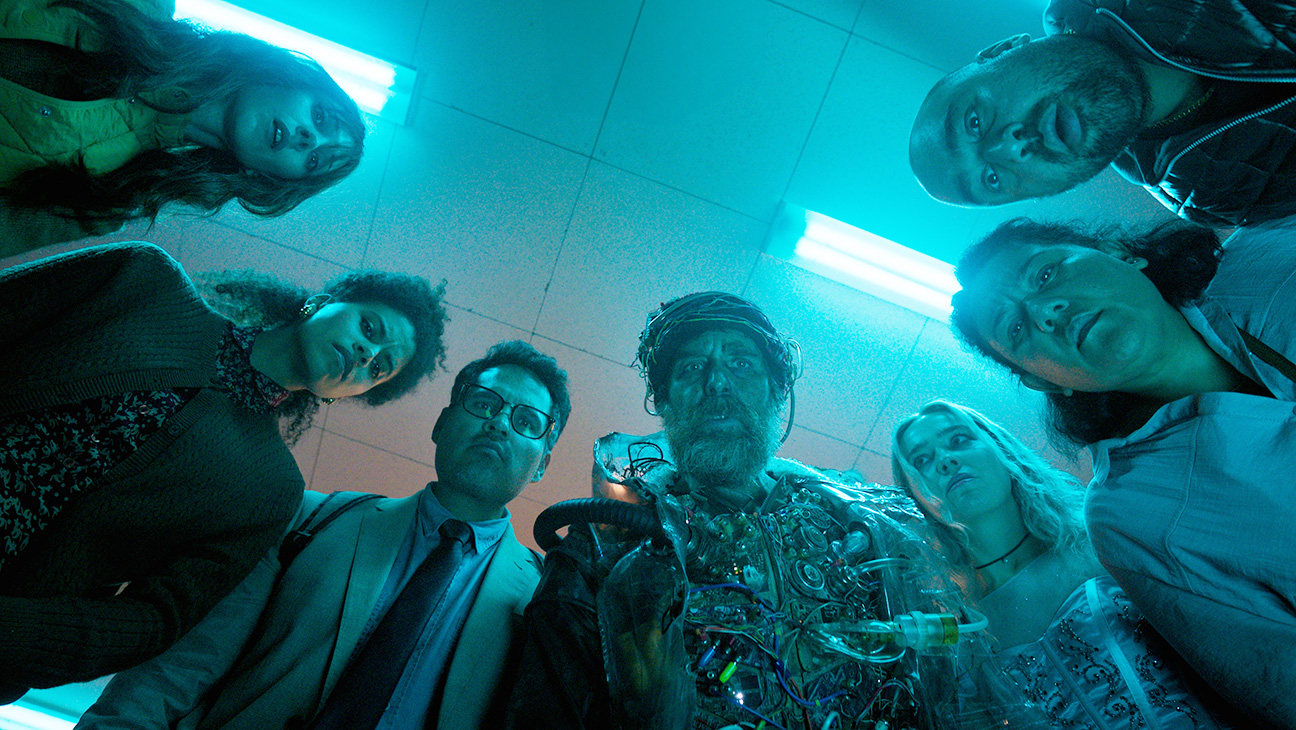
We had to be very clever with that. First, I’m very lucky to have Constantine and Briarcliff step up. Because there was no other way to get this movie made. And I just feel lucky that we found believers that still have faith in the theatrical process. It did mean it was going to be scrappy. Really, really scrappy. So we tried, wherever possible, to keep the small portions of the movie small. And I’ve always thought of the film as sort of this twist on Dog Day Afternoon. I mean, Sonny and Sal are the worst bank robbers, but you follow them through that entire movie. There’s something small about that, coming into Norms. And then by the end of the movie, we’re getting closer and closer and closer to this thing, to the antagonist. And that justifies a sort of move from the Sidney Lumet frame — It’s about acting. It’s about performance. It’s not about the shot, even though it is, but it’s deceptive. And then as you’re getting closer and closer to the antagonist, there might be a film like (Japanese animated cyberpunk action film) Akira, where you’re saying, okay, as an inspiration point, that’s what we’re getting. We’re being drawn to something that is more enigmatic and surreal and you can’t quite grasp what’s happening or what’s coming. That was always the plan. It was really, really tough to do. We used a very small visual effects company, which I really liked out of Copenhagen, called Ghost. We put them to task, and they came through. But it’s like that old saying, if you can answer the question, why must I tell this story? You’re going to figure out a way to do it with sock puppets and the lights you can carry in the back of a station wagon. You’re going to will it into existence somehow.
You were saying you don’t want to do the same movie over again, and you’ve made it clear you’re not interested in directing another Pirates of the Caribbean. What are you working on next?
I think I’m going to go on sabbatical, to be honest with you, after this. But I still have a lot of passionate ideas. It’s difficult out there right now for original material. The streamers have an algorithm that they’re shackled to. And studios are really risk-averse with big IP or franchises. So this has been a real education. This is my first, I would say, indie. But it may be the only place left to tell a story like this one. And I’d like to tell other ones that are equally genre-defined, I guess. You’re not quite sure where they fit. There’s a wonderful landscape to wander through in that realm of what’s over here. Everybody else is taking care of everything out there. All those movies are getting made.
Now you’re onto Berlin for a European premiere. How does that feel?
I think we’re going to be a small fish, which was always the plan. Our economics are built on that, and hopefully we’ll feel okay along with these bigger boys.