Director Casper Kelly made his name with the 2014 viral horror short for Adult Swim, Too Many Cooks. The film is basically an 11-minute TV theme tune that layers needling repetition, perky vocals and inane lyrics with increasingly surreal elements to skewer vintage network staples — from chipper family sitcoms through cop shows, primetime soaps, cartoons, superhero action and cheesy sci-fi, until a slasher villain with a machete hijacks the proceedings just in time for the episode to begin. It’s a neat conceit, a postmodern, genre-crashing parody that takes a wrecking ball to our nostalgia for television entertainment of the ‘70s, ‘80s and ‘90s, without overstaying its welcome.
That’s one of the key weaknesses of Kelly’s sporadically amusing Buddy, a variation on a theme that stretches its sketch-comedy idea to feature length by upping the gore and the demented detours but doesn’t go far enough to be as extreme or disturbing as it wants to be. The movie’s biggest plus is the inspired voice work of Keegan-Michael Key as the title character, which might help it rustle up a small but appreciative stoner audience on streaming platforms.
Buddy
In need of sharper teeth.
Co-written by Kelly with Jamie King, Buddy plays on the backlash that built in the 1990s toward the maniacal positivity and brain-numbing, sugary pap of PBS Kids hit Barney & Friends. And sure, why not? If you’re looking to target contributing factors to Millennial entitlement, go ahead and blame the cheery purple dinosaur.
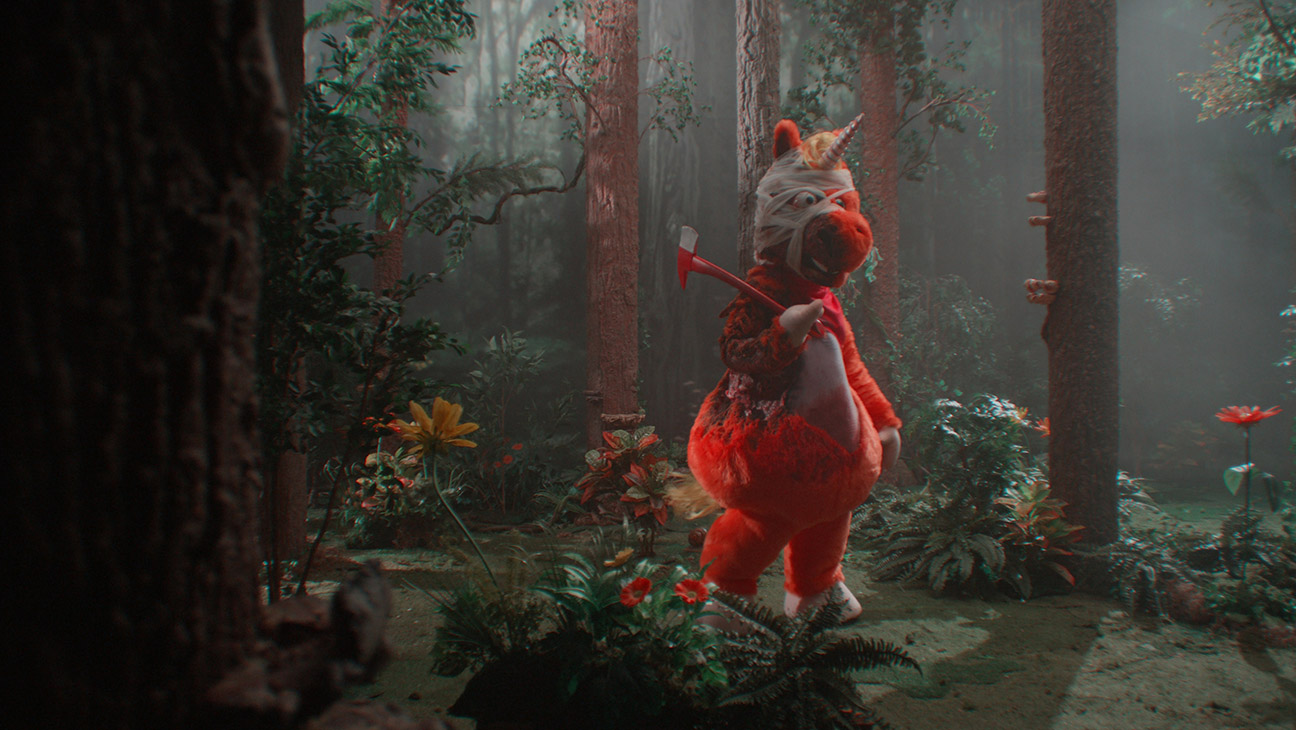
The protagonist of the TV show here, It’s Buddy, is a thinly veiled clone of Barney in a movie that also borrows liberally from Pee-wee’s Playhouse and more moderately from The Wizard of Oz. Kelly swaps out the anthropomorphic Tyrannosaurus Rex for an orange unicorn with a yellow mane and a purple tummy. He’s master of a hermetic children’s TV world in which the young human cast learn about things like friendship, sharing, bravery, kindness and optimism. Those lessons are reinforced in songs (by Shawn Coleman), which sound like every infernal childhood jingle that ever got stuck in your head.
But beneath his plush exterior and upbeat messaging, Buddy is an insatiably needy, controlling narcissist requiring constant affirmations of the children’s love and filling their heads with terror of the monsters lurking in the outside world beyond the park in which the show takes place. (A fear-mongering orange narcissist, I hear you asking? Political subtext might be a stretch.) Each episode ends with Buddy announcing, “Well, that’s all we have time for,” before a closing song and a big group hug as the credits roll. But at the slightest sign of rebellion, Buddy turns homicidal.
That happens first when the kids receive invites to a dance party in the clubhouse and the surly, withdrawn Josh (Luke Speakman) refuses to participate — even after Buddy sends him to the Worry Well for counsel and kits him out with a pair of magic dancing shoes. But terpsichorean shyness isn’t Josh’s problem. It’s more likely the oppressive boredom of an enclosed environment in which happiness, good behavior and community-mindedness are regime requirements.
The result of Josh’s non-cooperation is played out off camera with the unmistakable sounds of physical violence. Enterprising group member Freddy (Delaney Quinn) spots the paperback Josh was reading in the trash bin, spattered in blood. Sensing that something in their perfect world is very wrong, she shares her concerns with best pal Wade (Caleb “CJ” Williams). They decide to seek adult advice and given that no parents are ever mentioned, they seek out Nurse Nancy (Phuong Kubacki) in the clubhouse infirmary.
As the body count starts mounting, Freddy and Wade alert their friends Oliver (Tristan Borders) and Hannah (Madison Skyy Polan) to the danger and prepare to flee. But not before Freddy applies an earlier safety lesson about harmful chemical cleaning products to subdue the suddenly menacing unicorn.
All this is almost fun enough, and the child actors as good as they need to be to fit the mold of non-narrative kids’ TV. But it starts wearing thin even before the violence escalates.
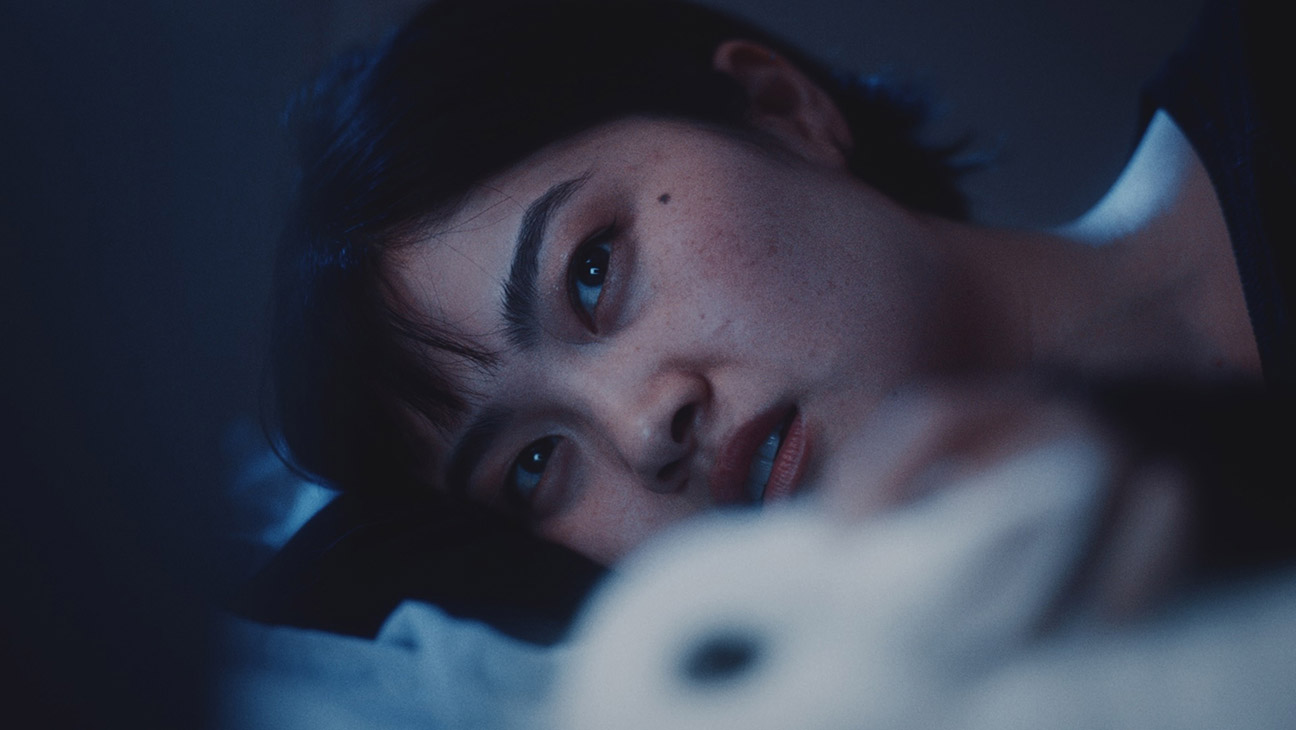
Kelly and King shake things up around the half-hour mark by venturing into the real world, where Grace (Cristin Milioti), the mother of two boys unusually far apart in age, starts being overcome by uneasy feelings about a cold dark void. She’s especially disturbed by an empty chair at the dinner table. Was it once occupied? Her husband Ben (Topher Grace) dismisses her anxiety, but Grace hires parapsychologist Dr. Deborah Burr (Brooke Bloom), who senses powerful energy in a room at some point converted into a home office.
When the doc tries summoning the presence in the house, the TV comes on with an episode of It’s Buddy, a show of which Grace can find no trace on the internet. With shades of Poltergeist, the two worlds violently collide. But this kind of metafictional overlap has been done better many times before, recently in I Saw the TV Glow.
Milioti as always is a distinctive presence with a subtle touch of the kook, but the script’s more ambitious developments once Grace crosses over into Buddy’s domain lapse into fuzzy logic, even within the elastic confines of Kelly’s story. There are humorous touches, such as the sudden addition to the TV show’s credits of “Executive in Charge: Buddy.” But the inevitable faceoff of Freddy and Co. with a rampaging Buddy, his inner demon unleashed in Godzilla-like form, lacks the scares, the suspense and the laughs to make it unsettling horror-comedy.
Genre audiences willing to settle for some weird-ass but ultimately toothless subversiveness might enjoy Buddy. And there are incidental pleasures like Patton Oswalt as the voice of Freddy’s anthropomorphized backpack Strappy or Clint Howard and Michael Shannon as a grizzled cowboy and his demanding ventriloquist dummy. But the movie is a one-joke premise, cute and colorful but unsatisfyingly fleshed out.