There have been numerous documentaries made about the war in Gaza, which began with Hamas’ massacre of Israelis on October 7th, 2023, and was followed by a brutal retaliation from the IDF, who killed tens of thousands of Palestinians and destroyed much of the Gaza Strip. I’ve reviewed a few of these docs over the past two years, including American Doctor, Holding Liat and A Letter to David, not to mention semi-fictional works like Of Dogs and Men. But none of them have felt as bleak or despairing as Israeli director Anat Even’s scathing cinematic essay, Collapse (Effondrement).
Shot in the Nir Oz kibbutz and the surrounding Negev desert, with Gaza lying just over the border, the movie chronicles the horrific aftermath of Oct 7th from the perspective of a filmmaker whose world was upended following Hamas’ attack. Ardently opposed to Israel’s punishing war, but also devastated by the loss of friends and neighbors in the bucolic leftist kibbutz she grew up in, Even arms herself with a camera to capture two years of chaos and destruction, reflecting on “a disaster without end.”
Collapse
A bleakly honest look at an eternal conflict.
The film begins with a quote from Hungarian writer and Holocaust survivor Imre Kertész, superimposed over a shot of an IDF bomb exploding in Gaza. “Yet we regarded all this with indifference,” is how the citation ends, setting up the state of things as Even sees it from Israel. And yet, the director is anything but indifferent to what’s happening on the ground, making numerous visits to Nir Oz and getting as close to the Palestinian side as possible, even if the army keeps turning her away.
“How will you speak of the situation in Gaza without being there?” a correspondent from France (Ariel Cypel, credited as co-writer) asks Even in one of many email exchanges the director reads aloud. The answer is that she does her best under the circumstances, filming the ruination across the border from various distant vantage points, as well as the maneuvers of IDF troops and tanks before they head off for another assault. The result is a war that mostly remains unseen, at times evoking the way Jonathan Glazer depicted Auschwitz in The Zone of Interest.
Even constantly returns to the slaughter of Nir Oz and other Hamas targets, including the site of the Nova music festival, while also lamenting all those killed on the Palestinian side. “Would you even call it a war?” a doctor from Gaza asks in a letter describing the dire situation of his people. Indeed, Collapse is less of a war doc than a chronicle of mass destruction, whether it’s the “stench of death” that Even encounters when she films abandoned homes in her former kibbutz or the miles of rubble on the Palestinian side.
It’s also an outcry against the Israeli government, which we glimpse up close when Bibi Netanyahu himself makes a much-publicized visit to Nir Oz toward the end of the film. “Destroyer of Israel!” a protester shouts as the prime minister walks among the ruins with his team of bodyguards. Earlier on, Even shows up at a rally held by Israeli settlers waiting to move into Gaza once the war is over. “Occupy, Expel, Settle,” one large banner reads, while a speaker rants about the urgency to “Judaize” Palestinian territory.
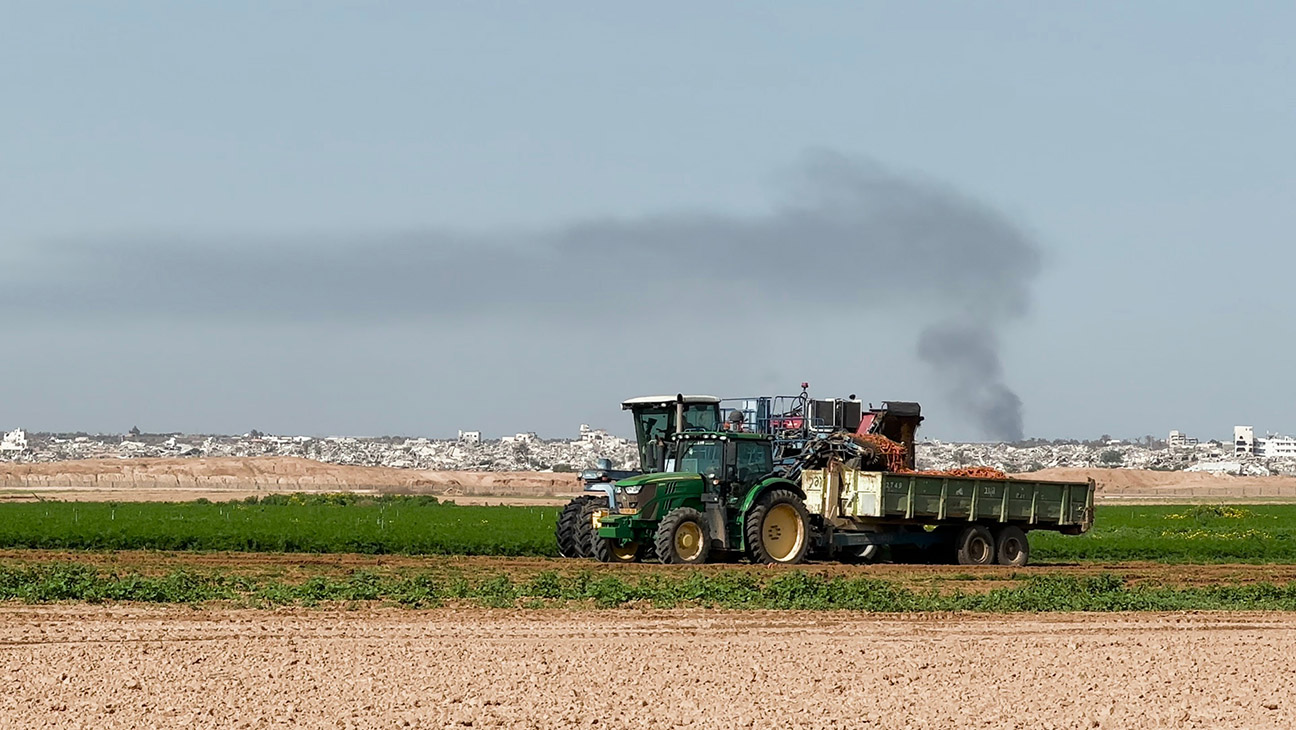
This is grim stuff, and Collapse is certainly a grim movie. Even the random animals — birds, deer, dogs, cats and, at one point, a peacock — the director encounters on her journeys around Negev seem to be shattered by years of bombing. But what appalls Even more than anything is the indifference mentioned at the start of her film, which she depicts in shots of Israeli tourists peering out at Gaza from a memorial park, or in images of farm vehicles harvesting carrots in fields while smoke billows in the background.
If there’s any hope in Even’s chilling first-person account, it’s in the small pockets of resistance she manages to document on the Israeli side, whether they’re a handful of peacenik protesters at a roundabout or a group standing up to the settler movement.
But perhaps the real hope lies in the existence of the film itself, which will serve along with other works as a record of what happened in the ongoing conflict. At the start of Collapse, Even mourns the death of Nir Oz residents who taught her “about history and cinema,” including a man who was kidnapped and murdered by Hamas. Her piercing testimony is an honor not only to his memory, but to all the innocent victims of “this great war of vengeance.”