
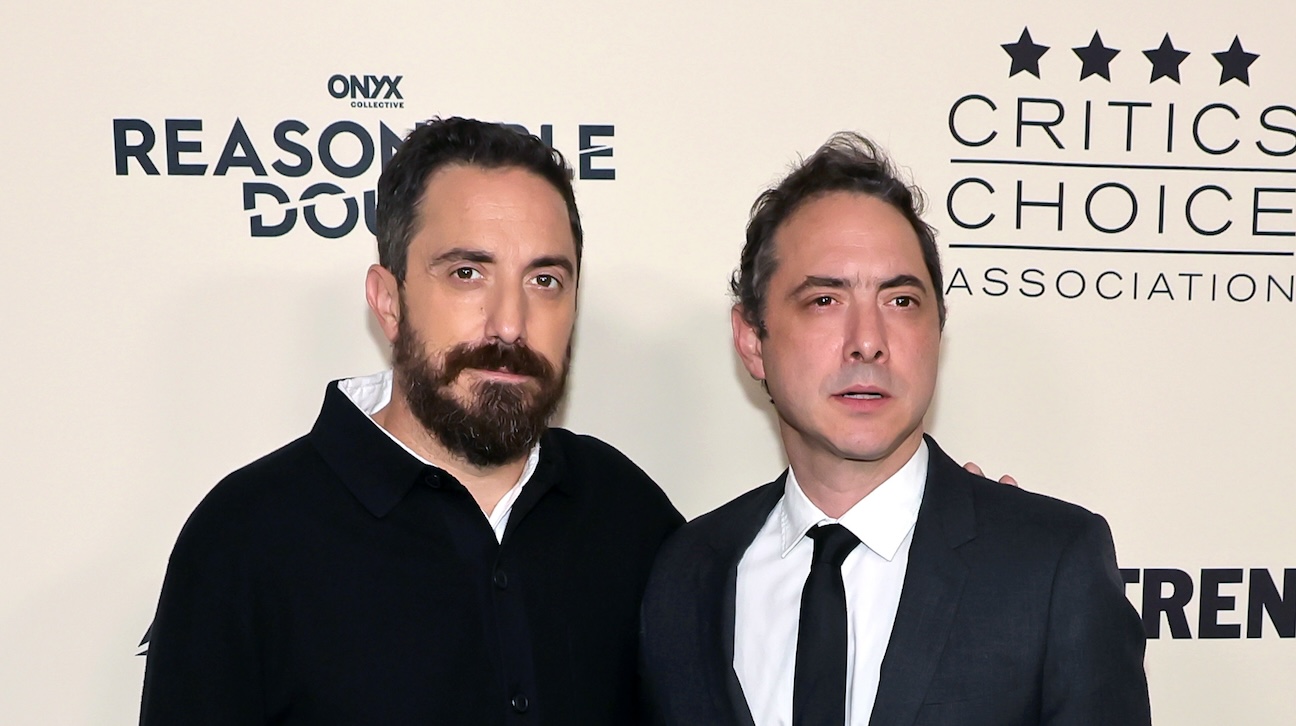
If there’s an unspoken consensus at this week’s European Film Market — one already felt at Sundance and so many film markets before — it’s that the tried-and-true systems of independent film sales and distribution remain under enormous strain, if they’re not outright broken. In an ecosystem squeezed by the brutal economics of streaming and the continuing struggles of the theatrical model, far too many worthy films go unsold and unseen. Enter the Larraín brothers and their startup video service, Pijama.
After growing deeply frustrated as both filmmakers and film lovers with the status quo, acclaimed Chilean director Pablo Larraín and his brother and longtime producing partner Juan de Dios Larraín have created a platform they believe can offer at least part of an answer. Think of it as Substack for cinema, or a digital version of an old-school VHS rental shop.
Pablo Larraín is hardly an outsider to the global film economy. The Chilean director earned international acclaim with the Oscar-nominated No, with later standouts including Jackie, Spencer, El Conde and the recent Angelina Jolie starrer, Maria — a career that has consistently spanned arthouse cinema and prestige English-language filmmaking. Together with his brother, he co-founded Fabula, the production company behind Oscar winner A Fantastic Woman and a deep slate of internationally produced films and series.
Pijama is a transactional video-on-demand platform designed, in the brothers’ words, to “restore balance between creators and viewers.” The model is straightforward: no subscriptions, no exclusivity, just individual rentals at a fixed price. Films that are two years or older will rent for $3.99. Newer titles can set their own price between $3.99 and $9.99. Rights holders receive 80 percent of rental revenue; Pijama retains 20 percent, most of which, for the foreseeable future, will go toward operating costs.
For filmmakers, the pitch is control. Creators can upload their films independently, choose in which territories they are available and manage integrated digital marketing campaigns from a single dashboard. Pijama does not require exclusivity, and rights holders can select exactly which markets they want to open.
For audiences, the appeal is equally direct: a pay-per-view library of high-quality cinema accessible across devices and territories, without the churn maintenance of increasingly expensive subscription services.
The idea grew out of what Pablo Larraín describes as an “enormous problem” in the current market.
“There is a cultural crisis, an enormous problem here, where if movies are not picked up by the very small, select group of buyers who still remain, then they are shelved and have no life,” he says. “And it’s absolutely insane, considering the number of movies this is happening to. Pijama feels like something that can help.”
Larraín estimates that “80 percent of the films that show in the Berlinale this year won’t get distribution.” He points to Sundance, where a handful of high-profile bidding wars masked a bleaker reality. “We all read about a handful of bidding wars for a lucky few titles, but the vast majority will have no life after the festival.”
He adds: “I talked to a lot of people who said, my movie got great reviews, all of the screenings at the festival were full, and I’m going to another 10 festivals over the coming months, but no distributors are buying it? What do I do with it now?”
“Personally, as a filmmaker, producer and a member of this team, I’m not going to accept that all of those movies that didn’t get distribution don’t have an audience and don’t have a market,” he says. “Because we don’t know, they never get a chance.”
On the consumer side, the brothers argue that the global streaming landscape has narrowed access rather than expanded it. “If I want to see a Michael Haneke movie or Jim Jarmusch film — or maybe something by Béla Tarr, who just passed away — in most countries, if I look them up on the services that exist, most of their movies are totally inaccessible,” Pablo says. “In a connected world, we shouldn’t be satisfied with this.”
Pijama’s answer is deliberately uncurated. The platform will not impose aesthetic gatekeeping beyond basic content moderation to prevent illegal or purely pornographic material. “We believe every movie has an audience,” Juan says. “Maybe some of them will be very small. If it’s an arthouse exercise or a short film, maybe it’s just 10 people or the filmmaker’s family — maybe it’s 100 or 1 million. Either way, that’s legitimate.”
At the same time, the service will feature rankings and curated sections highlighting films that premiered at major festivals, as well as mini-retrospectives organized around particular filmmakers or actors. The team is already in conversations with sales agents and rights holders about assembling curated collections.
“We are in conversation with all the most important sales agents,” Pablo says. “We went to Sundance and met with dozens of producers that were there with films. We’re doing the same in Berlin. We will do the same in South by Southwest. There’s a wave of new films coming to Pijama soon. We will have between 100-200 more in the next couple weeks.”

Several of Larraín’s own standout early features — including Tony Manero, No and Neruda — are already available on the service, their rights having reverted to the brothers’ production company Fabula after earlier successful runs and distribution deals.
The project has been financed to date with the brothers’ own capital.
Juan de Dios Larraín, a lawyer and MBA by training, has long overseen the business operations of Fabula, which operates across Chile, Mexico, Spain and the United States. As a producer, he has shepherded more than 40 films and over a dozen television series, making him a veteran of international financing, co-production and global rights management.
“We have been financing the platform with our own resources, and we have been working on this since May last year,” Juan says. “It took us eight months to launch it. Maybe there will be a day that we would like to scale it, and we’ll need more technical muscle, so we’ll bring in investors or partners. But for now, we’d like to stay independent.”
Going into the project, the brothers say they wondered why such an easy-access platform didn’t already exist. Afterall, the internet was supposed to make everything instantly accessible. The challenging economics and logistics of starting the service have provided one potential answer.
“If you charge $3.99 per rental and give 80 percent of the revenue to the producer, it’s actually very hard to find a business model that could work,” Juan says. “The margin is really low, and the compliance burden is very high. Cross-border sales trigger taxes in each territory and regulatory complexities across the world.”
“Every country has its own rules and it’s very complicated, but we’ve spent a lot of time and money with lawyers figuring that all out,” he adds.
In contrast to global subscription streamers like Netflix, Pijama is promising full transparency for rights holders. Filmmakers will have access to dashboards showing view counts, completion rates and audience analytics, data the brothers believe could eventually become a secondary monetization tool.
The Pijama app is rolling out across platforms over the coming weeks, with an initial wave of a few hundred titles launching on the service by the start of March.
“By the end of February, the system will be ready to be massive and to have a lot of films and a lot of viewers,” Juan says.
The brothers are careful to frame Pijama not as the sole solution but as part of a broader movement toward improving access. Letterboxd launched a similar online rental service for “missed” films last year, albeit with a different model.
“We’re not the only potential solution,” Juan says. “There are others doing something similar. The more the better. We just want to improve access.”
Whether the experiment can scale remains an open question, but the Larraíns say they are in it for the long haul.
“It will take some time. It’s not going to happen in two weeks,” Juan says. “We will be very patient. We’ll keep working with determination, because we really believe in this, and we want to help.”