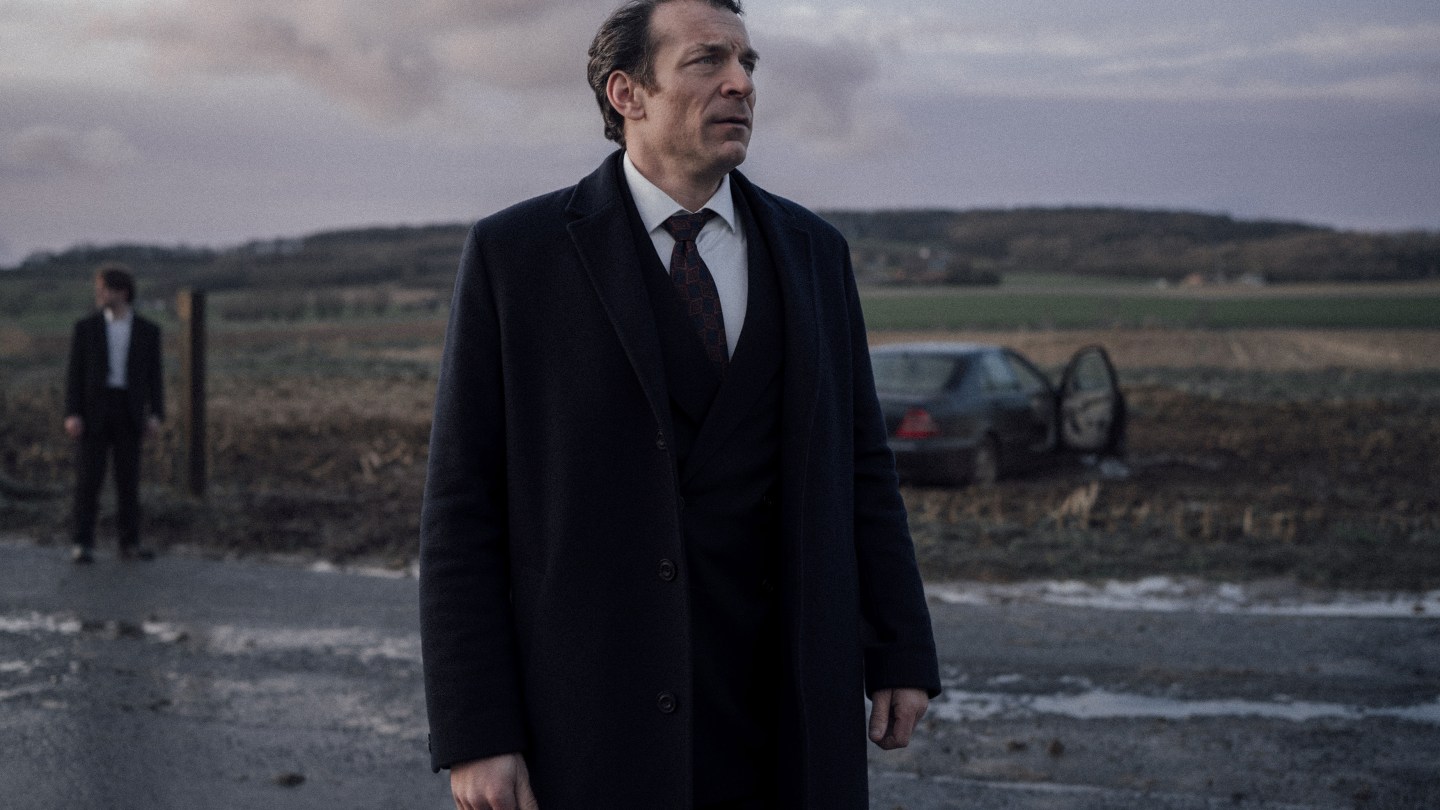
Berlinale competitor Dust unfolds a didactic parable, written by Angelo Tijssens (Close), that revolves around two outwardly respectable but privately panicking Flemish business partners, Geert (Arieh Worthalter) and Luc (Jan Hammenecker). The two face tough choices when they learn the start-up they built shilling speech-to-text software is about to be exposed by the police as a scam built with capital conned out of friends, family and small-time investors.
Set at the end of the 20th century, in the middle of what seemed like an unstoppable tech boom, Anke Blondé’s feature follow-up to debut The Best of Dorien B. feels uncomfortably relevant today as the AI boom juices stock markets worldwide. Dust icily exposes how character can evaporate in the crucible of greed, but the plodding pace makes this ethical exercise feel attenuated and flat by the time the climax rolls around. At least Stijn Verhoeven and Ewa Mroczkowska’s nuanced production design for the interiors, including bourgeois homes full of kitschy knick-knacks, anonymous office spaces and frigidly austere villas, tell a story of their own about the material culture of the era.
Dust
Ultra-relevant, but a bit of a slog.
Kicked off by a pithy epigraph from Dutch satirist Multatuli — “Nothing is entirely true and not even that” — Dust offers viewers a chance to wallow in the cushy jet-set lifestyle enjoyed by Geert and Luc, proud as peacocks before their fall from grace. They’ve first met at an international conference pitching their product in English to an applauding audience, but once off stage, Luc is throwing up in an executive toilet. Standing at the urinal, British financial journalist Aaron (Anthony Welsh) gloats that soon his story about their corruption, their “ghost” companies and the offshore accounts will be published.
Back at their headquarters, an only half-finished construction site where the fancy office chairs are still wrapped in plastic in the usable meeting rooms, the men learn that the board, led by helmet-haired Yvette (Aldona Jankoswka), has voted to oust them. The two men will be arrested in less than a day, but they’ve been given a little time to get their affairs in order. They are to report back the next day at 9 a.m. to face the consequences. As they gather files and collect personal possessions, a strange rhythmic industrial noise can be heard blended with composer Andrea Balency-Béarn’s menacing musical bed. Only later do we learn that it’s the sound of a paper shredder, steadily mincing documents.
With the countdown to the 9 a.m. deadline begun, Luc and Geert retreat to their respective homes to put their affairs in order or consider their options. Luc stops off on the way to spend some moments with his hospitalized, stroke-incapacitated father, who scrawls a note that Luc can’t even read. (The payoff near the end when Geert deciphers the chicken-scratch writing is a felicitous touch, in keeping with Tijssens’ knack for telling details.)
At home (this is the setting with all the cozy knick-knacks), it becomes clear that Luc’s wife Alma (Fania Sorel) has a pretty clear idea about her husband’s shady dealings and is more troubled about what people will think, especially those who sunk their life savings into the company. Luc tries to make amends with his daughter, from whom he’s estranged, on the phone, but it’s clear there’s no more time for that.
Across town, Geert contemplates his situation differently. A gay man who appears to be in a relationship with his twink driver Kenneth (Thibaud Dooms), Geert doesn’t have children to worry about — although later we meet his sister (Janne Desmet), perhaps the only family member he cares about, who runs a bakery and will be another victim of Geert and Luc’s Ponzi scheme.
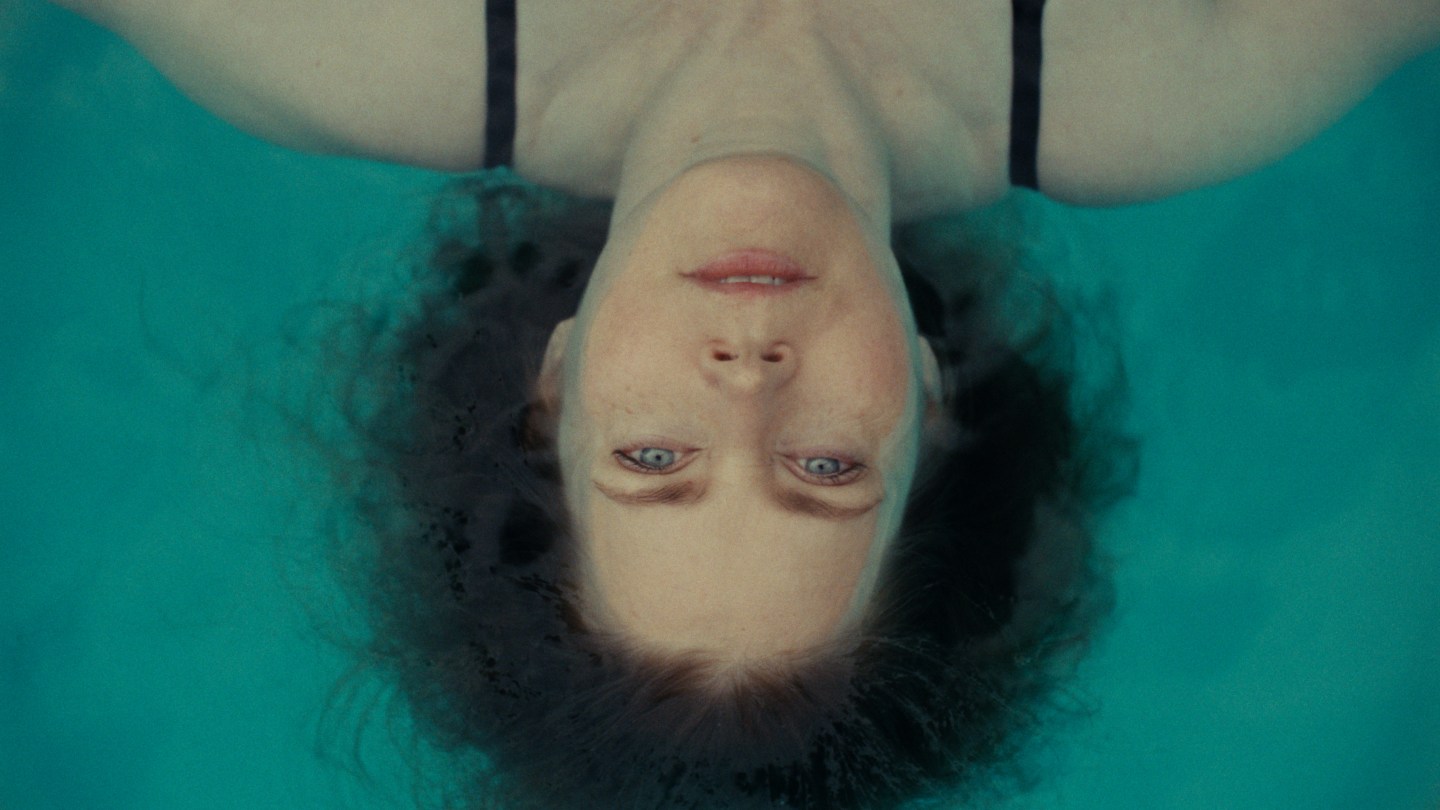
As Kenneth enjoys a last skinny dip in the indoor pool, Geert makes some inquiries about flights to countries with no extradition treaties to Belgium. Will he or won’t he run? Or perhaps will he flip to the police on Luc in order to save himself? Betraying Geert clearly crosses Luc’s mind too, and when in the last act he finds himself stuck in the adhesive Flemish mud after driving recklessly into a field, it’s not evident at first if he’s running away or heading for his last morning at the office.
Although Tijssens and Blondé drop in humanizing touches and scenes that soften the characters’ rougher edges, some viewers may find it hard not to feel that the central duo are fundamentally a pair of smug, venal finance bros, edgelords of low character. Ultimately, it’s a bit of a slog waiting nearly two hours to see what fate they’re finally served, and there’s not quite enough sociological background offered to give the film a sense of wider context. Belgian and other northern European viewers may feel otherwise, but like Luc’s car, this gets mired in the mud of its own making.