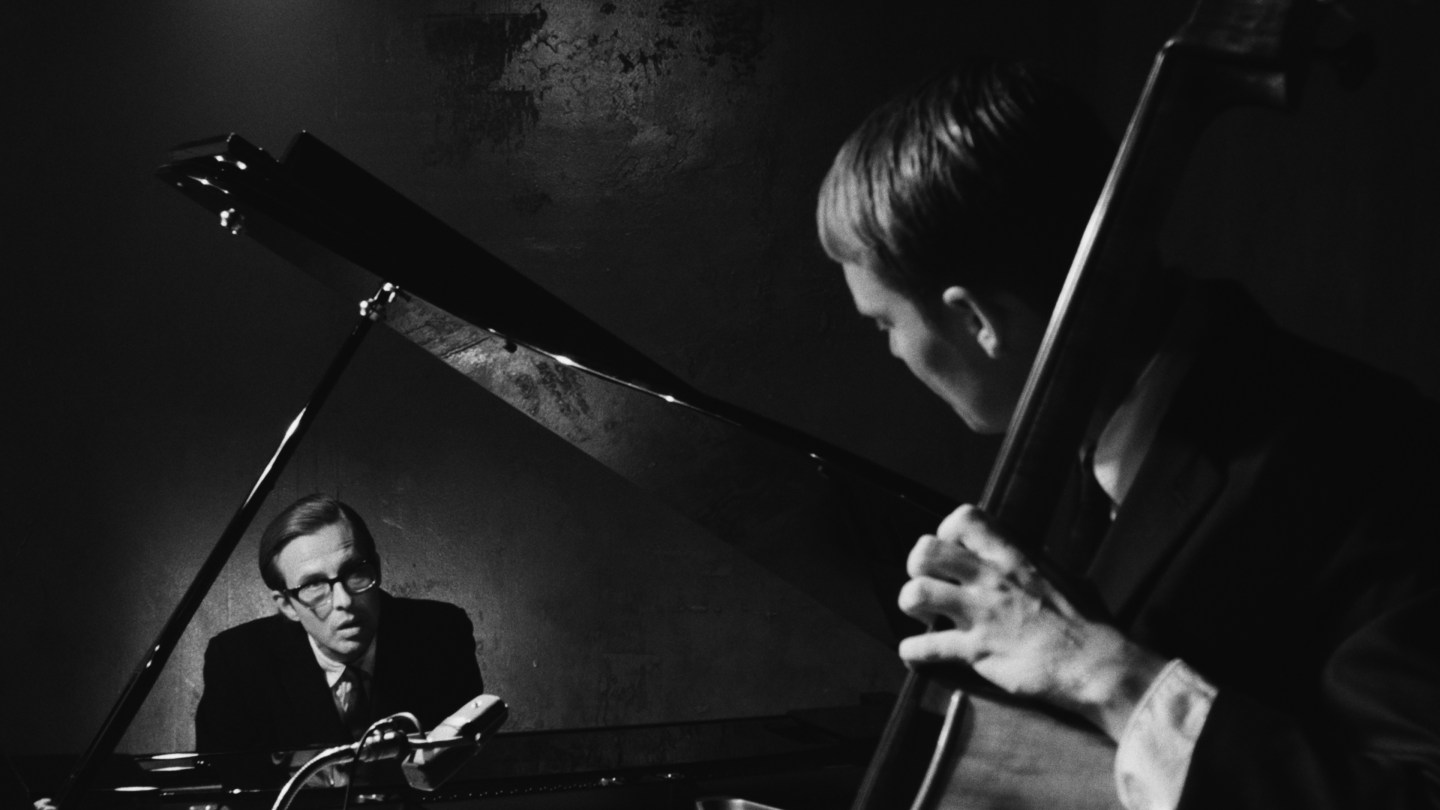
The seductive opening sequence of Everybody Digs Bill Evans draws you in like a magnet. The improvised jazz drifting through the air at the Village Vanguard in New York on a summer night in 1961 — soft, caressing, mellow, smoky — is one thing. But the extraordinary communion shared by the musicians of the Bill Evans Trio is what makes the sequence so memorable, concretizing what will later be described as “a perfect conversation” between them. Fingers skitter up and down the strings of a double bass, hands massage the piano keys, brushes gently scratch at the drums. It’s hypnotic.
The five nights of the trio’s Vanguard booking spawned two live recordings considered among the greatest jazz albums of all time. But it’s not that significant moment in music history that is the scene’s primary concern. What it establishes, more importantly, is the special connection between Evans (Anders Danielsen Lie), intensely focused on the keyboard, and Scott LaFaro (Will Sach), the handsome blond bassist beaming with pleasure across the small stage at him.
Everybody Digs Bill Evans
Evocative and full of feeling.
What director Grant Gee and his actors are showing us is uncommon musical empathy between two players, like witty conversationalists — talking at the same time, batting words back and forth, completing each other’s sentences.
Toward the end of the performance sequence, editor Adam Biskupski cuts between the Vanguard stage and 25-year-old LaFaro nodding off at the wheel of his car less than a month later. Only the briefest glimpses of the fatal automobile accident are shown, but the image of flames licking the double bass resting on the backseat of the car signals that the “perfect conversation,” the alchemical interplay between two gifted musicians is finished.
When Bill’s older brother Henry (Barry Ward) finds the pianist in numbed solitude in his dingy apartment, Bill has canceled all his upcoming gigs, saying Scotty cannot be replaced. Nor can their connection be easily untangled.
Mark O’Halloran’s psychologically and emotionally perceptive screenplay, based on Owen Martell’s semi-fictionalized novel, Intermission, never gets into specifics about the length of time the two musicians have known each other or the depth of their friendship. But in Lie’s painfully internalized performance, it’s almost as if Bill were mourning a lost lover. The months that followed LaFaro’s death, in which Evans disappeared from public life, alternately feeding his heroin addiction or going cold turkey in an attempt to kick it, constitute the movie’s principal timeline.
Gee, a documentarian making an assured move into narrative features, punctuates the B&W scenes from 1961 with glimpses in color of Evans in the 1970s, when he had returned to performing, and in 1980, the year of his death. (A bad wig here and there is forgivable.) The film in no way resembles a cradle-to-grave bio-drama and yet the fragmented approach yields a multidimensional portrait of a complete life, once described by a friend of Evans as “the longest suicide in history.”
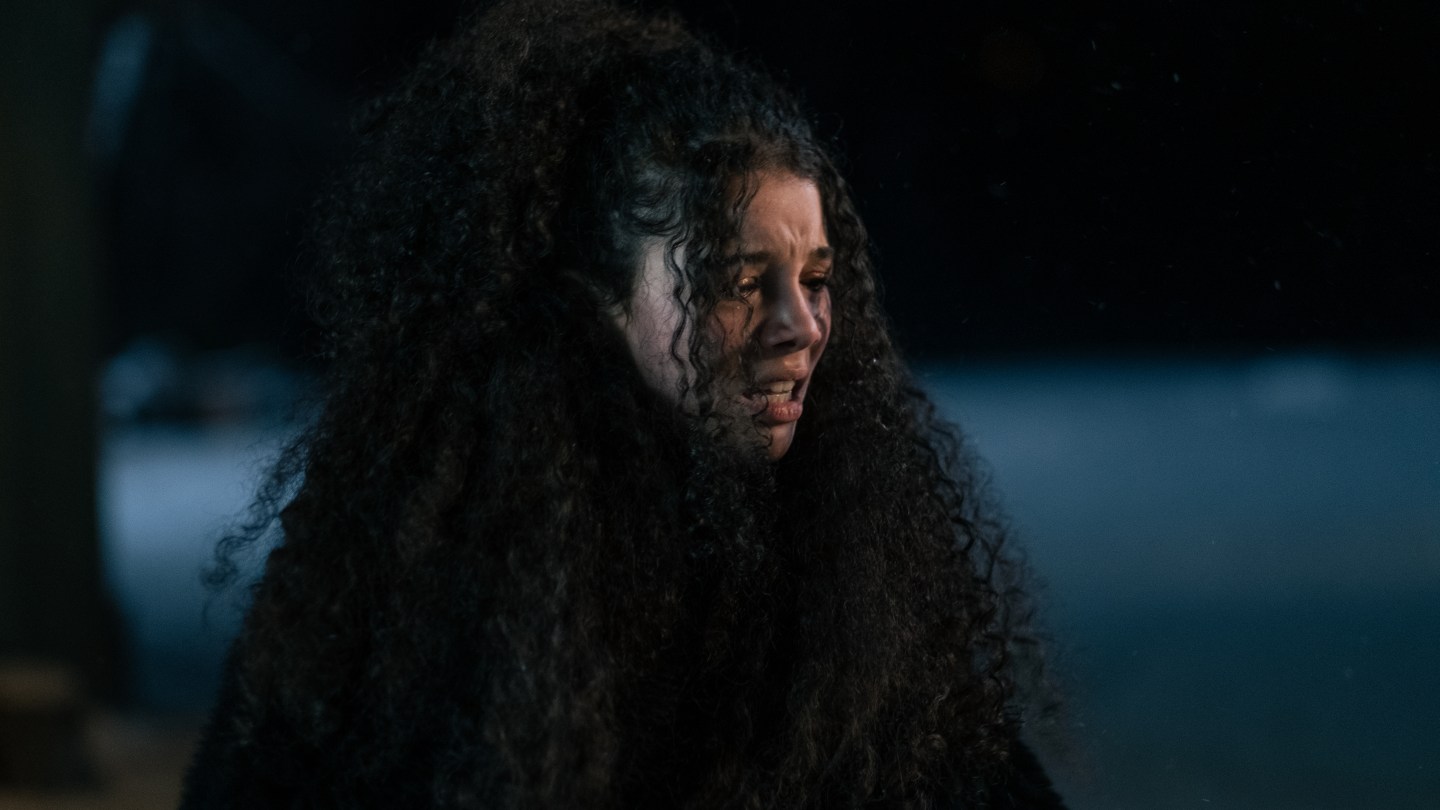
Reluctant to leave him alone, Henry insists Bill come to stay with him and his wife Pat (Katie McGrath), giving him time also with his adoring niece Debby (Tallulah Cavanaugh). Played with a bottomless well of kindness by the wonderful McGrath, Pat is genuinely concerned and loving with her brother-in-law but also worried about her husband, whose episodes — she describes him as schizophrenic, though in modern mental health terms he would likely be diagnosed with bipolar disorder — are getting worse.
Henry moved his family to New York from Louisiana to find better opportunities as a music teacher. His envy of his brother’s talent — something he never came close to, despite showing early promise — comes across less as sibling rivalry than bitter self-defeat. “It’s not easy for ordinary people, you know,” Henry tells Bill, an accusatory reminder to his brother that his artistry affords him privileges it would be irresponsible to throw away.
Bill wanders around the house like a ghost, stepping out at night to score heroin and shoot up with his sometimes girlfriend Ellaine (Valene Kane, heartbreaking even while putting up a resilient front) or getting high in the bathroom using gear he hides in his dopp kit. When his addiction becomes impossible to ignore, Henry decides his brother’s presence in their home is unhealthy for Debby to be around, so he ships Bill down to Florida to stay with their parents.
That change of location yields some of the movie’s most beautiful scenes — and not just because it ushers in two of America’s most treasured stage and screen actors.
Bill’s mother Mary (Laurie Metcalf) fusses over him being too skinny and then in the quiet of the night slips into his bedroom to watch over him as his whole body shakes with DTs, never saying a word about his drug use. A former pianist herself and the boys’ earliest teacher, Mary reassures Bill that time to rest and recover is what he needs: “Sometimes an intermission is part of the music.”
She keeps the worst of Bill’s condition from his father, Harry Sr. (Bill Pullman), who potters around in the garden and seems to see only what he wants to see. Pullman’s performance is a fascinating mix of happy-go-lucky and corrosively disappointed. His face locked in a permanent grimace even when he’s making jokes, Harry Sr. isn’t one to give too much consideration to depression or mental health. He tells Bill his brother’s problem is that he thinks too much.
Harry Sr. muses that retiring to Florida is a sign of his success, but Pullman makes it tacitly clear he’s saying this to convince himself. He enjoys having his son around, explaining: “I like to talk, your mother’s tired of listening, so bingo!” Mary does nothing to hide her irritability with him, something Metcalf conveys to perfection.
In one absolute stunner of a scene, Harry Sr. insists on taking Bill to a bar where he and his fellow-retiree cronies have a regular singalong night. After leading them in a blustery “Danny Boy,” Harry Sr. returns to a table with Bill (who’s not drinking) and opens up about his shame regarding Mary, saying his mother did not deserve someone as rough and uncouth as him, with dirt under his fingernails.
The only time Harry Sr. makes any real display of emotion is when they get home and he grabs Bill in an anguished drunken hug, mumbling about the cost of “years of squeezing myself into a life that was too small.” There are delicate parallels in O’Halloran’s screenplay showing the different ways in which the Evans men deal with their despondencies.
There’s no magic fix for Bill’s sadness, nor his drug dependency for many years. But Lie subtly shows the light flickering back on in his eyes as he resigns himself to talking with his record company again and going back to performing.
Norwegian actor Lie — a regular in the films of Joachim Trier, he was unforgettably moving in The Worst Person in the World — plays American with ease and without a trace of an accent. He’s also an accomplished musician, doing all his own piano playing here. That includes the virtuoso Vanguard performance of Evans’ “Jade Visions.” Sach also does impressive work on the double bass, as does Boz Martin-Jones as drummer Paul Motian.
Gee and cinematographer Piers McGrail have a great eye for composition and texture, vibrantly evoking the time and place in the high-contrast B&W scenes. The interior-heavy production was shot in Ireland, the one cheat being footage from D.A. Pennebaker’s Daybreak Express, which is seamlessly integrated in subway scenes. And Roger Goula’s original score is a marvel of shifting moods, groaning and mechanical at times, ineffably tender at others.
Everybody Digs Bill Evans is a very fine entry in the tortured artist canon, an intimate encounter with a man shut away in his own private cage of grief and self-reproach yet too raw and helpless to hide it. It should, by rights, be a big downer, especially since more tragedies follow LaFaro’s death. But the movie’s artful direction, nimble structure, visual richness and impeccable performances make for something full-bodied, compelling and deeply affecting, its melancholy beauty lingering long after the end credits roll.