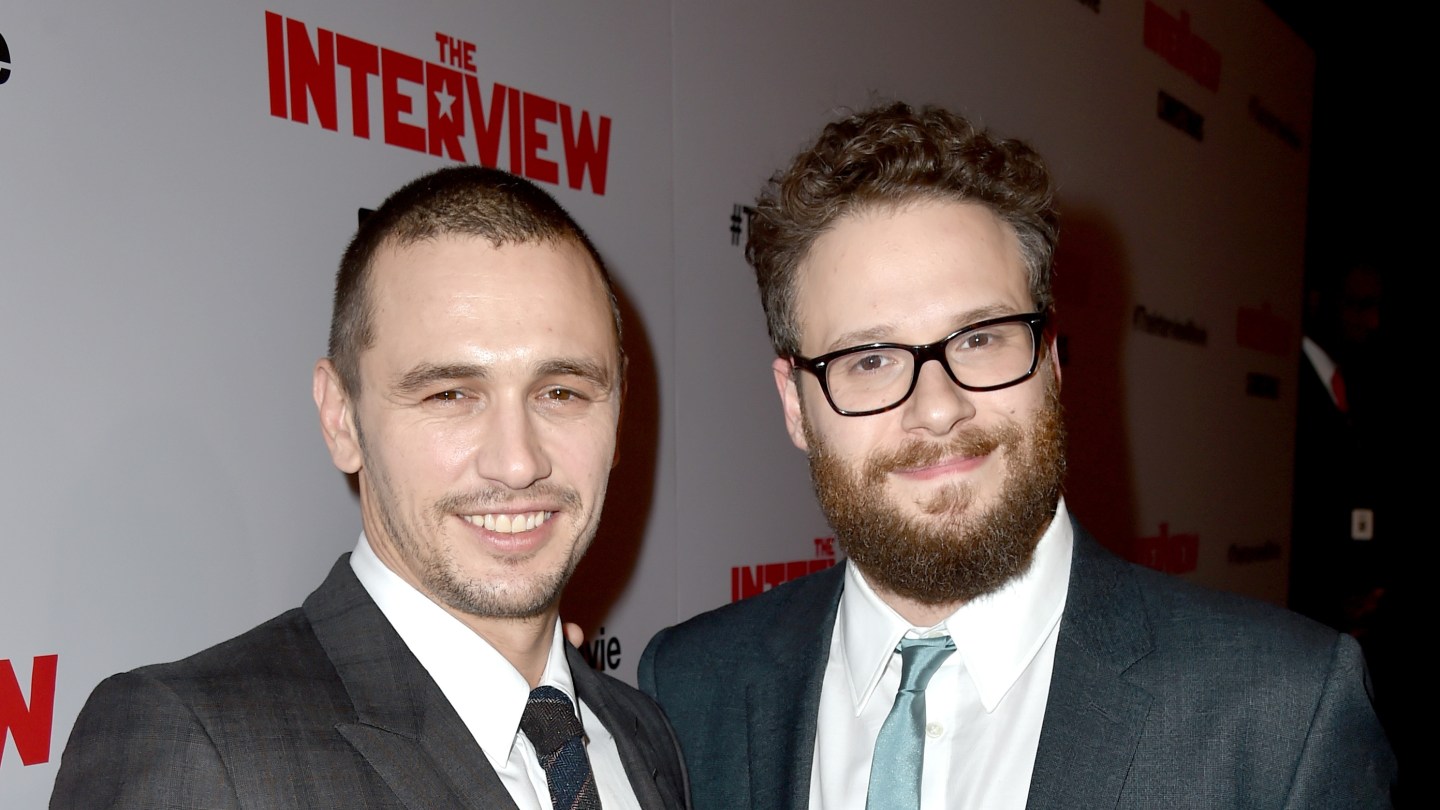
Michael Lynton, the former CEO of Sony Pictures Entertainment, is looking back on the 2014 film The Interview with deep regret.
In a recent excerpt from Lynton’s upcoming memoir From Mistakes to Meaning: Owning Your Past So It Doesn’t Own You, published recently in the Wall Street Journal, he opens up about how greenlighting The Interview, a dark comedy starring Seth Rogen and James Franco about a plan to assassinate North Korean leader Kim Jong Un, was the “biggest mistake of my career,” because it led to the infamous Sony hack.
Lynton was made aware on Nov. 17, 2014, by the head of IT reporting that 70 percent of Sony’s servers were irreparably damaged. Hackers released stolen emails that had confidential scripts and personal information. The FBI became involved with evidence suggesting that North Korea was most likely behind the attack to axe the release of the film.
The movie was pulled from the U.S.’s major theater chains ahead of its Dec. 25 release after threats from hacker groups implied that moviegoers would be in danger at screenings, The Hollywood Reporter reported at the time.
According to Lynton’s memoir, eight months after the FBI investigated the cyberattack, they knew that North Korea was behind it.
The fallout resulted in the studio having its relationships ruined with prominent industry figures, including Will Smith, Adam Sandler and Angelina Jolie. Former President Barack Obama even called Lynton to tell him, “What were you thinking when you made killing the leader of a hostile foreign nation a plot point? Of course that was a mistake.”
Lynton can now acknowledge that his biggest mistake was “my decision to greenlight a project on the fly.”
He admits that his motivation for allowing the film to be made in the first place stemmed from his “desire to belong” and from his care from the “opinions of others.”
“Just for a moment, I wanted to join the badass gang that made subversive movies,” he wrote. “For a moment, I wanted to hang — as an equal — with the actors. I had grown tired of playing the responsible adult, of watching the party from the outside while I played Risk.”
He added, “My middle-school self took over, and my adult self lost the courage to disappoint the other kids. The party got out of hand, and the company, its employees, my family and I all paid dearly.”