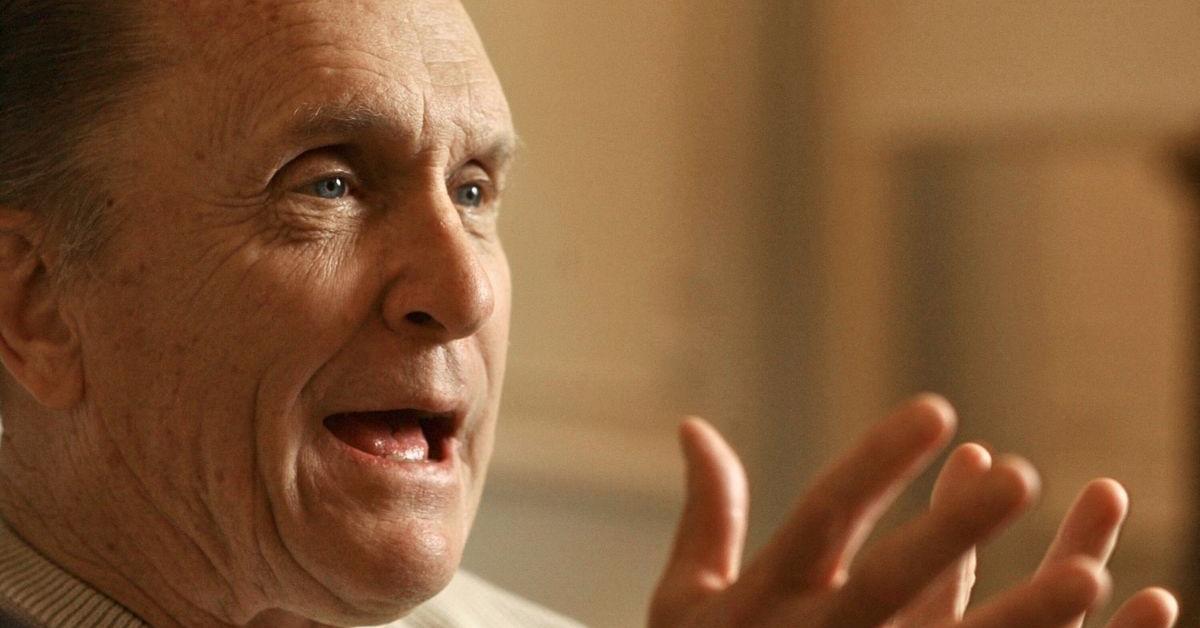
Robert Duvall staked $5million of his own money and his reputation on The Apostle after Hollywood executives repeatedly told him audiences did not want a film about faith – a rejection RadarOnline.comcan reveal sent the Oscar-winning actor into a years-long fight to bring his passion project, inspired in part by his war hero father, to the screen before his death aged 95.
Duvall – who died on February 15 – was 66 when The Apostle was released in 1997, and had already cemented his status with performances in To Kill a Mockingbird, The Godfather, and Tender Mercies, the latter for which he won the Academy Award in 1983.
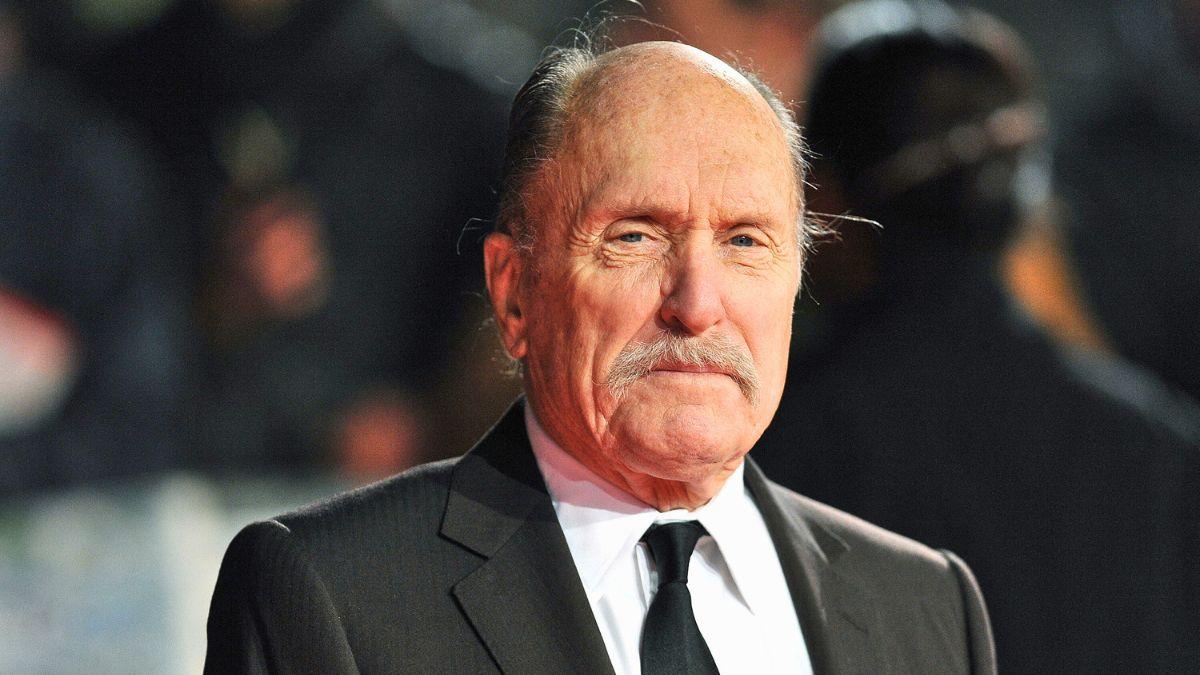
Duvall died at the age of 95 on Sunday, February 15, 2026
But despite being a seven-time Oscar nominee, he struggled for decades to persuade studio bosses to back a story about a flawed Pentecostal preacher.
The film, which he wrote, directed, and starred in, was eventually shot in just seven weeks in Texas after he financed it himself through his company, Butchers Run Films.
Only after a strong reception at the 1997 Toronto Film Festival did it secure distribution and go on to become a critical hit.
“I’ve been an actor all my working life, and learning a part has always meant more than just memorizing my lines,” Duvall said in 1998 about the passion he carried for his craft.
“I immerse myself in the character I am to play. I find out everything I can about who he is, the world he comes from, his dreams, his fears, his passion, his humanity. I try to transform myself. A remarkable thing can happen in this process. Many times, I discover something new about myself. Sometimes it is a discovery that changes my life.”
‘Somehow, I Would Tell That Story’
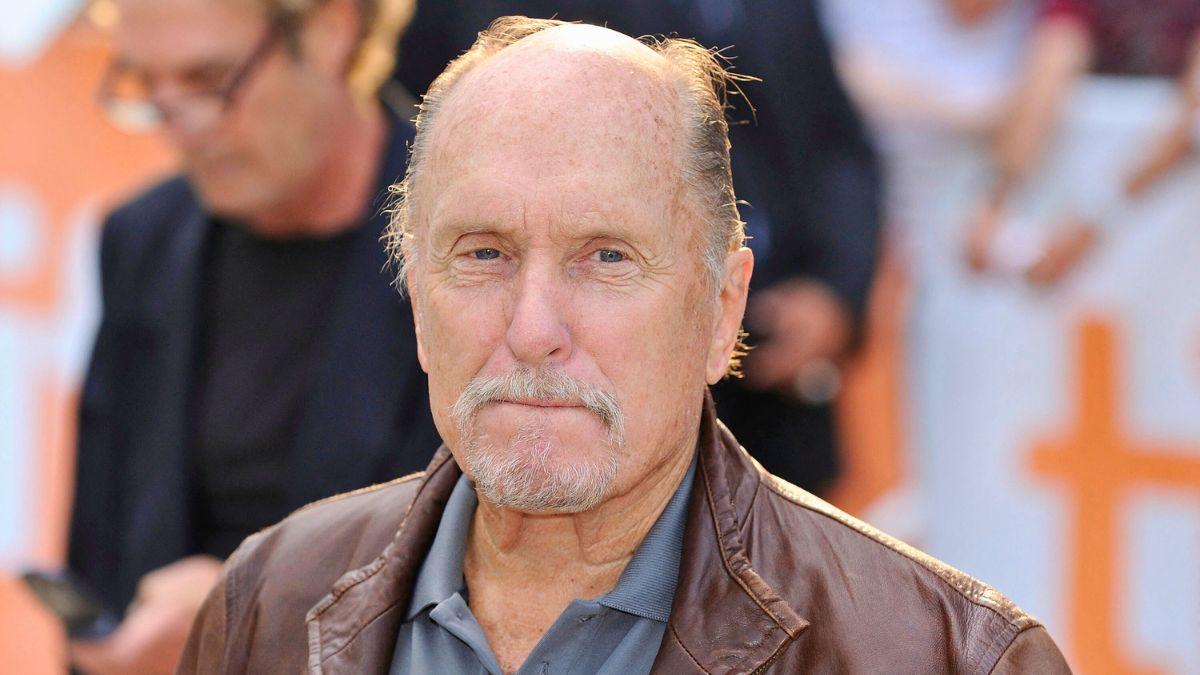
The actor struggled for decades to find a studio to back the story of a flawed preacher.
For Duvall, the roots of The Apostle stretched back to 1962, when he traveled to Hughes, Arkansas, to research a role in an off-Broadway play.
There, he wandered into a small Pentecostal church and witnessed worship unlike anything from his churchgoing Navy upbringing in Annapolis, Maryland, during the Second World War, when his father commanded a destroyer escort in the North Atlantic.
“I knew about the inner life of the Spirit, but I had never seen such an extraordinary outward expression of faith as I witnessed in that Pentecostal church,” he recalled.
“I had never seen church like that. People could barely contain the joy of their faith. Their faces were alive with it, imbued. Folks were on their feet, singing praise and clapping, shouting to God! The air crackled with the Spirit.
“It was nearly impossible to be a mere observer. I wanted to sing and shout with them. I couldn’t explain it, but I knew the people in that church had a gift, a story to share. Somehow, someday, I would tell that story.”
Robert Duvall Pushes Back on Hollywood
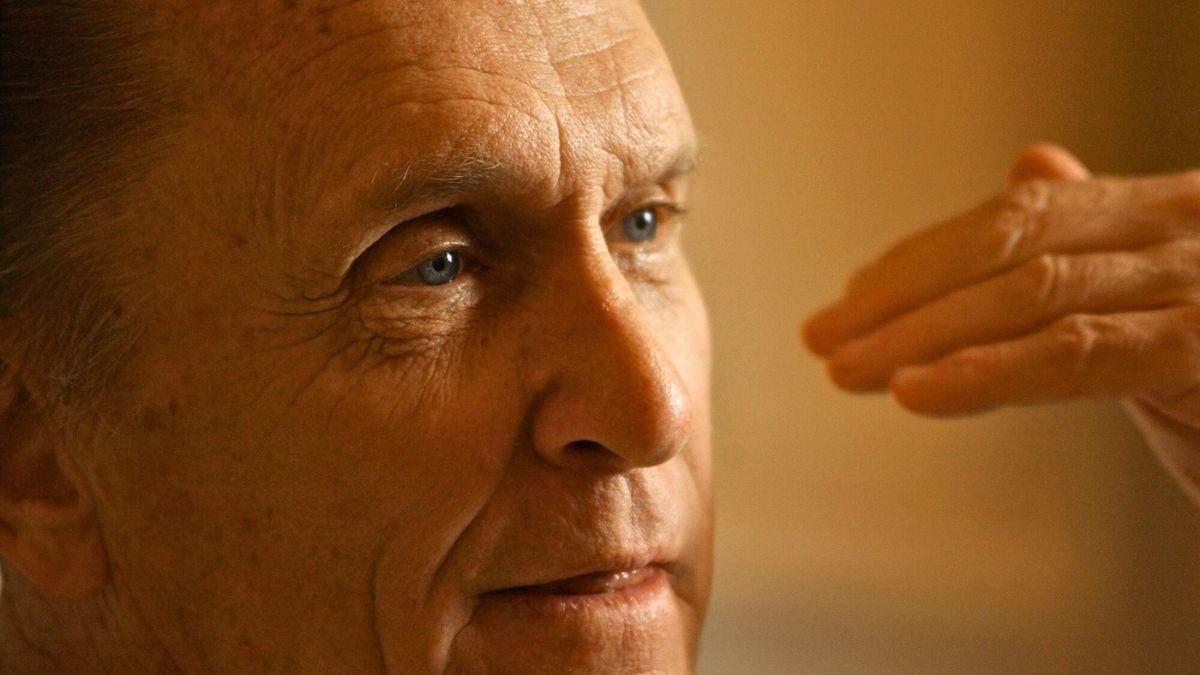
The project was inspired by a 1962 visit to a Pentecostal church in Hughes, Arkansas.
Back in Virginia years later, sitting in his father’s wood-paneled study, he reflected on legacy.
A rear admiral, his father displayed no medals despite surviving German U-boats. Duvall began writing the preacher’s story in earnest, determined to depict Christianity “on its terms.”
Studios were unconvinced. Duvall recalled being told, “Bob, religion is not a subject our audiences want to watch.”
The Hollywood veteran disagreed, arguing faith was central to many lives. When the backing failed to materialize, he invested $5million of his own savings. Production proved smoother than feared.
“The things I worried about never came to pass,” Duvall said about the blessed production. “Generators didn’t break down, the weather was good, people showed up on time, no one got sick. I’m proud of the film. Many of the parts are played by real people and real preachers, not professional actors, because true faith is something that’s hard to duplicate.
“I think some viewers might be shocked – pleasantly so, I hope – to hear Jesus’ name mentioned so often, or startled by the unironic tone of the church scenes and worship services. They might be surprised to see blacks and whites worshiping together as equals even in the deepest rural South.”
Robert Duvall’s Wife Pays Tribute to Late Actor
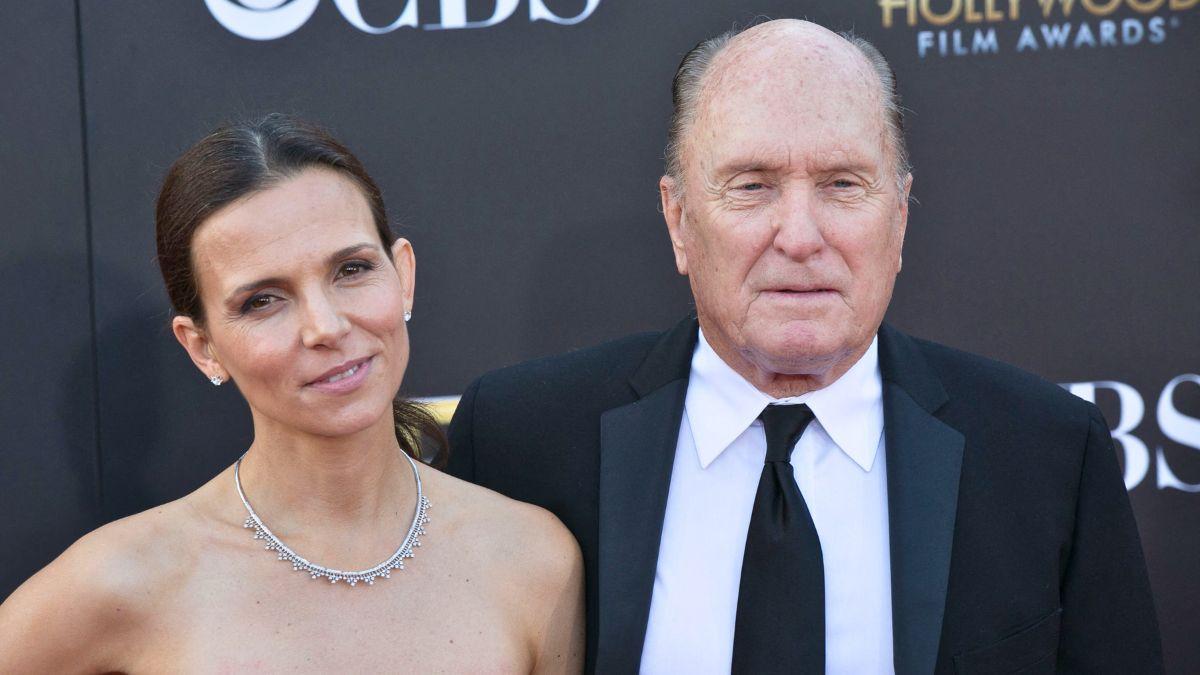
His wife, Luciana Pedraza Duvall, described the actor as her ‘everything’ in a tribute statement.
Even then, distributors demanded cuts – 30 minutes were trimmed from The Apostle before its release. Duvall found that painful, but pressed on.
He said: “Mostly, I hope (audiences) will be moved – moved the way I was when I happened upon that small church in Hughes, Arkansas, and with no warning, something awakened within me that had always been there, dormant and untouched until that day.
“It was the greatest discovery I ever made.”
Luciana Duvall, Duvall’s wife, said in a statement on Monday, February 16, about his passing: “Yesterday we said goodbye to my beloved husband, cherished friend, and one of the greatest actors of our time. Bob passed away peacefully at home, surrounded by love and comfort.”
She also raved about Duvall’s “passion for his craft,” adding: “To the world, he was an Academy Award-winning actor, a director, a storyteller. To me, he was simply everything. His passion for his craft was matched only by his deep love for characters, a great meal, and holding court.”