Johnny Flynn‘s on something of a showbiz roll.
You might know him as the star of British sitcom Lovesick, the delightful George Knightley in Autumn de Wilde’s 2020 Emma adaptation, or as Dickie Greenleaf in 2024’s Ripley series, next to Andrew Scott. Maybe the Brit caught your eye in 2018 miniseries Vanity Fair, Kate Winslet’s recent directorial debut, Goodbye June, which hit Netflix in December, or even as the lead singer-songwriter at the helm of Johnny Flynn & the Sussex Wit (who have released six studio albums).
It might be that his upcoming slate intrigues you further: He’ll be a series regular on season two of Paramount+ crime drama MobLand, play Russian philosopher and novelist Fyodor Dostoyevsky opposite Aimee Lou Wood in The Idiots, and soon, Lucius Malfoy in HBO’s hotly anticipated Harry Potter series.
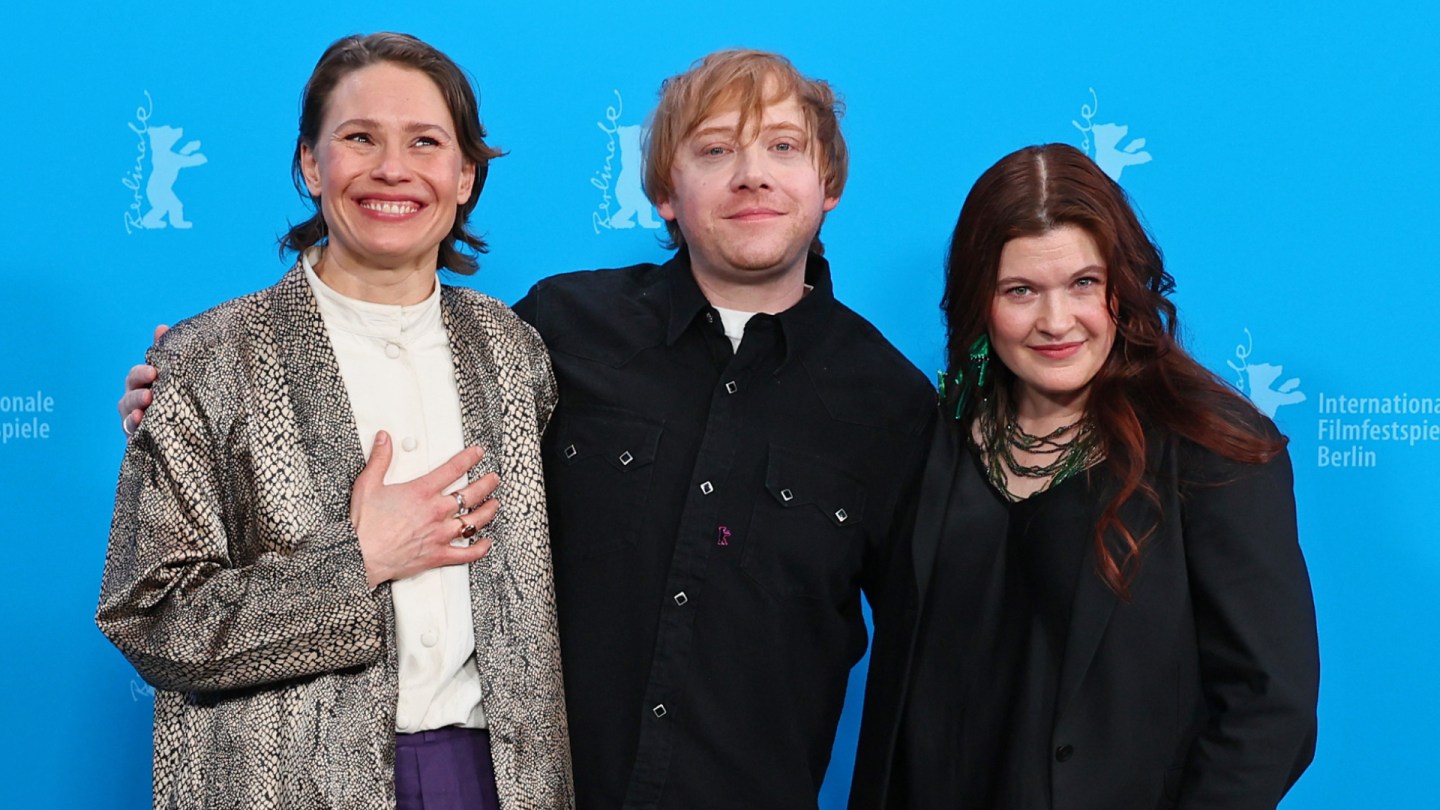
As if he couldn’t get much busier, the character chameleon is continuing his storming run of form in Berlin, where Flynn and John C. Reilly — who you might spot on billboards promoting the film around the German capital — will debut Dara Van Dusen’s A Prayer for the Dying. To call her movie a Western wouldn’t be accurate, he agrees, though neither is it a straight horror or historical drama. “I think it’s safer to not see it as belonging in a particular tradition,” says Flynn about the genre-transcending feature. “It feels like something unique to me.”
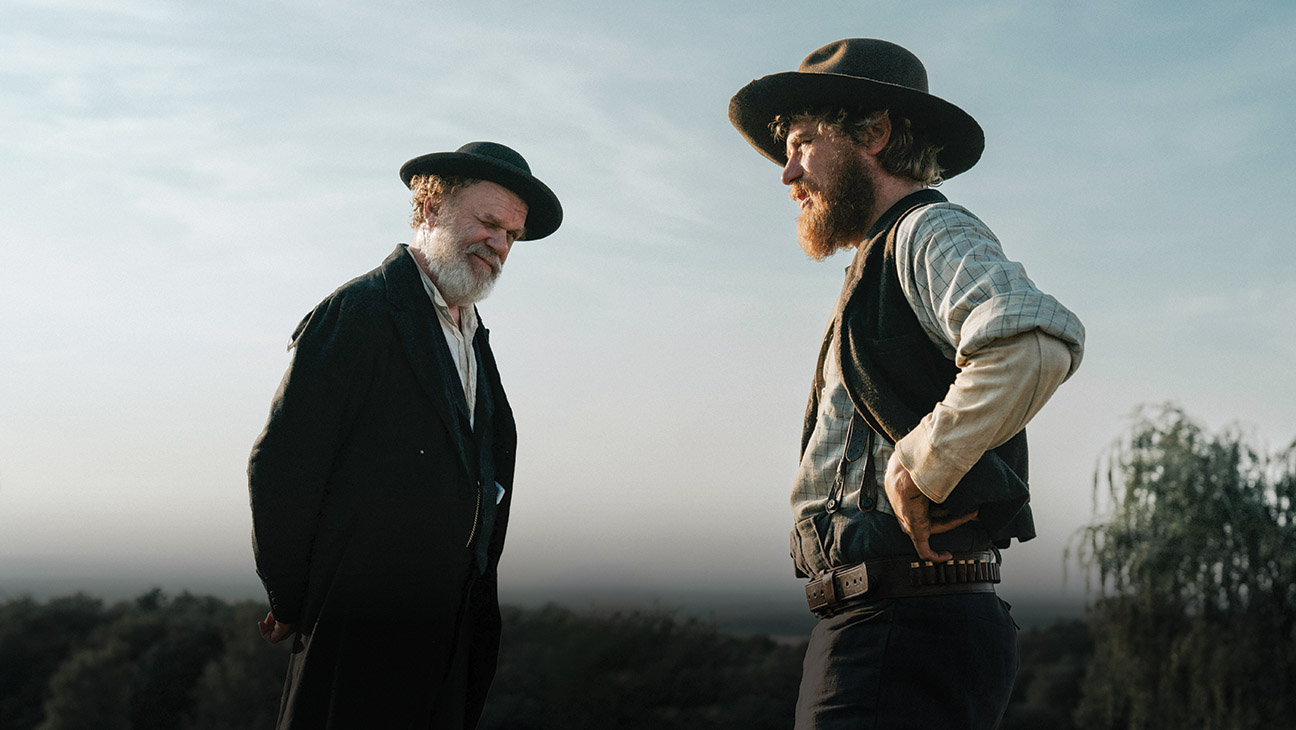
Set in 1870 in the Wisconsin town of Friendship, Van Dusen’sfeature, adapted from Stewart O’Nan’s novel of the same name and inspired by the Book of Job, revolves around Jacob Hansen (Flynn). A hero of the American Civil War with Scandinavian heritage, Jacob finds himself unable to shake the violence he experienced as a soldier. Compelled to atone for his dark past, he takes on the roles of Friendship’s sheriff, undertaker, and pastor, making a home with his wife Marta (Kristine Kujath Thorp) and their young child. But when an epidemic that the town doctor (Reilly) cannot contain threatens to obliterate what they’ve built, Jacob must protect his residents by any means necessary.
“I think she had to fight quite a lot of battles to have it done in the way that she saw it in her mind’s eye,” adds Flynn about Van Dusen and the frenetic, unorthodox energy emanating from her film. “It felt like such a cool experiment. I’m excited to see it land, because I remember while I was making it, thinking, ‘Gosh, when I watch this for the first time, I’m gonna be so emotional, because it’s been such a powerful experience.’”
Below, with The Hollywood Reporter, Flynn gears up for a stirring Berlinale premiere of A Prayer for the Dying. He discusses his monumental diary, touches on the debate around Harry Potter author J.K. Rowling and her staunch anti-trans views, and gushes over getting to witness American star Reilly in a rare dramatic role: “Because we know him as a very fun person, I think it’s uncanny and quite eerie to watch him in a story like this… But the reason why he’s so good in those comedy roles is he plays the goofy stuff with such conviction. And that’s kind of how he is. He’s a man of extreme conviction.”
How did A Prayer for the Dying come into your life?
How did it happen? It’s been quite a long time, relatively, since we shot it. Like, a year-and-a-half. I was talking with the amazing Dara Van Dusen, our brilliant director, and I think it’s out there because it was on IMDb, but another actor was going to play the role. Callum Turner, specifically. [Laughs.] Who’s a friend of mine. But for whatever reason, he couldn’t do it… Dara called me up and I think she had a feeling that I would connect with it. It’s funny. It’s interesting to see why they would have thought of me for a Norwegian-American in 1870. But it defies genre… It ticks every box for me.
What exactly appealed to you about this script?
Well, there’s so much to it. The novella is really good. After reading the script, I went to the book because Dara recommended it. It’s a pretty short novella and it’s got this amazing device, which I think in literature is called an unreliable narrator, and it’s all in a weird tense. It’s a very eerie thing to read, and it’s all in his head, [so] you start to realize that the things he’s saying are not really what other people are experiencing. That slow realization is really haunting, really powerful, and so I love that. And the script… I think Dara had been working on it for so long with the writer of the novel quite closely. She found this book when she was still at film school, and had written to the writer — this is 15, maybe 10 years back — and he’d just had a really bad experience with adapting one of his other novels. So for some reason, her passion — this young, student filmmaker who hadn’t ever made a film — grabbed his attention and I can see why. There’s such a faithful sense of tone to the book, which is uncanny and scary. There’s a dream quality. There are lots of moments in the film that we shot and you almost don’t know if it’s real or not, and you don’t know what’s in his head. He’s having a kind of breakdown, and you have a sense of this trauma from a past that we don’t really get to see — the Civil War, which I think was a really horrific thing for anyone who survived it.
It’s not a Western. It kind of bends lots of genres around. I think it’s safer to not see it as belonging in a particular tradition. It feels like something unique to me. But I grew up reading a lot of novels and watching a lot of films set in America at that time, and I was really into Westerns. And I think Westerns, historically, have been like a prism to look at a particular human condition, an emotional situation somebody’s in. It’s set up for how you do a character study and that’s true of this film, even though it’s not a gun-slinging Western. It’s a psychological portrait of somebody who is having to hold everything together while everything around him is falling apart. Dara actually told me that the novel is originally based on the Book of Job, which I found exhilarating. I don’t know if you know the story well.
Not super well, but that’s really cool.
Yeah. What happened in that story is that the devil and God are hanging out, as they do. [Laughs.] They’re talking about who has the most loyal followers and the devil’s like, “Look at all these evil people that love me and do terrible things in my name. I’m much more loved than you.” And God says, “Look at this guy. He does everything in my name and is the most holy person, and he has his beautiful family and his farm.” And the devil says, “Kill everybody he loves, take away his crops and burn everything he owns, and then see how much he loves you.” And God does and kills everybody and destroys everything. And Job still loves God at the end. In terms of theological philosophy, it’s really interesting.
For those who haven’t read the novella, is that maybe how you’d describe this film — a test of faith?
It is a test of faith. It’s absolutely not necessary to know the story of Job or to even know that it’s based on that, because I think that was just a starting point for Stewart, the writer. But it’s a really interesting setup. And there were these towns that were wiped out by various illnesses that they didn’t have vaccines for in the 19th century. There’s an amazing book called Wisconsin Death Trip that the tone of this was kind of based on a bit, it’s a picture book and there was a documentary that was a great reference. It’s just like an unimaginable amount of darkness faced by these people who survived the Civil War.
Had you met John C. Reilly before this?
No. Or, I say that but I think I met him at some point, very briefly. He’s a good friend of the director that I worked for, Autumn de Wilde, who directed a film called Emma. He was around when we did that. I really love John and I have loved his acting for a long time. I find him very funny in his comedic roles — I would see him in anything — but because we know him as a very fun person, I think it’s uncanny and quite eerie to watch him in a story like this. He’s an amazing and maybe quite an underrated dramatic actor. But the reason why he’s so good in those comedy roles is he plays the goofy stuff with such conviction. And that’s kind of how he is. He’s a man of extreme conviction. He’s a really interesting person, and I really like hanging out with him and working with him.
Dara’s vision is really palpable watching this film. Did it feel that way in the making of it?
Totally. In a really brilliant way, because she’s such a nice person, but she was, as all great artists are, uncompromising in realizing that vision. And I think she had to fight quite a lot of battles to have it done in the way that she saw it in her mind’s eye. She worked really closely with our DP, Kate McCullough, who is really good. They do everything together and are very, very close friends. So that was a really important relationship. The camera movements are really unusual and I’m sure you noticed the way the camera panned in those really fast, jerky movements. And only moved along certain angles… The camera was a character in the scenes that you were playing, partly because you could see it moving very quickly in the corner of your eye. [Laughs.] But also, it’s a point of view. Like, sometimes you’re in Jacob’s head but it’s a paranoid sense of what he’s seeing, which I think the movement helps to achieve. But yeah, all of that is Dara being very strict on how she wanted it to be done. It was really exciting. It felt like we were doing something really unusual.
Will you be on the ground in Berlin?
Yeah, I’ll be there. I’m arriving on Friday, so I’m really excited. I’ve seen it on my laptop, and I’m really excited to watch it in a room with people… The first time you [watch] something that you love, that you worked on with other people, and sharing it in that way, it’s really thrilling.
It felt like such a cool experiment. I’m excited to see it land, because I remember while I was making it, thinking, “Gosh, when I watch this for the first time, I’m gonna be so emotional, because it’s been such a powerful experience.” And holding that energy of Jacob was quite a thing at the time.
Why was it so emotional for you? If you’re comfortableelaborating.
I usually find the experience of making any film quite a powerful, emotional thing, because I fall in love with the people around [me]. You make all these friends, and you become a family, and you’re telling a story. Especially if you have faith in what you’re doing. It becomes a beautiful way of communing with people that you didn’t know a couple of months before. And then as it comes towards the end, you know that it’s never going to be that same group of you again doing that same story. You can obviously get together and do another film, but it’ll be something different.
Have you been to the Berlinale before?
Only once before, for the very first film I ever did in 2005 or something. Jesus! Anyway, a long time ago, like 20 years exactly.
A full circle moment for you, maybe.
Yeah. Let’s hope it’s not my last one. I really like it a lot there. I love Berlin as a city, but I remember it being a really, really cool place during the festival. And last time I went, there was thick snow. So I’m hoping for snow again.
You’re doing such a vast range of projects recently. Is that diversity something that’s guiding you at this stage in your career?
Yeah. It’s nice to hear that reflected, because I think that is something that I’m looking for: variety. For me, it’s about doing as many different types of things as possible, working with as many different visionary directors and actors and crew and DPs. The thrilling thing about this job is that nothing is the same, and there’s the opportunity to really be quite diverse. The joy is testing myself in new roles and seeing if I can pull something off, and feeling something very different from within. I’m doing this job at the moment on a TV show called MobLand. That’s one of the more different things I’ve ever done. But it’s really fun to be a psychopath, apparently.
I know you have The Idiots as well, playing Fyodor Dostoyevsky. Have you shot that already?
Yeah, we shot that in the summer. That was also an amazing experience. One of the best times I’ve had doing a project, and again, because of the relationships with such interesting people, the directors Małgorzata [Szumowska] and Michał [Englert] and Aimee Lou Wood, who I love.
I have to ask about Potter too, because THR spoke to Lox Pratt, playing your son, Draco Malfoy, recently. He said you have a lot of aura. How has the whole experience been so far, with that wild fanbase too?
Somebody told me about your piece on him and then I had to ask my kids what that meant because I had no idea.
It’s a really good thing!
Apparently it is, yeah. I’m really chuffed to be aura, and I’d say the same about him. He’s a really, really cool guy and he’s got a lot going on and he’s super nice, he’s really good and he’s grounded. It’s great to see that kids aren’t having to deal with stuff that they probably would have had to deal with years ago. I think, hopefully, these guys will have better treatment than previous generations.
Obviously, there’s quite a lot of stuff around Jo [J.K.] Rowling. I suppose that’s been quite interesting to navigate, the conversations there — but all important conversations to have. The people working on this are really, really great and create a really special atmosphere, [like] Francesca [Gardiner] the showrunner, and Mark Mylod and various directors. There’s such care. I’m basically not in the first book. Lucius is hardly in book one at all, but I’m in the first series. So it’s quite a thing to go do a day and then have a month or so [off] and come back and everybody’s got these really tight relationships. But it’s such a welcoming environment.