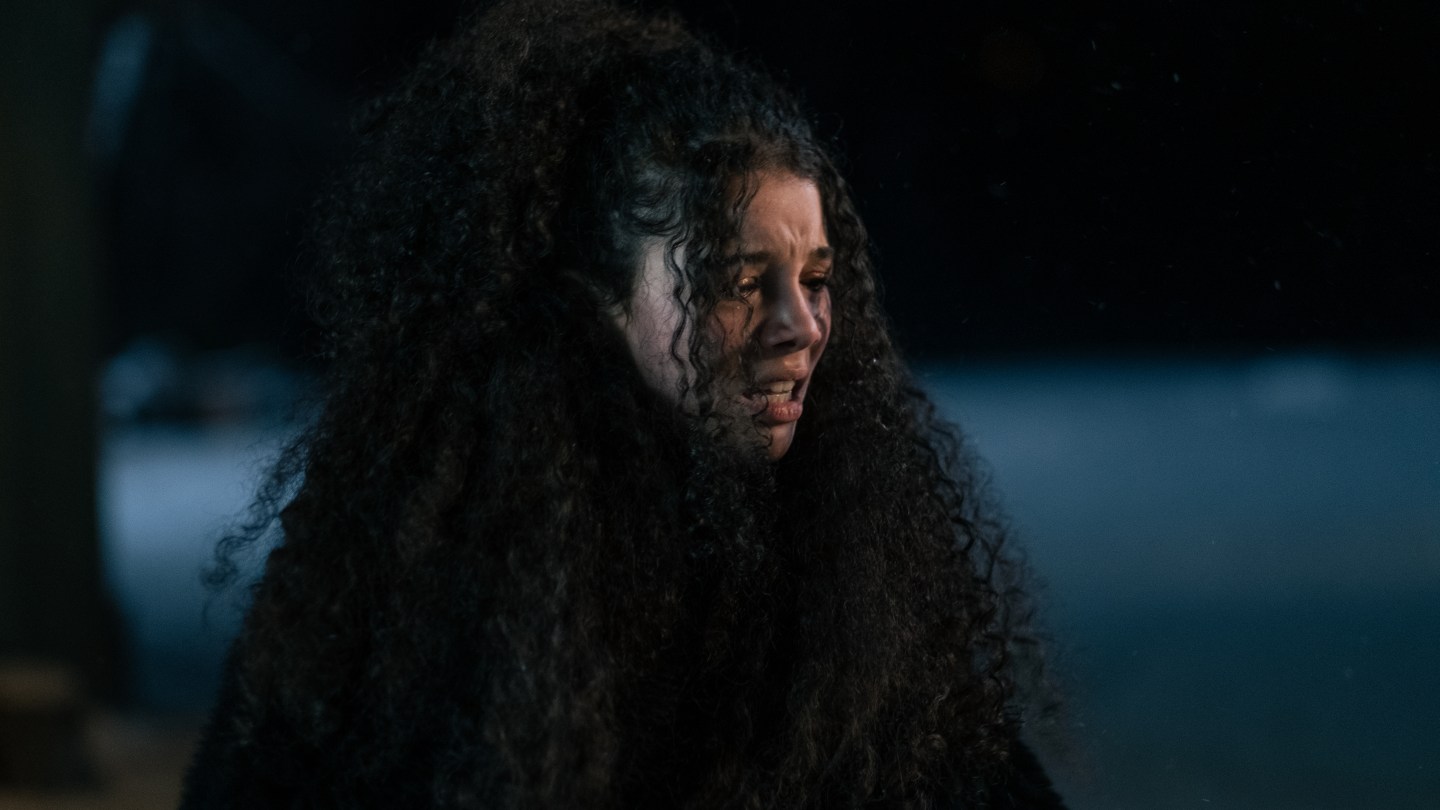
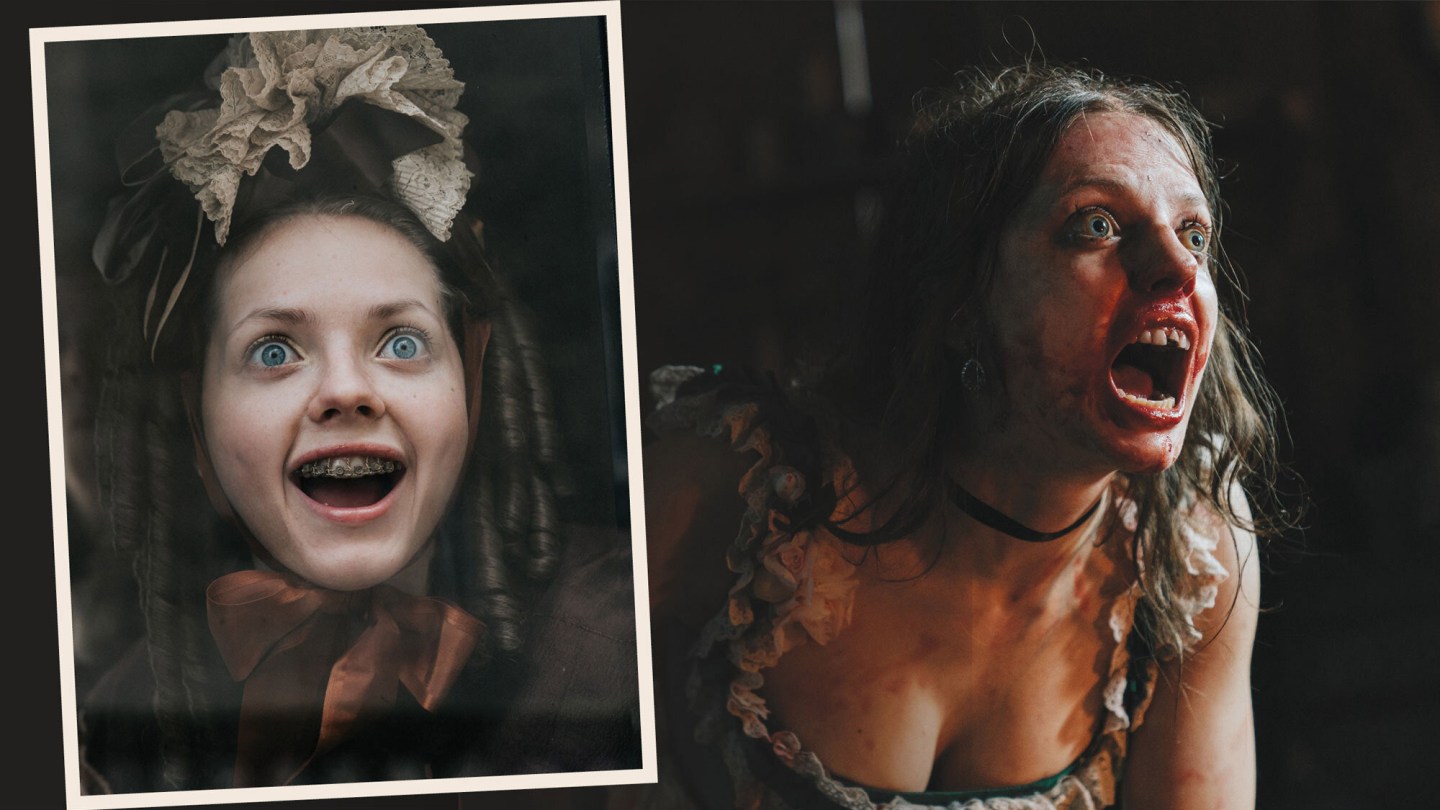
The Ugly Stepsister is a period body-horror black comedy, but it turns out its creative inspirations are rooted as much in ’70s-era Cher and glam rock as in the classic fairy tale Cinderella that it reimagines. Nowhere is that more present than in the ballroom scene where Prince Julian (Isac Calmroth) holds a party to select a potential wife.
“The heavy makeup was because the eyelash look was critical,” explains hair and makeup designer Anne Cathrine Sauerberg, who, along with prosthetic makeup effects designer Thomas Foldberg, is nominated for an Oscar in the best makeup and hairstyling category. (The other nominees are Frankenstein, The Smashing Machine, Sinners and Kokuho.) “It didn’t look like a contemporary eyelash that the girls would do nowadays, because we didn’t want to look like we were making fun of anyone, so we used this spidery eye, a very open look like Cher — a big hero of mine — in her ’70s era,” she explains.
In addition to using bolder colors than you might expect in a period piece set in the 1880s, Sauerberg embraced the style of her first heartthrob, T. Rex singer Marc Bolan, and other artists of the era, adding a decadent and flamboyant flair to writer-director Emilie Blichfeldt’s satirical vision.
“I don’t think it was intentional, but it’s in my blood. I’ll often go to David Bowie or Velvet Underground, too,” Sauerberg muses. “When you are a kid, you look up to people. Elvira [Lea Myren] is looking up to Cinderella; she idolizes the prince like a pop star. She has a lot of heroes, and your heroes stick with you.”
Something Sauerberg and Foldberg found invaluable was Blichfeldt’s meticulous storyboarding, especially when it came to creating the film’s first gross-out moment: Elvira, the titular ugly stepsister, squeezing a zit.
“There was a lot of talk about that, and I think that was actually the first drawing I saw,” the prosthetic makeup effects designer recalls. “We decided to do it with a separate fake nose piece, a small silicone prop of her face, instead of doing it with the prosthetic on her.” The decision came from the director and her cinematographer, Marcel Zyskind, who needed a very tight shot of the pimple pop.
The next challenge was creating the perfect pus to ooze out. Foldberg experimented with various mixes and materials. “We tried Vaseline with some talc in it, and some wax-based stuff, and then other lubricants with thickeners in them,” he explains. They settled on the Vaseline option “because we had to be able to control how fast it came out. It was a strange job.”
Period hairstyles also play a significant role in defining the characters of Elvira and Agnes, aka Cinderella, played by Thea Sofie Loch Naess. The original plan was to use no wigs in the movie.
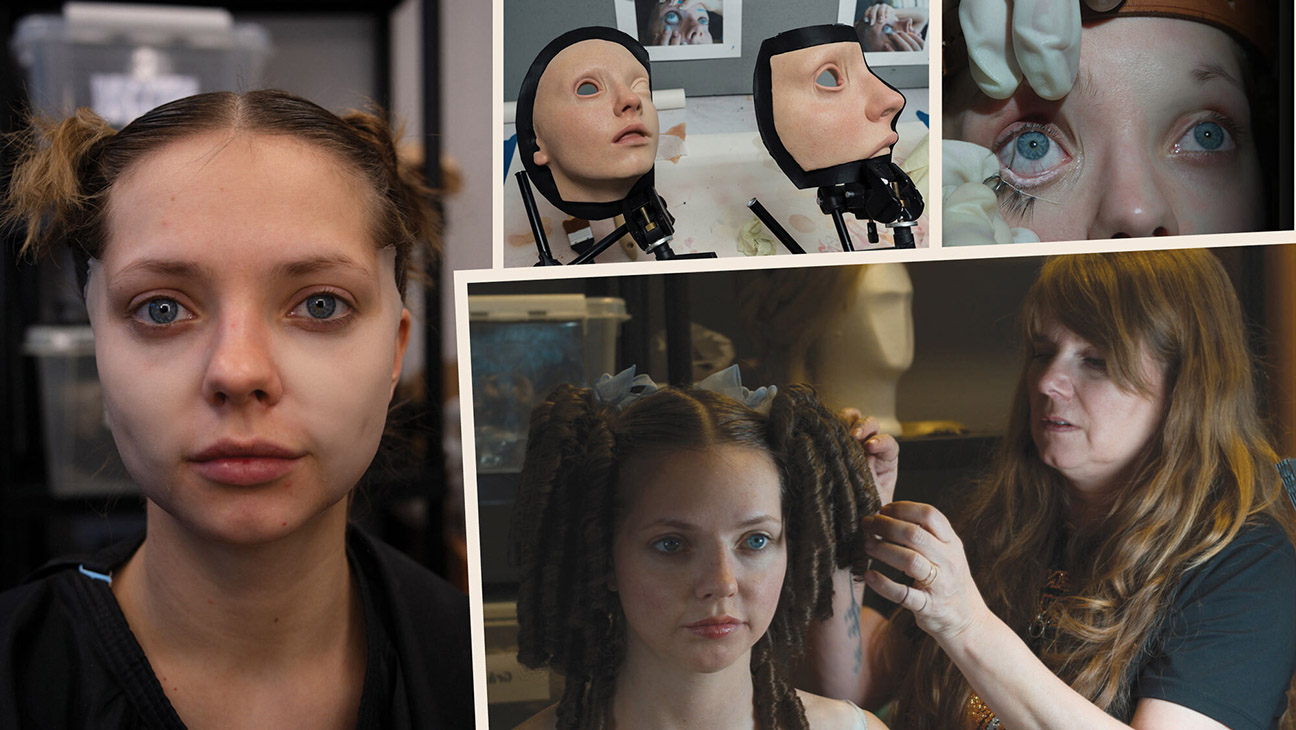
“I just said, ‘Well, that’s not going to happen,’ ” Sauerberg remembers with a laugh. With about 80 percent of the cast requiring some hair enhancement, the designer hit Black hair supply stores in Paris to find the desired texture and would dye, cut and sew it together as needed. With a choice between white, red or black hair, Sauerberg opted for white but says it was “an absolute nightmare” to match the “yellowish” blonde tone associated with Scandinavia.
For The Ugly Stepsister’s third act, where the prince is looking for Cinderella post-ball, Elvira goes to extreme measures to make her feet fit the slipper. Foldberg leaned into the body horror, with a transformation that evokes comparisons with Italian giallo films. Again, her hair, now falling out, plays a key role in Blichfeldt’s visceral vision, but it was a race against time to pull it off.
“I was directing a wonderful wig maker in Norway while having Emilie in Poland,” he recalls. “The wig maker ended up coming to set and only finished the wig four days before shooting started. I think we got to do one test makeup session, and that was it.”
Because of the filmmaker’s clear plan, Foldberg was able to create the desired look on time and avoid predictable tropes. “It’s so easy to get into a cliché look with thin hair,” he explains. “Emilie didn’t want it to be like a chemotherapy kind of thing, or just going thin. She wanted these big chunks of hair missing, with the rest looking full. I had a tough time getting into it, but I got there eventually.”
The solution saw Myren wearing a bald cap with a silicone forehead and a wig created in several sections so the hair could fall off piece by piece. However, that was just the start of Elvira’s top-to-(severed) toe grotesque metamorphosis.
“She also had lenses for her eyes that toned down the white part to match her skin tone. That always makes people look sick and weird,” he explains. “There were also dentures, the broken nose and the eyelashes, so a lot was going on.”
While the look is the most extreme in the film, at one hour and 45 minutes, it took the least time to apply, with Foldberg doing it himself several times. The most work went into the natural look Elvira has for the majority of the film.
“In the beginning, people didn’t realize it, which is funny and I take that as a compliment, but it was also a little sad, because people thought that I had only done a few effects gags with some blood and stuff,” he muses. “In almost half of the film, we have her in prosthetic cheeks, the fake nose, a double chin and a neck piece to cover the collarbones.”
Because Myren is a dancer and athletic and toned in real life, the effects team needed to add a teenage doughiness to her physique. “Where you see her without her dress on, we applied arm pieces to make her look softer than she is,” the prosthetic makeup effects designer concludes. “We’re not talking about nine hours in a chair. It was a four-hour makeup process when we had the arms on, but it was a lot of work.
This story first appeared in a February stand-alone issue of The Hollywood Reporter magazine. To receive the magazine, click here to subscribe.