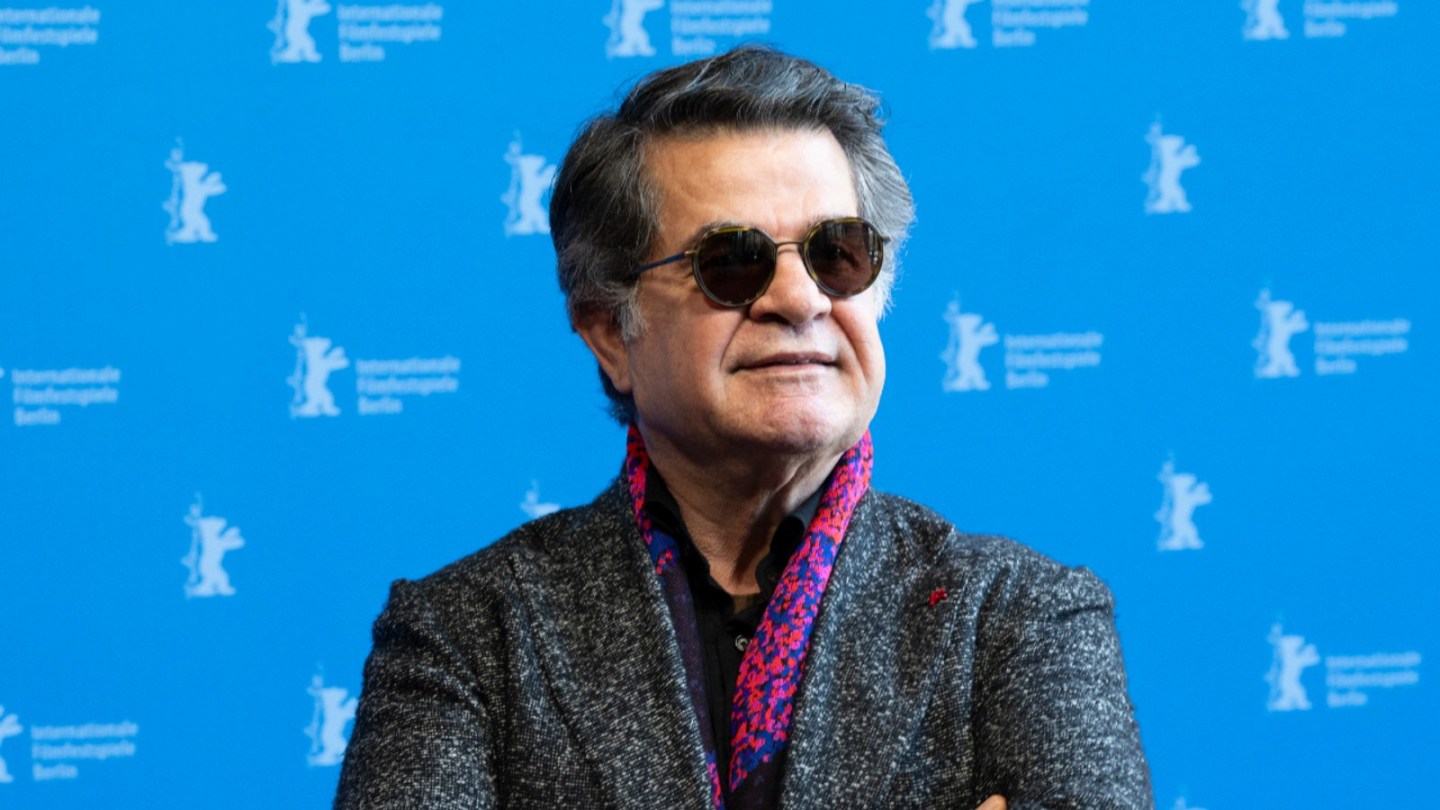
Oscar-nominated Iranian director Jafar Panahi (It Was Just an Accident) used a rare public appearance at the Berlin Film Festival to denounce what he described as an “unbelievable crime” unfolding in his home country, as independent filmmakers mounted a parallel campaign to spotlight artists killed and detained in a sweeping crackdown by the Islamic Republic.
In an on-stage discussion with The Hollywood Reporter’s European Bureau Chief Scott Roxborough in Berlin on Thursday, Panahi said the festival wanted to retroactively present him with the Berlinale Golden Bear honor he won in 2015 for Taxi [the director, under a travel ban at the time, was unable to attend in person]. He said he declined, wanting to keep attention fixed on the Iranian regime’s violent repression of protestors, which has resulted in tens of thousands of deaths.
“They wanted to give me the Golden Bear I had won for Taxi, and I refused it, because of the situation in Iran,” Panahi said. “An unbelievable crime has happened. Mass murder has happened. People are not even allowed to mourn their loved ones…The regime is forcing them into these acts. People do not want violence. They avoid violence. It is the regime that forces violence upon them.”
Panahi has long resisted the label of political filmmaker, even as his work and his life have been shaped by the state’s response to dissent. The current moment, he suggested, has made silence impossible.
“Artists do not want to be politically active by themselves. It is the regimes and governments that force them into political engagement,” he said. “Artists try to avoid being politically active, but socially engaged artists cannot stay silent about what happens in society. That is why so many artists, actors and actresses, and superstars have stood with the people of Iran and now face consequences. We have many artists in prison — documentary filmmakers as well. During previous protests and demonstrations, filmmakers were arrested. When an artist is silent, they are complicit in violence.”
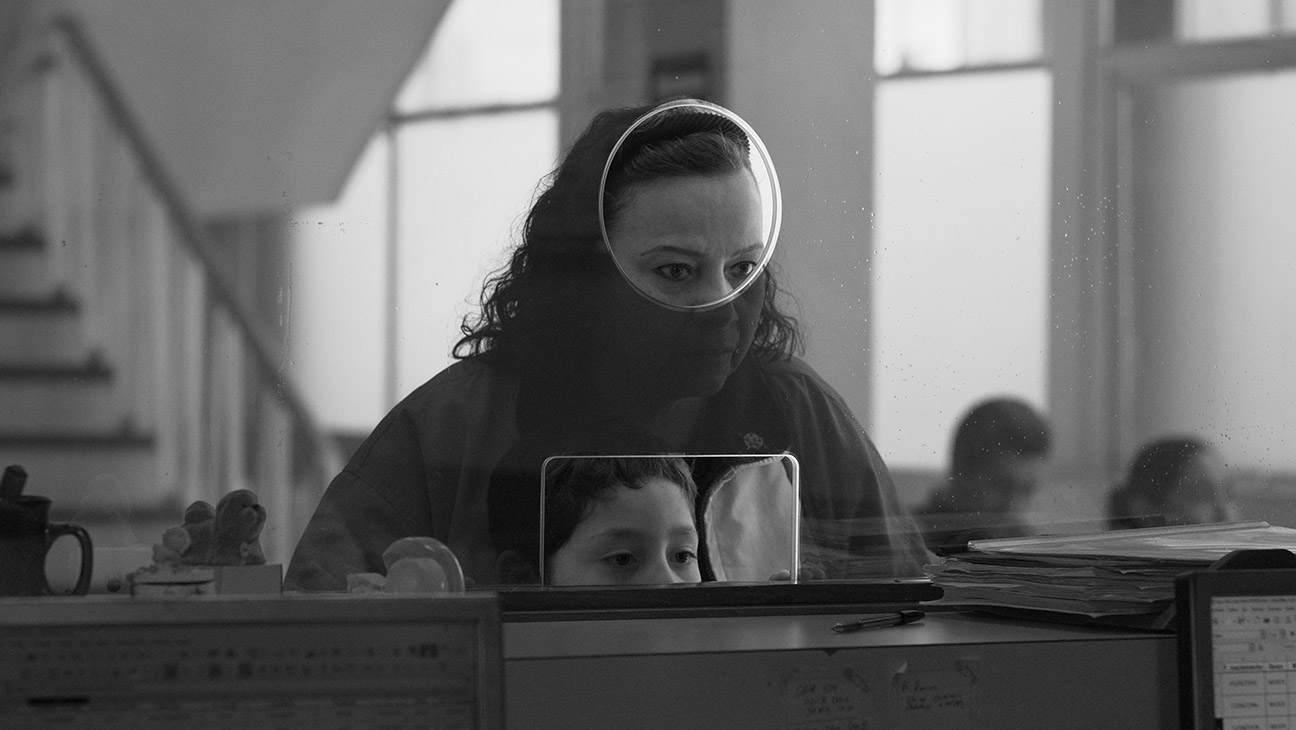
Panahi’s It Was Just an Accident, was written after the director spent seven months in Iran’s notorious Evin Prison and was inspired by the stories of the political prisoners he met inside. The film follows a group of former prisoners who kidnap the man they believe to be their torturer, debating whether to kill or forgive him.
“I did not know I wanted to make a film about this,” Panahi said. “But when I left prison, when the doors opened and I walked out and looked back at the huge walls behind me, I thought about those still inside. It became a weight on my shoulders. After weeks and months, it grew heavier, and I decided to make a film about them.”
To render that world authentically, he enlisted several of his fellow inmates, including political activist Mehdi Mahmoudian, to co-write the screenplay. Mahmoudian was recently re-arrested for condemning the actions of Iranian supreme leader Ali Khamenei and is currently out on bail.
“Mehdi Mahmoudian has spent nearly a quarter of his life in prison. He had more contact with people inside than anyone else. He knew the torturers very well — how they think, what their ideology is. That was a great help to me.”
In December, while touring with It Was Just an Accident outside Iran, Panahi was sentenced, in abstentia, to a year in prison and another travel ban, for “propaganda activities” against the government. He said following the Oscars — It Was Just an Accident is nominated for best international feature and best original screenplay — he will return to Iran.
“Half of my existence is in Iran — my family, my mother, my sister, my brother, my son, my friends, and the society I work for. If I did not return, I would betray what I believe. As a socially engaged filmmaker, my duty is to stand with the people I belong to. A doctor can save lives anywhere. But my cinema exists there. I must go back and make films there. That is the right thing to do. I will return, 100 percent, because of who I am and because of my beliefs.”
His remarks in Berlin unfolded alongside a coordinated effort by the Iranian Independent Filmmakers Association (IIFMA) to draw attention to artists killed and detained in the latest wave of repression. The association, founded in 2023 in the wake of the Woman Life Freedom movement, returned to the Berlinale with a stand, a panel and a flashmob on Potsdamer Platz.
At a panel in Berlin, IIFMA board member Mahshid Zamani screened footage compiled from social media and material sent directly from Iran documenting the Jan. 8 and 9 crackdown.
“Each frame captures the courage, hope and longing that define the Iranian spirit while also shedding light on the brutal realities imposed by a repressive, fanatic, Islamic, terrorist regime,” he said. “Tens of artists were murdered while bravely standing up for their beliefs in the uprising of January 8 and 9.”
Zamani then read aloud the names of musicians, filmmakers, actors and other arts professionals confirmed killed or detained, asking the audience to applaud each one. Later, IIFMA members staged a flashmob reenacting rows of body bags in Berlin’s festival district in commemoration.
According to IIFMA, the following arts and culture professionals have been killed:
Ahmad Abbasi – filmmaker
Shokoufeh Abdi – photographer
Melika Dastyab – musician
Pouya Faragardi – musician
Shabnam Ferdowsi – puppeteer, graphic designer
Javad Ganji – filmmaker
Sorena Golgoun – musician
Yaser Modir-Rousta – musician
Sanam Pourbabaei – musician
Sahba Rashtian – painter and animation director
Foad Safayi – musician
Mehdi Salahshour – sculptor
Zohre Shamaeizade – script supervisor and voice actor
Mohammed “Shahou” Shirazi – singer
Mostafa Rabeti – filmmaker
Reyhaneh Yousefi – actor
Amir-Ali Zarei – musician, art student
And the following detained:
Dawood Abbasi – filmmaker and cinematographer
Ghazale Vakili – actor
Navid Zarehbin – filmmaker
Kimia Mousavi – artist