While Beth de Araújo’s 2022 debut feature Soft & Quiet, an uncomfortably real ride-along with the white-supremacist women next door, unfurled its horror with patience and combustible purpose, her transfixing follow-up, Josephine, hits you with a shocking gut-punch of violence in the first 15 minutes. Drawn from a scarring experience in the writer-director’s childhood, this unflinching chamber piece puts us inside the head of an innocent 8-year-old girl as she struggles to work through her inchoate feelings following a vicious awakening to male aggression.
Devoted San Francisco dad Damien (Channing Tatum) in the opening moments appears already cognizant of the dangers facing girls and women as they move through the world. Before starting their regular Sunday morning run to nearby Golden Gate Park, he puts his daughter Josephine (Mason Reeves) through a rigorous safety drill to reduce her time getting inside their garage at home and hitting the door switch.
Josephine
Raw, personal and quietly shattering.
Now might be a good time for the spoiler-averse to stop reading, as any detailed discussion of the movie hinges on the drama’s inciting incident. As her dad slows down to catch a breath once they are inside the park, competitive Josephine races on ahead. In real time and through the child’s barely comprehending eyes, we watch as a young woman (Syra McCarthy), previously glimpsed jogging on a different path, steps into the restroom. Out of nowhere, a fortyish man (Philip Ettinger) appears and follows her inside, from where sounds of distress and a scuffle can be heard.
The woman manages to break free and run back out into the clearing, but although she puts up a considerable fight, the assailant soon overpowers her. He knocks her out, peels off her clothing and rapes her, continuing as she regains consciousness.
That scene is profoundly upsetting because with a few key exceptions — Paul Verhoeven’s diabolically effective rape revenge drama Elle, with Isabelle Huppert, for one — we seldom see sexual assault depicted onscreen in such a matter-of-fact way, every agonizing second of fumbling clumsiness, brutal violation and shattered aftermath seared into the psyche.
De Araújo’s approach is both dispassionate and blunt, instantly heightening our awareness that if the crime is so disturbing to us as an adult audience, it must be horrific to the vulnerable child watching in silence, who doesn’t even have the vocabulary to describe what she saw.
Damien reappears just as the rapist is fleeing the scene. A glance at the woman weeping on the ground makes the situation instantly clear; he gives chase, calling the police and telling Josephine to wait right where she is until they come.
That period in which she’s deprived of parental protection, stealing glances at the victim as they are both ushered into the back of a patrol car by a male cop startlingly unskilled at dealing with children, seems to solidify the worrying extent to which Josephine will be processing what she saw alone, much more so than with the help of adult intervention. An extended moment of eye contact with the apprehended rapist adds another layer of reverberating trauma to the experience.
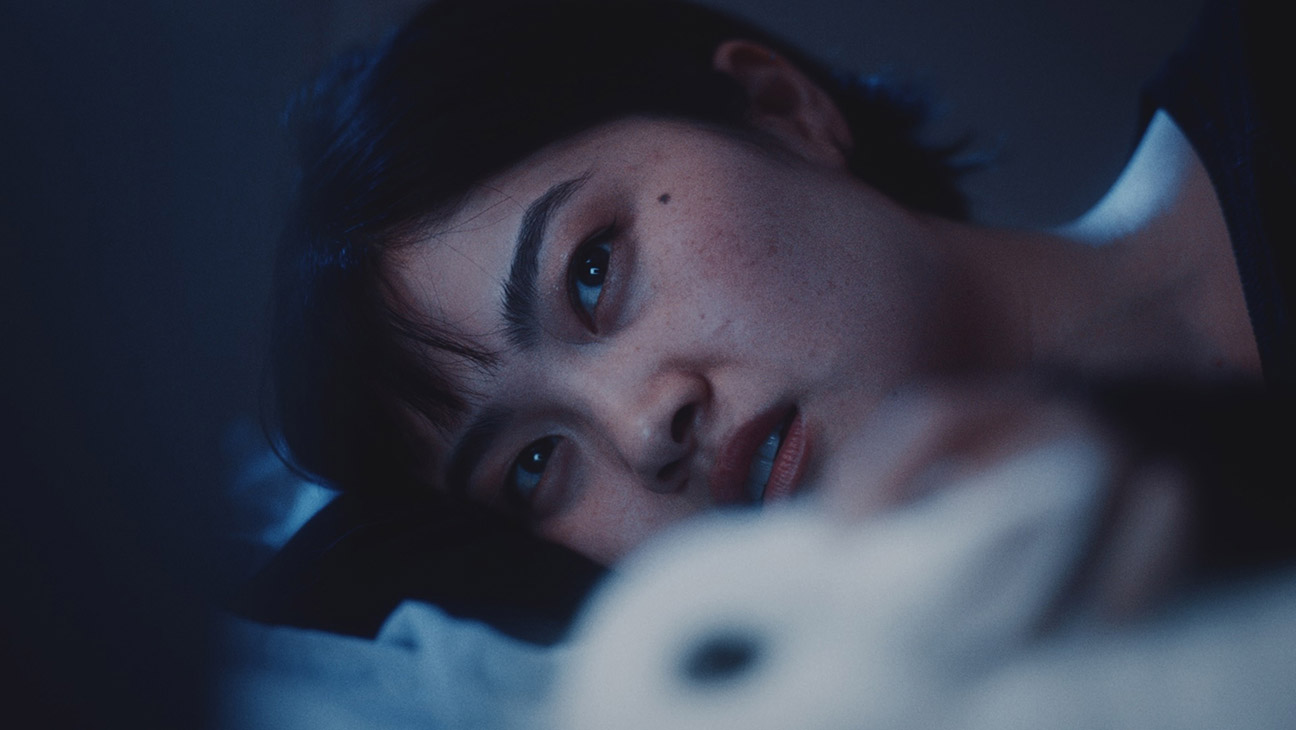
Josephine is very much the center of the film, and Reeves holds that position with the intensity of an intuitive actor. We watch her mind ticking over as she wrestles with frustration and uncertainty while reacting in ways both impulsive and calculated. It’s a remarkably assured performance, utterly natural and unforced, bouncing between fragility and resilience like a ragdoll one minute and a pugnacious fighter the next.
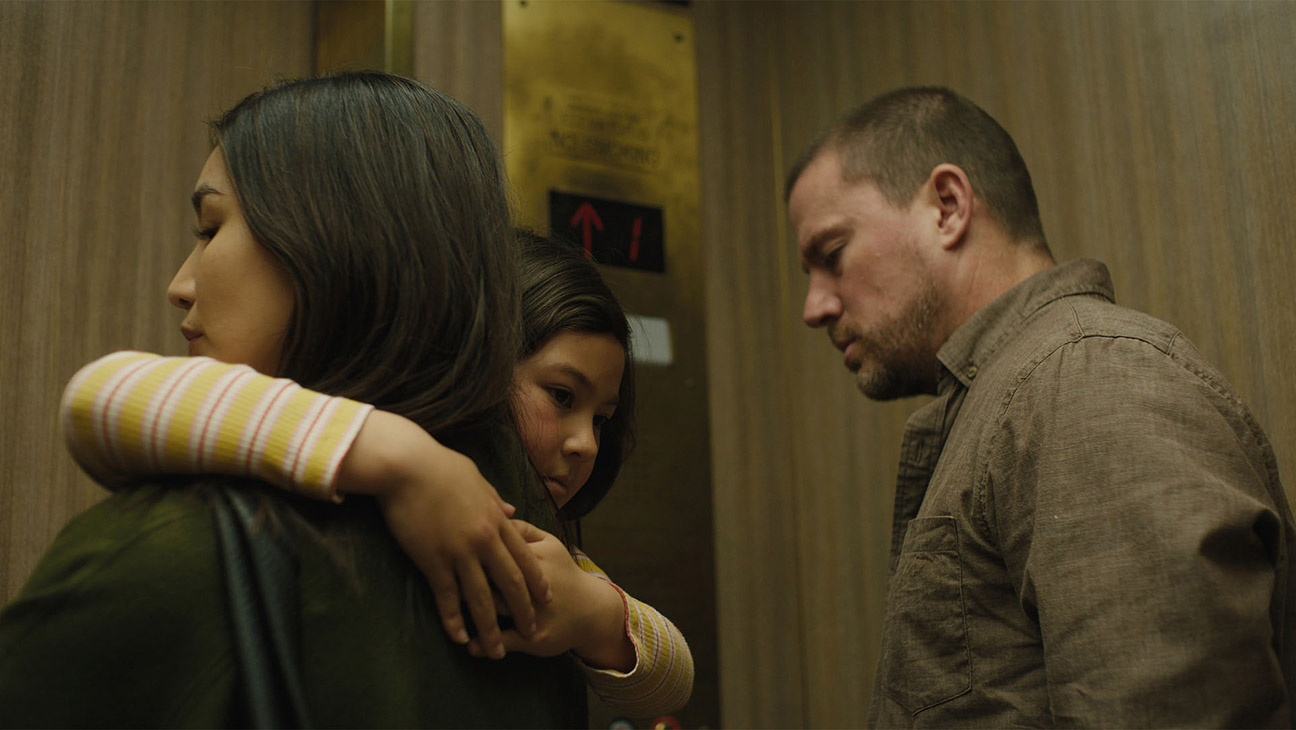
Their chemistry could be stronger, but Tatum and Gemma Chan as Josephine’s mother Claire are affecting as they flail about trying to figure out how to comfort their child and contain her trauma. But if there are weaknesses in which the verisimilitude of de Araújo’s script could be questioned, it’s in the degree of cluelessness with which Damien and Claire face those challenges, often in conflicting ways.
The first eyebrow-raising moment comes immediately after the incident, before Damien and Josephine have even left the park, when he attempts to distract her by practicing soccer kicks and strength training, saying almost nothing about what she witnessed. He has no words with which to respond when she asks, “What was the man doing?”
Claire is in favor of talking to Josephine about the attack, but Damien is more focused on steering her toward self-defense. “I don’t want to scare her,” he says, somewhat obtusely. Josephine follows his lead and refuses to see a therapist. In a store, after being told that a plastic semiautomatic is not a suitable toy, she asks, “When can I have a gun?” And on the playground at school, her focus on toughening up causes disciplinary issues, along with her muddled ideas about rape and sex.
The one jarringly false note comes when her parents take Josephine to see Claire, a modern dancer, perform in a dark piece where she is flanked by two shirtless men, their physicality both sensual and dangerous. This makes Damien and Claire seem almost idiotic in their willingness to expose their daughter to potentially triggering images.
But there’s integrity to the performances even when the writing falters, or when de Araújo gets overly literal in showing how haunted Josephine is by the incident, despite mostly maintaining an inscrutable expression. Especially as nerves are frayed over the decision of whether to have Josephine, the sole witness, testify in court, the dilemma of loving parents placed in a nightmarish situation with inadequate psychological preparation is quite moving.
With precise visuals and elegant scene transitions accented by a restrained synth score, the drama is insightful even as it asks questions destined to remain unanswered. Is Josephine young enough to forget what she saw? Seems doubtful. De Araújo makes that thought linger as she brings both empathy and compassion to the ordeal of a family trying to figure out tough stuff without a how-to manual.