If Sony’s Hollywood studio rivals weren’t already scrambling for a big-screen anime strategy, they certainly should be now.
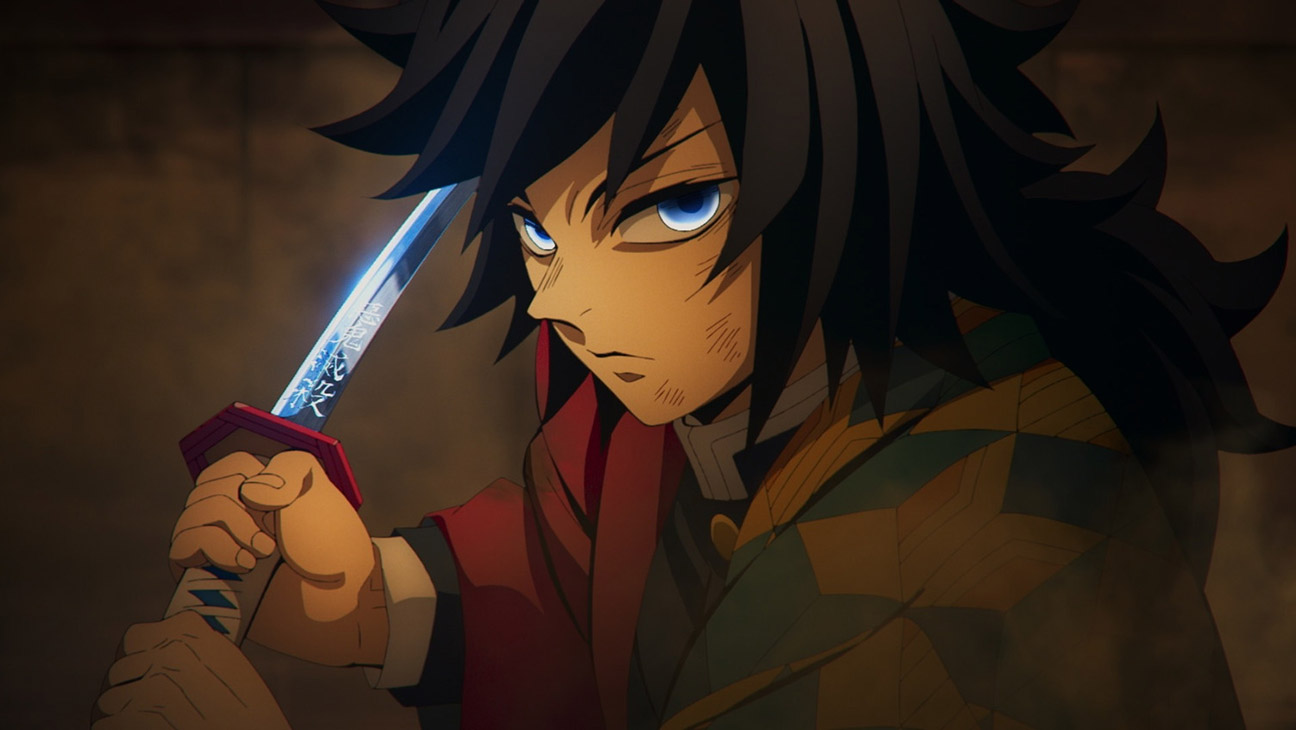
When Demon Slayer: Infinity Castle arrived in theaters late last year, it didn’t just mark another milestone in anime’s ongoing ascent into the global mainstream — it delivered one of the most staggering box office performances in animation history. The film has grossed $722 million worldwide, including a remarkable $134.5 million in North American cinemas, making it the highest-grossing Japanese film of all time and further cementing anime’s status as a true theatrical force.
Directed by Haruo Sotozaki and produced by Hikaru Kondo, Infinity Castle marks the opening installment of a planned trilogy adapting the climactic final arc of Koyoharu Gotouge’s original Demon Slayer manga. Set almost entirely within a shifting, gravity-defying fortress controlled by the series’ ultimate villain, the film plunges its heroes into an all-or-nothing confrontation that serves as the beginning of the end for the saga — with two more theatrical chapters still to come.
Behind the film franchise is ufotable, the Tokyo-based studio founded by Kondo in 2000, whose idiosyncratic name derives from a piece of designer furniture — a UFO-shaped table — that once sat in the company’s original office, reflecting the founder’s early desire to build an anime house that felt informal, collaborative and artist-driven. Long admired within the Japanese industry for a meticulously polished visual style that fuses hand-drawn animation with sophisticated CG compositing, ufotable built its reputation over two decades through technically ambitious manga adaptations such as The Garden of Sinners and the Fate franchise. Under Kondo’s leadership — and with an unusually large, largely in-house staff — the studio became known for its cinematic camera movement, dense effects work and an internal production model that prioritizes long-term collaboration over outsourcing. With Demon Slayer, that craft-first philosophy has translated into unprecedented commercial scale, transforming ufotable from a respected boutique outfit into one of the most bankable creative engines in Japanese animation.
Infinity Castle also represents a major win for Sony and its anime subsidiaries, Aniplex and Crunchyroll, whose global distribution strategy has helped push anime into multiplexes worldwide. The film’s recent Golden Globe nomination and growing Oscar buzz further underscore just how far the medium has traveled from Japanese niche to U.S. mainstream.
The Hollywood Reporter recently connected with Kondo — and an Aniplex business executive, somewhat by surprise — to discuss the creation of Infinity Castle and what comes next for the franchise. The conversation took place via an interpreter.
As you and your team first began work on this trilogy,how did you approach visualizing the Infinity Castle itself? It’s one of the most memorable settings of the Demon Slayer saga, a space that’s as much psychological as physical. What were your guiding ideas about how it should look and feel on the big screen?
Going all the way back to the start, our original idea was very simple: let’s take the Infinity Castle and put it on the big screen. That’s what the fans wanted to see. As a studio and as producers, we want to create something that audiences will be desperate to experience — to meet their desire and their thirst. But what kind of experience is that going to be? With the Infinity Castle, we asked ourselves: how do we visually express something infinite? How do the characters run in this space? How do they fight in this space? What kinds of situations can we put them in? In the end, this turned out to be a huge undertaking and a huge challenge.
Because I personally oversee the screenplay and the storyboards, I think a lot about what the storyboard is actually for. For me, the storyboard is a launch pad — a prompt. It’s something that sparks ideas. Once the framework is there, our individual artists respond to it. We have about 300 people in the studio. One animator might say, “I want to take this section and try a new kind of action sequence.” Another might say, “I want to experiment with camera motion here.” So my role is almost like sending a prompt into the studio and watching people rise up to meet that challenge.
We’re all in-house, and many of our team members have been with us for many years. Because we’ve worked together for so long, there’s a kind of shorthand communication. I think about which animator is best suited for which type of action, or who is best at intimate character scenes, or who can best handle a CG-based water expression.
When I’m storyboarding, I often already have an idea of who might take on a sequence — but I also hope they surprise me and exceed my expectations. There’s a lot of trust in the process. The result is the film you see.
I’ve read that the budget for Infinity Castle was around $20 million, very high for a Japanese anime film, but very low compared to most Hollywood animated features — especially for a film that has earned over $700 million worldwide. Is that budget estimate roughly accurate? And given the film’s huge success, do you expect to have considerably more resources for the sequels? Or, given the insular way your company works, is budget not the key constraint?
Can I respond to your two questions with two questions of my own?
Of course.
Where did that number come from? Because we never officially announced a budget figure for Infinity Castle. I’m genuinely curious.
I didn’t get it directly from any source at your company, but I’ve seen it in a few reputable places. The New York Times, as well as some anime-world outlets, have pegged the budget at around $20 million. That seems to be the consensus estimate within the industry.
Unfortunately, I can’t comment on the budget. But if that rumored number were accurate, what do you think would be an appropriate budget for Part Two, given the success?
Well, that’s kind of my question to you… But if this were Hollywood, and a film made well over $700 million worldwide, a budget of $100 million to $150 million would be very easy to justify for a sequel.
So, I don’t speak English myself, so in addition to having the interpreter here with us, I’m using a translation app on my phone, which is also transcribing everything you say. I want to thank you very much for leaving that statement on the record for me. What you said makes me very, very happy. To that point, I have our distributor and financier from Aniplex right next to me here, so perhaps you can get some additional comments from him. [Smiling ruefully, Kondo gestures for the executive sitting next to him to chime in.]
[Yuma Takahashi, a producer at Aniplex, briefly joins the conversation]: Yes, I am a producer at Aniplex [Laughs.]. I’m in charge of business and marketing. So I’ll just say, that’s a huge budget! I can’t say anything official right now, but I will sincerely try my best.
Well, I hope we’ve helped the cause here! So, the success of Demon Slayer has gotten Hollywood’s attention in a closer-to-home way, too. Many analysts are now saying every major studio should have a significant Japanese anime strategy — perhaps Disney most of all. Has the Demon Slayer phenomenon opened new doors for ufotable? Are you hearing from more Hollywood studios? And is true co-production even possible given the intimate, in-house way you work?
Actually, this isn’t something that started only recently. For quite some time, we’ve received various approaches and offers, and we’ve been having conversations. We look at every project and opportunity individually. The question is always: which project fits into which slot, and how should we approach it? How should this be animated? What will bring the most enjoyment to audiences? How should the movement of this work be translated? Honestly, I don’t do many interviews like this because I’m usually at my desk thinking about these creative questions. But ufotable itself has changed with each production. Even from a business perspective, we haven’t used the same model for every project. So even as our team and our opportunities grow, our fundamental approach will not change. We will continue to examine every project very carefully.
You founded ufotable in 2000 at age 30. For years, the anime industry was known to be notoriously punishing, with low pay for artists and very thin margins for studios. Now it’s a global phenomenon, and ufotable is behind the top-grossing Japanese film of all time. What has the journey been like for you personally?
The industry was extremely tough in the past. I’ve always been closer to the actual production than to the business side. I was always in the studio. Twenty years ago, working conditions throughout the industry really weren’t in a good state. When I look back, what humbles me most is that there are team members who are still here today and have worked alongside me this entire time. For me, that’s one of our greatest achievements and assets as a studio. We now have veterans who have benefitted from that transformation, and new graduates who are eager to join us every year. From my perspective, what matters most is making sure the business remains sustainable and continues to support everyone.
Ufotable is famous for seamlessly blending 2D and CG animation. With technology evolving so rapidly — higher frame rates, new workflows, AI tools — how do you think about technological progress versus preserving the 2D human touch that anime fans cherish? What innovations excite you, and what traditions will you insist on keeping in place?
Our studio has grown, but our fundamental approach hasn’t changed. We start with an idea — “I want to express this visually” — and then we storyboard it. From there, it’s always trial and error. We’ve had shots that went through dozens of revisions until we were satisfied. Through that process, we try new tools and discover new techniques. Something might not work in one scene, but it might work beautifully in another. Maybe adding a few keyframes can dramatically enhance an action sequence.
That trial-and-error feedback loop, within deadlines, is where our seamless blending of 2D and 3D comes from. We try something in 2D, then in 3D, then adjust again. I don’t believe our artists are born with some unattainable genius. Their skill comes from effort, repetition and deep experience. What you see on screen is the result of that accumulated human process.