To say that German auteur Angela Schanelec’s latest movie is one of her more accessible projects to date will probably seem strange to anyone unfamiliar with her films. And yet compared to works like Music, I Was at Home, But… and The Dreamed Path — artfully crafted dramas that are so subtle and elliptical, they can be fairly hard to follow — the writer-director’s new feature feels like a straight-up romantic tragedy.
Not that My Wife Cries (Meine Frau weint) suddenly has the 64-year-old Schanelec going full The Fault in Our Stars on us. This austere and enigmatic think piece, which premiered in competition in Berlin, is likely to only please a select few. But its story of a couple on the verge of breaking up, with the usual confessions, freak-outs, and painful longing, plays out rather classically if you look beyond some of its high-art conventions.
My Wife Cries
Both compelling and distancing.
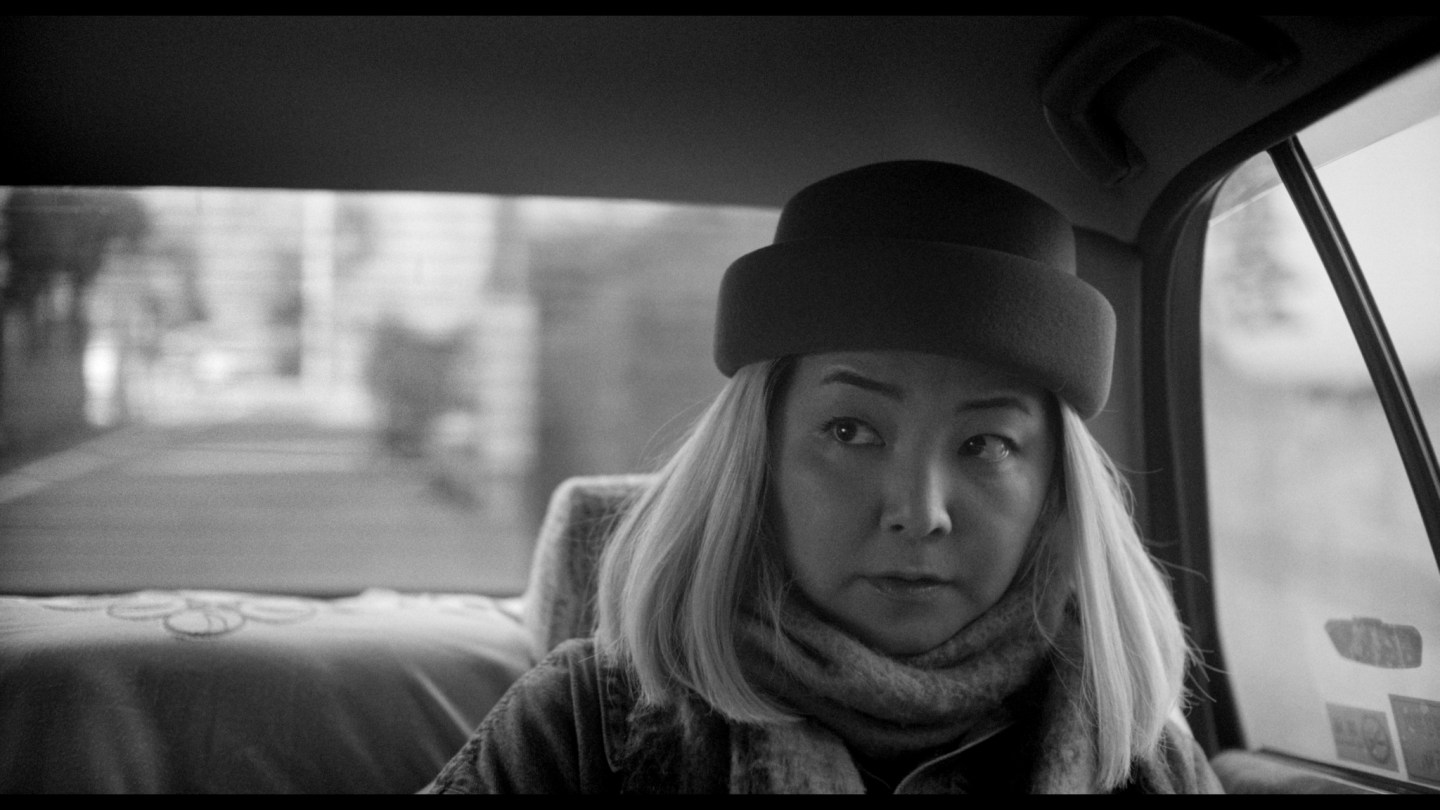
It also features a terrific lead turn from French actress Agathe Bonitzer (daughter of directors Pascal Bonitzer and the late Sophie Fillières), who convincingly performs in German, playing a young woman falling out of love and facing up to the consequences. She manages to anchor a movie that digresses from its main plotline and distracts with its brand of stylistic minimalism, yet also contains some genuine moments of feeling.
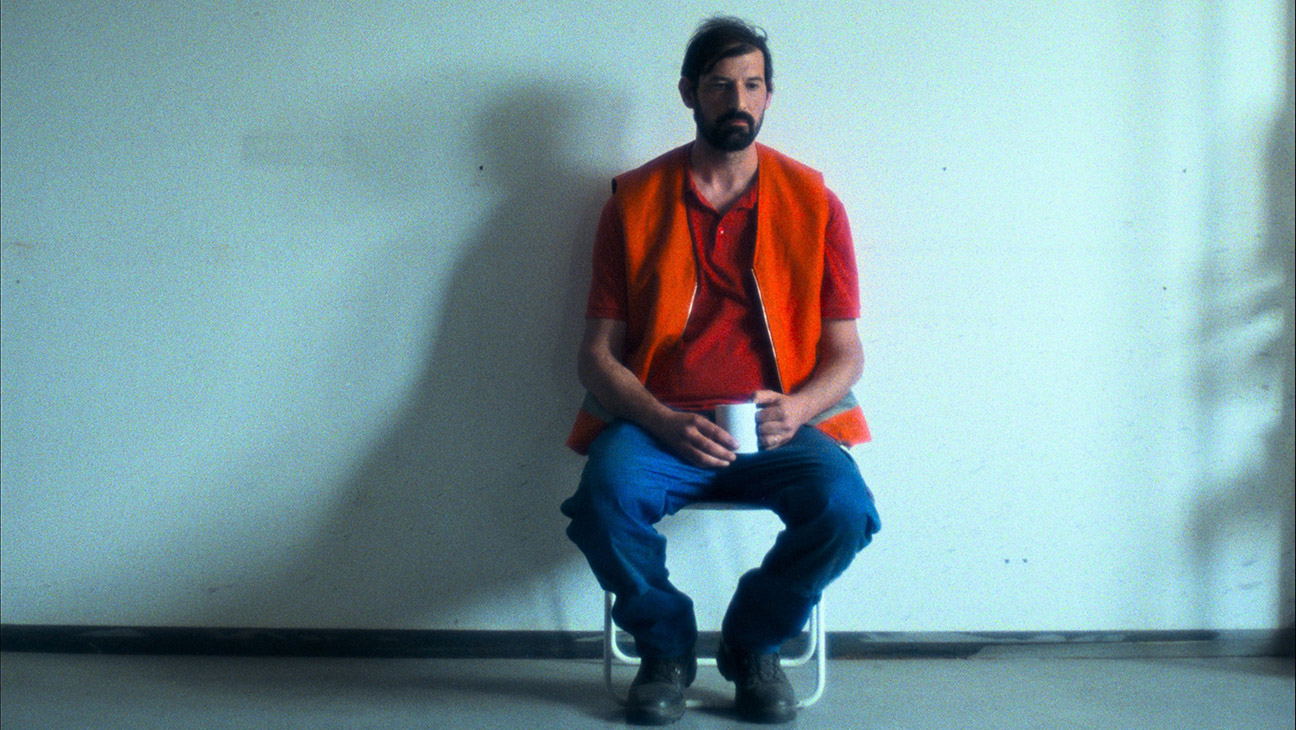
A fixed eight-minute shot of a crane operator, Thomas (Vladimir Vulević), sitting in a drab construction office, checking his phone and responding to questions from unseen characters, kicks off the movie in a way that portends a pure cinematic experiment. Schanelec, who’s also credited as editor, finally cuts out to reveal the other side of the room, then follows Thomas after work as he meets up with his long-time partner, Carla (Bontizer), who’s sitting on a park bench and clearly traumatized by something.
For a story that starts off extremely subdued, My Wife Cries quickly becomes a full-on drama when Carla reveals that she was embarking on an affair with another man, until the two got into a car accident and her potential lover was killed. This is all divulged during one long walk-and-talk monologue that Bonitzer performs expertly and quite dryly, as if she were reciting lines in a Brecht play. The other performances are equally remote — this is the kind of a movie where nobody talks over anybody else’s lines, with steady pauses between each piece of dialogue — keeping the viewer at a certain distance.
But Schanelec also exhibits a talent for depicting fading romance, doing it in an elusively deadpan way that at times recalls the work of Eric Rohmer. If the plot diverges in places, it generally sticks with Carla as she deals with the fallout of her unrequited affair, talking to friends and colleagues, taking long bike rides around Berlin and the surrounding countryside (including a visit to the site of the car crash), and eventually reuniting with a dejected Thomas, with whom she seems, perhaps, to still be in love.
The latter sequence, which involves Carla stripping down naked and attempting to arouse Thomas’ flaccid penis as he sleeps on the couch, may be one of the saddest sex scenes in contemporary cinema — or at least at this year’s Berlinale, where there’s likely some stiff competition. Nobody seems to be happy in their relationships here, even if a fellow teacher (Clara Gostynski) confidently announces to Carla that she’s pregnant, suggesting that some couples can work out, at least for now.
What Schanelec captures most in My Wife Cries is the constant romantic yearning, whether it’s Carla recalling the dance classes she took with her dead paramour; Thomas breaking into his own long monologue about a former girlfriend who got pregnant and disappeared (and, in one odd detail that he mentions, had extremely thick pubic hair); or a scene where several characters perform a random interpretive dance set to the Leonard Cohen ballad “Lover Lover Lover,” which is definitely this film’s theme song.
Because of the way the director works, emotions tend to be more discussed than felt, although there’s something about Carla’s desperation that pierces through all the soberness. As usual, Schanelec reveals a deft touch for composition, working with cinematographer Marius Panduru (a regular collaborator of Radu Jude) to create a series of carefully staged sequence shots, placing characters in tableaux-like setups that feel both raw and artificial.
The Romanian DP is not the only non-German involved in a movie whose cast counts several foreigners alongside Bonitzer, including co-star Vulević, who hails from the Balkans; Swiss actress Gostynski (star of the excellent Unrest); Icelandic opera singer Thorbjörn Björnsson; and another French actress, Laure-Lucile Simon (This Life of Mine). None of them perform in their native tongue, which highlights both Berlin’s multicultural melting pot and the fact that no matter where you come from, love hurts.