A Model World
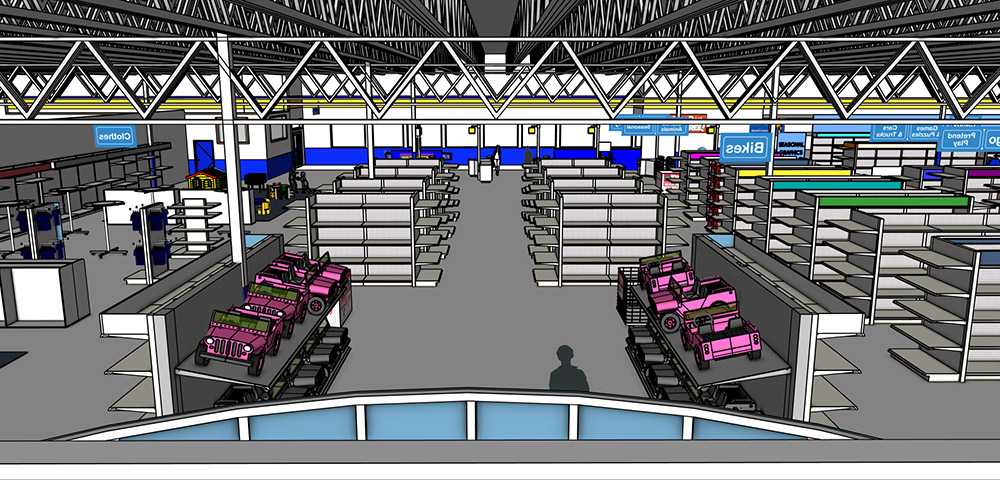
It took a lot of trial and error to accurately depict the size of a Toys R Us and to figure out the best camera placement for filming, notes Weinberg, who says that when Cianfrance first looked at this exact 3D model of the store, which served as a blueprint for the production design crew, he told her, “It’s not large enough, it’s not going to feel expansive enough.” To accommodate the moving camera, flyaway walls had to be built. Manchester’s hideaway is positioned at the bottom of the model, overlooking the toy shelves and the cash registers in the far back.
Blast From the Past
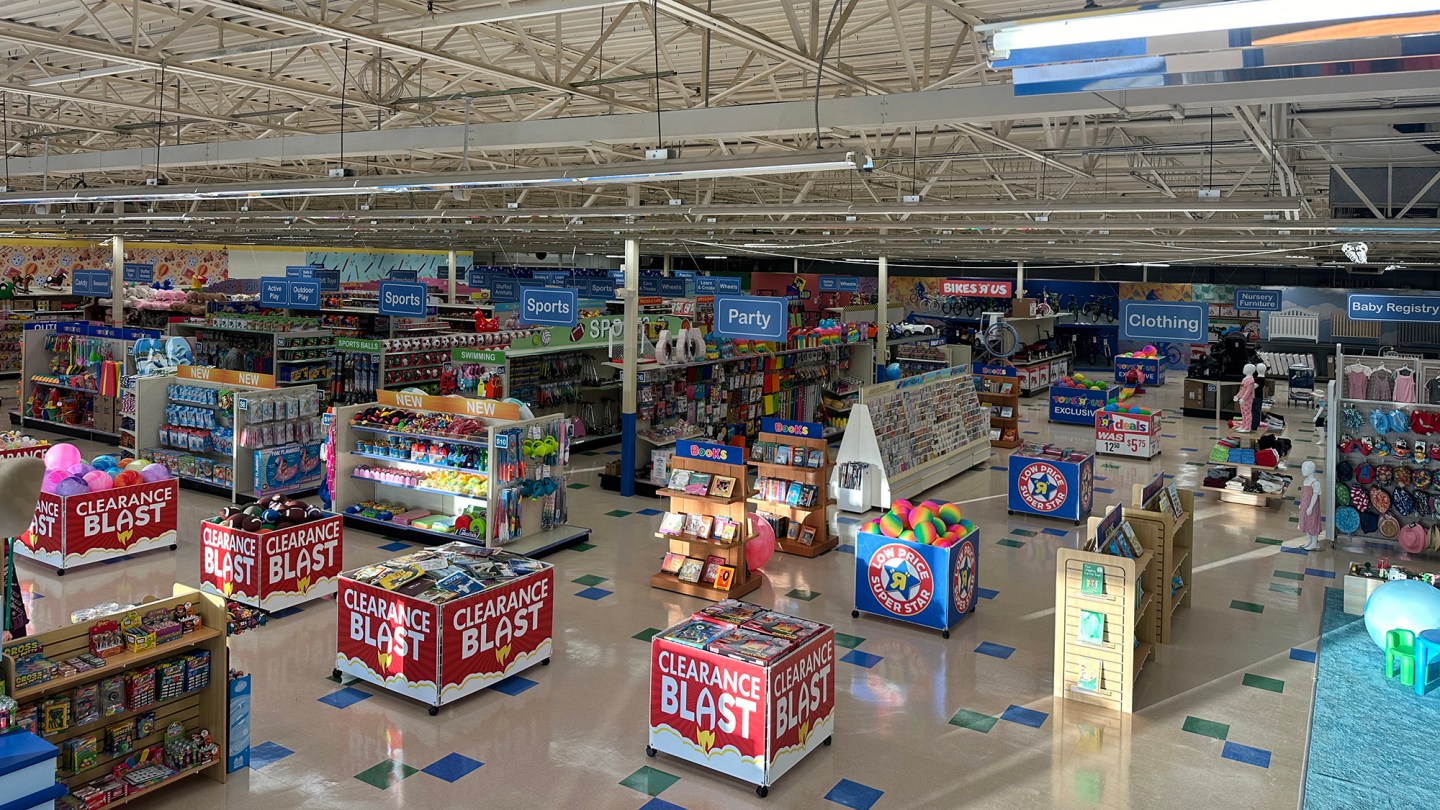
The production design team had six to eight weeks to take the store from concept to reality. The
CCTV cameras, landlines and cash registers were all functional, and the team built the store as if it were a real franchise, including period-appropriate signage, toys, jingles and technology. “At the end, when we had to donate and find a new home for all the toys — we wrapped right before Christmas — we thought, ‘Our crew should be our first customers.’ We opened the store for a few days for crew and family, and gave a discount to purchase things. It was a bit of ‘life imitates art imitates life,’ ” says Weinberg.
Sketched Out
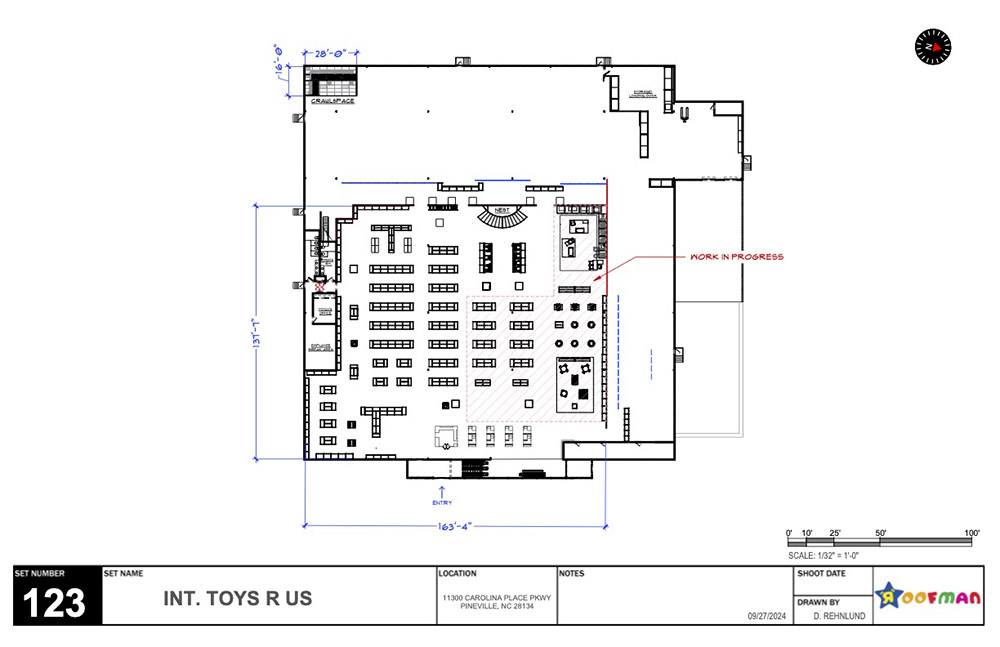
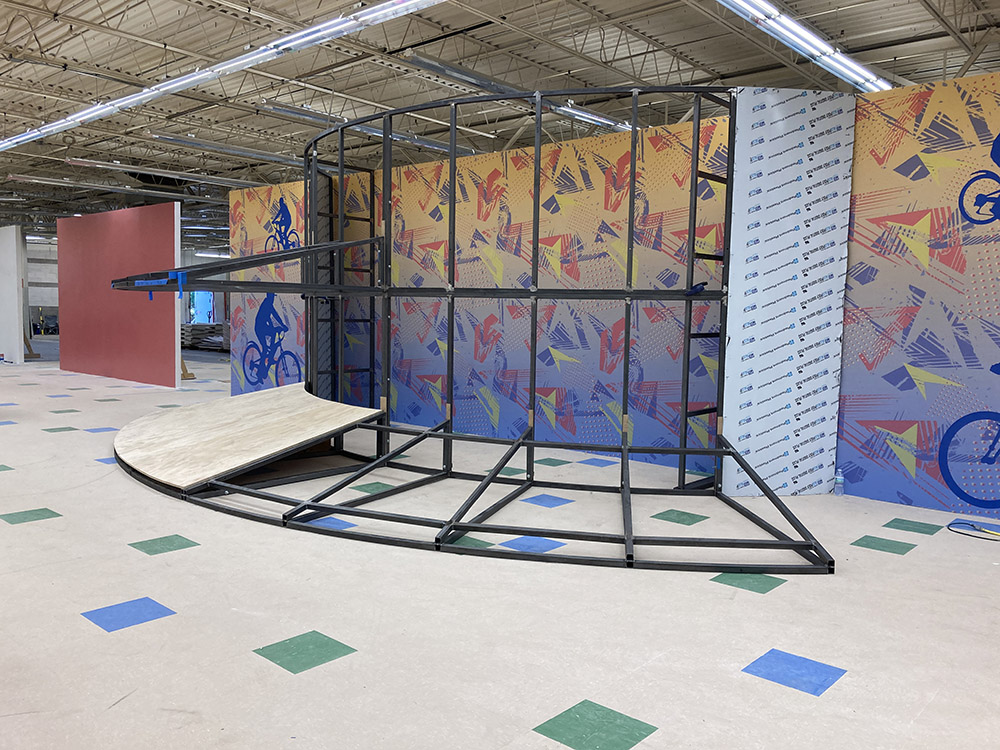
It took Inbal Weinberg and her team weeks to close the contract on the commercial space, and time was getting tight before production was meant to start, so she started to draw up floor plans of how merchandise would be sectioned inside, using research on Toys R Us and other big-box stores. But once the team actually got into the space, her plans had to be reconfigured because the warehouse was so vast, so they came up with “layering techniques” that used graphics and toys to fill the shelves. In the floor model, you can also see the back offices and Jeff Manchester’s hideout, which the real Manchester told director Derek Cianfrance (in phone calls from prison) was behind a curvy bike rack.
From Scratch
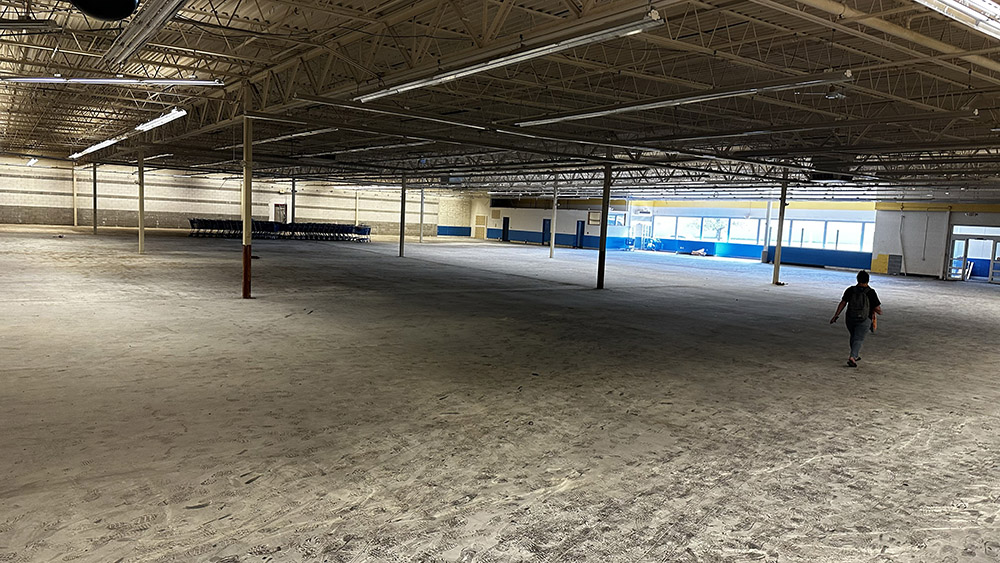
The “defunct” Toys R Us Weinberg found was a vandalized and “gutted concrete box” with no floor, electricity or running water. Seeing this as an opportunity to start from scratch, she treated the store like an interior stage build. In the 23,000-square-foot warehouse, the crew created a functional store so that the camera dolly could move anywhere on set. Floors re-creating the Toys R Us pattern were laid through the entirety of the space, 2,000 fluorescent lights were wired, and every surface was repainted in official Toys R Us colors.
The Source Material
Cianfrance spoke to Manchester (who was sentenced to 40 years in prison in 2005) several times a week while working on Roofman, which is how Weinberg was able to get a description of his hideout. To make it more visually appealing, Channing Tatum, who portrays Manchester in the movie, would pick things up from the store as he was walking around, sometimes on camera, to adorn his space. “There are details of Jeff’s story, as well as Channing’s, so it’s a mix of both of them,” Weinberg says.
Authenticity, Always
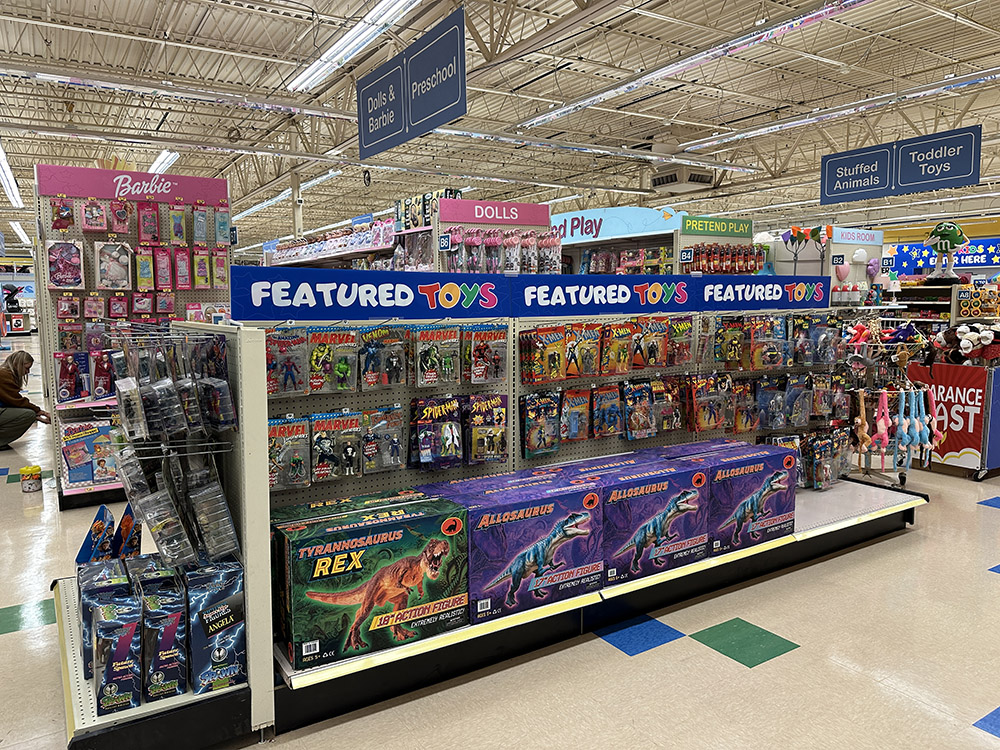
“Everything in the store had to be real, and we had to have quadruples [of every toy],” Weinberg explains. After analyzing inventory spreadsheets of every product that was on the shelves in 2004, the crew manufactured much of the toy packaging to accurately represent the time. “What I realized very early on is that we will never have enough product,” adds Weinberg, noting that the team also found classic merchandise like hula hoops and basketballs to fill the vast space. “We also went to collectors to source the important things like Barbies and action figures,” she says.
This story first appeared in a November stand-alone issue of The Hollywood Reporter magazine. To receive the magazine, click here to subscribe.