After a 14-year hiatus during which he focused on directing television and acting, Jay Duplass made a welcome return to features in 2025 with The Baltimorons, a gentle May-December romance with an After Hours vibe and an unassuming charm that sneaks up on you like a surprise hug. I wish See You When I See You had a similar effect, but despite its sincerity and the raw pain of shattering real-life experience that infuses it, this feels like a knockoff struck from the template of a thousand bittersweet, funny-sad indie grief dramas branded with the old-school Sundance stamp.
Dysfunctional family whose members seem to have forgotten how to communicate? Check. Belabored metaphor that never adds up to much (in this case a sage grouse at risk of extinction)? Check. Surreally stylized flourishes that are both awkwardly realized and inorganic to the prevailing mood and style? Check. Random nostalgic nods to ‘90s bands? Check. Treasured childhood memory tarnished by soul-crushing trauma? Check. Tinkly piano score poised to underline every emotional beat? Check. The list could go on.
See You When I See You
Not if I see you first.
All this is a shame since first-time screenwriter Adam Cayton-Holland, adapting his 2018 memoir Tragedy Plus Time, is clearly drawing from a very personal well in depicting with candor the spiraling chaos of a young comedy writer as he struggles to move forward after his beloved younger sister’s suicide. The authenticity of the writer-protagonist’s feelings is undermined by the banal familiarity of a specific indie-film model.
It’s doubly regrettable because Cooper Raiff pours a ton of heart and humor, along with PTSD, into the author’s stand-in, Aaron Whistler. He’s likable and funny, and even when the character is pushing people away like a flailing mess, he never forfeits the audience’s compassion.
Duplass could not have wished for better preparation for material of this nature than his work as producer and director of six episodes — including the pilot — of HBO’s sublime Bridget Everett series Somebody Somewhere. That series started from a similar place, with a central character trying to regain her footing after the shattering loss of a sibling and tending to deflect her sorrow with humor. Every single member of the ensemble felt fully lived-in and relatable, something that can be said for only some of the principal roles here.
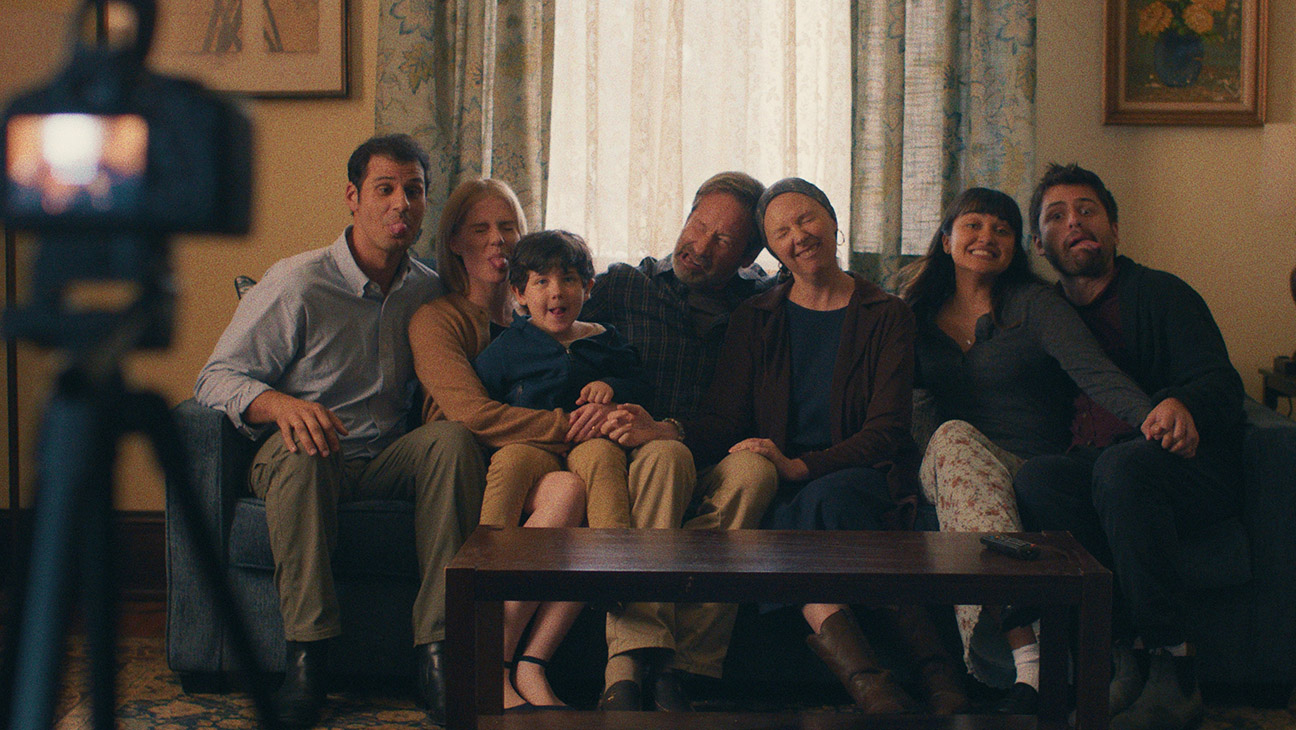
It’s been two months since Leah (Kaitlyn Dever) took her own life and her devastated family has still not been able to agree on funeral arrangements — if they are to have one at all. The urn containing her ashes sits conspicuously on the mantlepiece in her parents’ loveless bedroom.
Leah’s mother Page (Hope Davis) has become closed-off and sour, doing her best to ignore her own grave health situation; her husband Robert (David Duchovny) pours himself into his work as a civil rights attorney, avoiding the subject of Leah; their other daughter Emily (Lucy Boynton), who has her own young son to care for, urges Aaron to see a therapist and goes from impatience to anger at the extent to which his grief has hijacked everyone else’s loss. Aaron and Leah were always members of a private club from which Emily felt excluded.
A big part of Aaron’s trauma is that he was the one who found his little sister’s body; when he is forced, after a DUI charge, to sign up for a mental health diversion program, he’s uncooperative and hostile with the therapist, who tells him nothing he didn’t already know. Later, when he finds an empathetic therapist with whom he connects (Poorna Jagannathan), Aaron initially remains blocked, only able to revisit the night he found Leah dead up to a point.
Raiff is very good in these scenes, which makes it frustrating that the memory flashes throughout of time spent with Leah are so clunky and obvious. Dever is always a compelling presence, but Leah seems more like a bundle of exposed nerve endings than a real person — the dangerous, out-of-control highs, the precipitous lows, the psych ward stints. The worst part, though, is a thuddingly literal device so poorly handled it yanks you out of the movie every time — a hole opens up in the ceiling or sky at a certain point in Aaron’s recollections, and Leah is sucked up into the atmosphere.
There are sweet interludes when Aaron reconnects with his girlfriend Camila (Ariela Barer), who is furious about him ghosting her for months until she learns the reason. Still, it’s clear to her that Aaron is not OK, causing her to pull away again.
The scenes that work less well and seem virtually superfluous are those with Kumail Nanjiani as Adeel, an environmental activist who drags Aaron along with him to break into a fracking site that is disturbing the breeding ground of…the sage grouse.
Duplass can’t be accused of lacking sensitivity as a director, and in the moments when See You When I See You works best, the movie has an infectious warmth. Until it turns into treacly cliché. The performances mostly are better than the material deserves — Raiff in particular, but also Davis and Boynton. No one enjoys beating up on a film in which the writer has invested so much of himself and his pain. But Cayton-Holland and Duplass have somehow made an authentic tragedy feel phony and unaffecting.