Ah, young love! So full of passion and aspirations! But also so full of struggles! Director Łukasz Ronduda (Heart of Love, All Our Fears, Rave) explores the struggles and aspirations of the younger generation in his native Poland in his new feature, Tell Me What You Feel, which he co-wrote with Agata K. Koschmieder. The movie world premieres in the Big Screen Competition of the 55th edition of the International Film Festival Rotterdam (IFFR) on Saturday, Jan. 31, and it features physicality, art, and tears.
The film focuses on artists, which won’t surprise the fans of the creative who is also a curator at the Museum of Modern Art in Warsaw. After all, his past narrative features have also put a spotlight on artists.
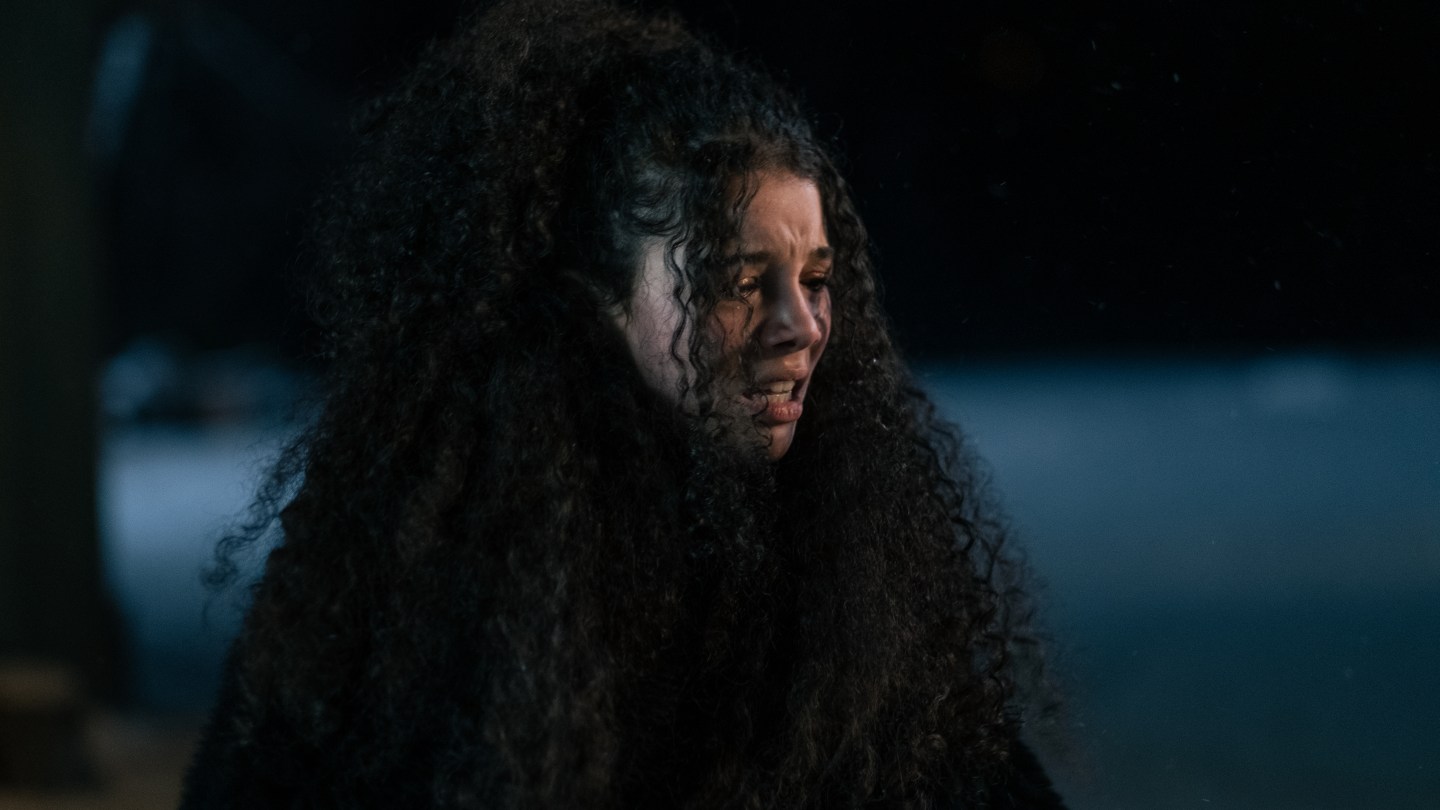
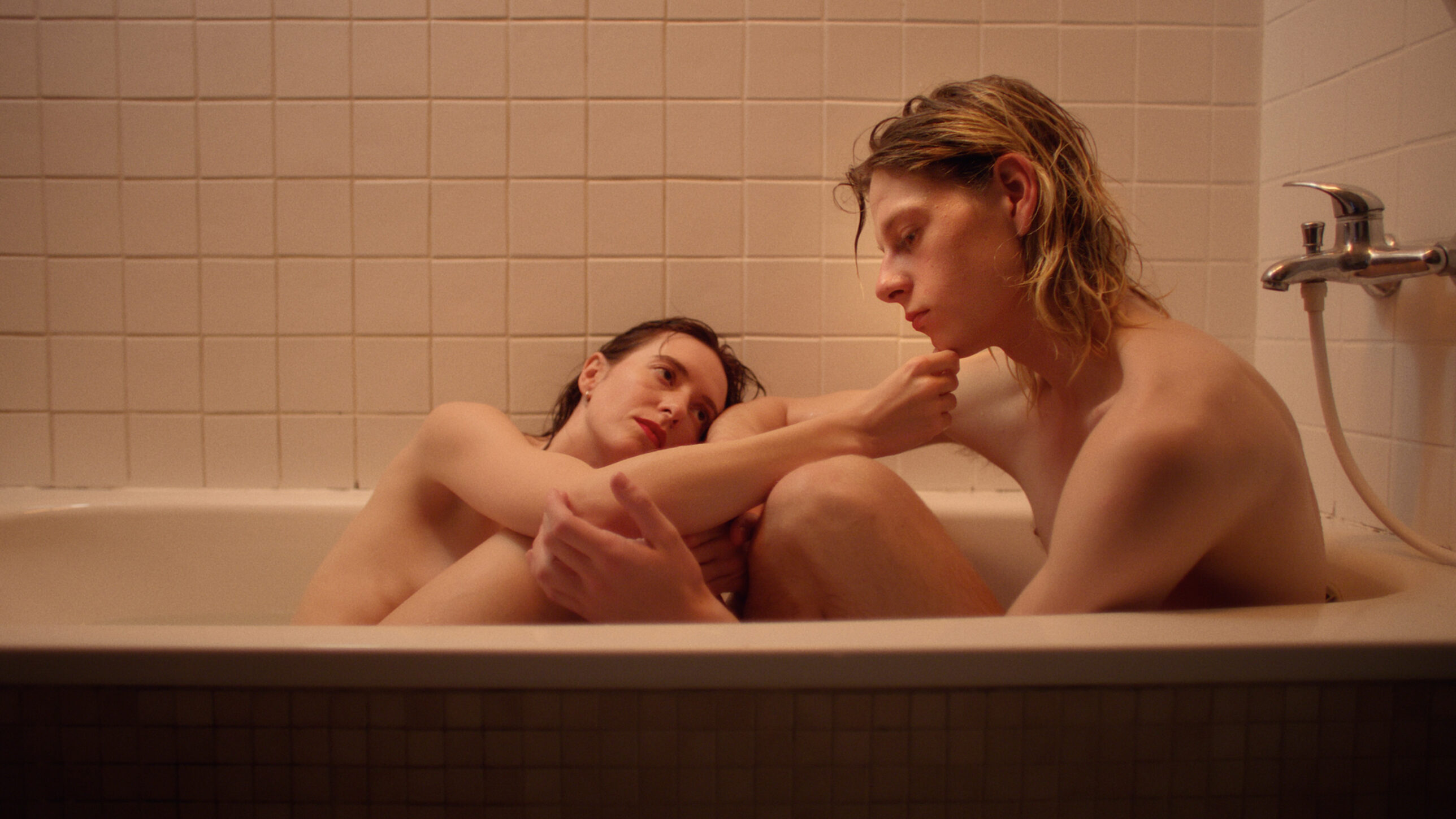
In Tell Me What You Feel, they are Maria, portrayed by Izabella Dudziak, and Patryk, played by Jan Sałasiński. While Patryk struggles to sell his paintings, Maria comes from a well-off background and created Tear Dealer, an art project that lets poor people sell their tears, collected in vials.
Loosely based on the experiences of real-life young Polish artist Patryk Różycki and a female artist, the film dives into the hopes and challenges of modern love and relationships, including social differences and what the filmmaker describes as “over-therapeutization,” which “significantly affects the way they build relationships.” It also looks at how an increased focus on emotions among a younger generation may lead to the “illusion of removing social and economic borders between lovers.”
Tell Me What You Feel was produced by Natalia Grzegorzek at Koskino, in co-production with Documentary and Feature Film Studios (WFDiF), Silesia Film, EC1-Łódź and Fixafilm. It was co-financed by the Polish Film Institute.
Ronduda talked to THR about Tell Me What You Feel, some of its provocative concepts, and what’s next for him.
Discussing his inspirations for the film, the creative highlights that the character Patryk is based on a real person, as is Maria. Plus, the Tear Dealer project is real, too. But he wove elements of real life together with his own creations. “Tell Me What You Feel is a synthesis – creative fiction based on real inspirations,” Ronduda explains.
The Tear Dealer art project helps anchor the film in Poland and its current environment. “It was very moving and telling something about Polish society,” the filmmaker tells THR. “In 1989, at the beginning of the transformation from Communism to capitalism, we started as a very equal society. But more than 35 years later, we have big inequalities, big economic divisions, and, of course, that is also the background for polarization. There is very strong political and cultural polarization in Poland and [beyond].”
The concept of buying tears from poor and unemployed people, who are excluded from benefits of economic growth, fascinated Ronduda. “People buying their tears for money, buying their anger, their sadness, their emotions, their despair made me interested in how this place is a metaphor of several processes. So, I know it would be an arena of my themes.”
Beyond the econonic divide, another one of these themes featured in Tell Me What You Feel is what the filmmaker describes as “the appearance of therapeutic discourse, this discourse of dealing with emotions.” Some of the young artists among his students, for example, are in their early 20s, “and they have had seven years of therapy,” he shares. “So, there is such a therapeutic atmosphere among young people. They are very empathetic, very gentle. And I was interested how this sensitivity, how being this gentle being immersed in therapeutic discourse and culture relates to the strong social conflict we have in Poland. And I was interested in how they fall in love differently from our generation.”
In line with that, Tell Me What You Feel sees characters sharing and discussing traumas and patterns of intimacy. Early on, for example, the two protagonists “decide to tell each other about family traumas,” highlights Ronduda. “And they think after that, we will decide whether this relationship has a chance. This is one thing about this new romantic love, which is maybe less romantic in our sense.”
Patryk is far from toxic masculinity, but feels challenging emotions intensely. “This film is also about new masculinity, a very fragile, vulnerable masculinity,” the writer-director notes before moving on to physicality. “I was interested in showing sexuality through this male perspective, but showing how awkward sexuality often is, this awkward dimension that sexuality has. And when you have an emotional problem and some traumas, it really affects your sexuality.”
If you, too, are reminded of Sigmund Freud, the filmmaker will not be surprised. “Yes, there is this very Freudian aspect to the film, this closeness between romantic relationship and emotional trauma connected to your parents,” Ronduda tells THR. “I was not putting Freud in consciously, but this film is very Freudian and Marxist, too.”

Let’s go back to the idea of vulnerable rather than toxic masculinity for a moment. The writer-director does see a likelihood that this could stand out to viewers as interesting at a time when a range of political leaders around the world follow a right-wing conservatism that seems to have little interest in emotions. “It seems that toxic masculinity is coming back in Poland, also in political parties,” Ronduda says. “I feel it’s important to introduce such fragile new men as Patryk and discuss this type who is open to emotions.”
The two lead actors in Tell Me What You Feel are both new to the experience of being protagonists in a feature films. “I’m very proud that they are appearing for the first time on the screen in this film in leading roles,” the filmmaker emphasizes. “In the casting, I really wanted to find fresh faces. I had this idea that I would find somebody new to also have this documentary effect.”
Tell Me What You Feel does indeed often feel like a documentary camera is following the young people it shows. That is no coincidence. “I made three feature documentaries before, and this is my fourth [narrative] feature, and it’s different,” Ronduda points out. “This feature is affected by these three documentaries I made before.”
How is that doc influence felt? “It is about this openness for something unexpected, this openness for reality, something that is really not planned, and for something spontaneous, which appears between actors,” he explains. “And that has this documentary vibe.”
Will Ronduda’s next film project again feature artistst? “One will be about the art world, but the second is set in the Caribbean,” he tells THR.
The first, based on real life again, features a main character called Karo, “a charismatic 17-year-old girl with a sharp, gothic edge, who chooses a path of radical rebellion when faced with a terminal diagnosis,” he shares. “She forms a performance group with the mission to confront people with what they fear most: illness and mortality. Karo professionally ‘haunts; those who have turned their backs on their dying loved ones, seeking revenge for the abandonment she once suffered herself.”
The second narrative feature that Ronduda has in the works is very different. “I’m in the process of preparing a film about the real story of soldiers in the Polish Legion at the beginning of 19th century, who were sent by Napoleon to Saint-Domingue, [which is today] Haiti to fight the revolution by Black former slaves,” he tells THR. “But the Polish soldiers identified with the rebels and shift allegiance and became known as the Black Poles. It’s the story of a beautiful utopia, this mixed society and mixed culture.”