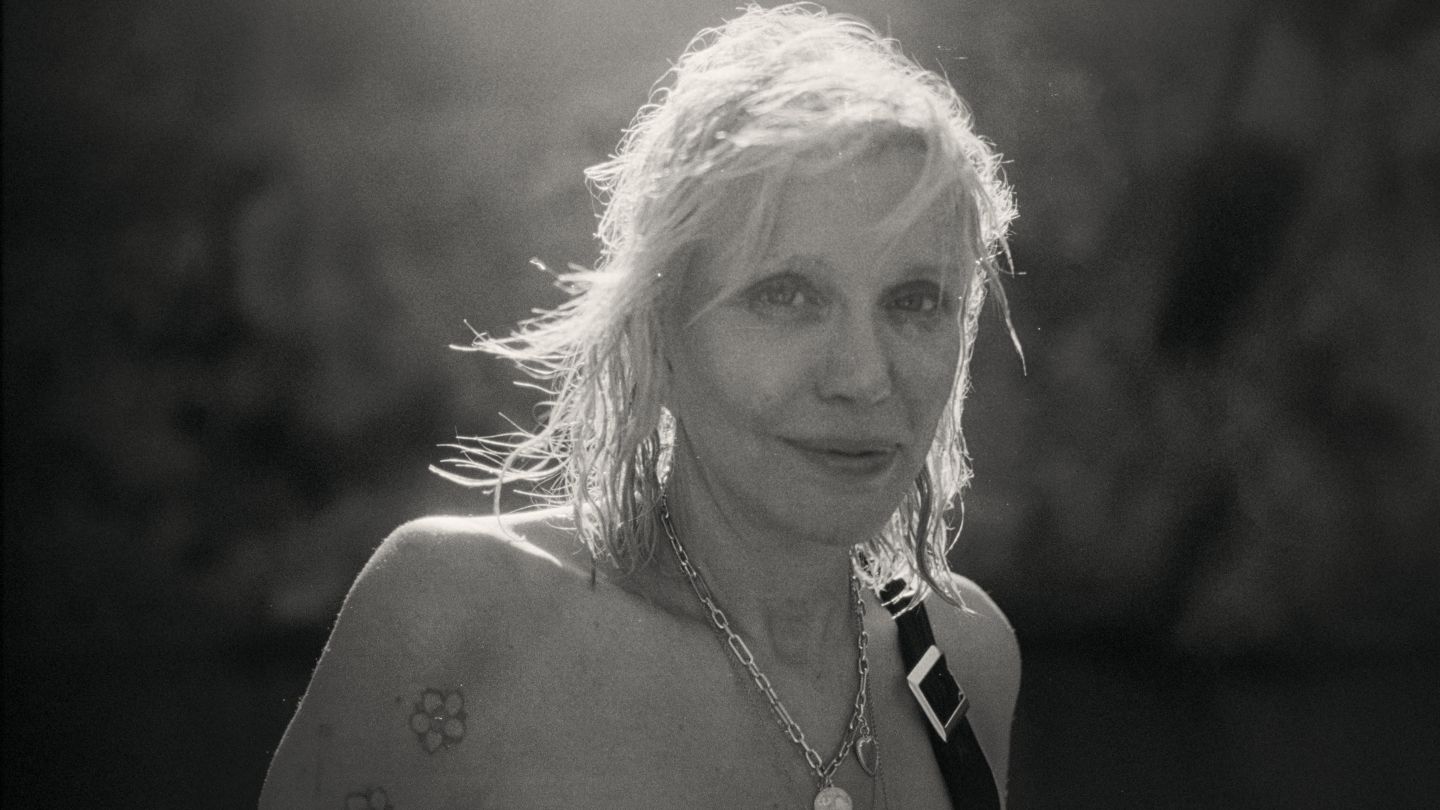
There’s a scene at the end of Antiheroine — a new Courtney Love documentary from Edward Lovelace and James Hall that just had its world premiere at Sundance — that shows its reclusive star as she does something she’s not done in years: Perform live.
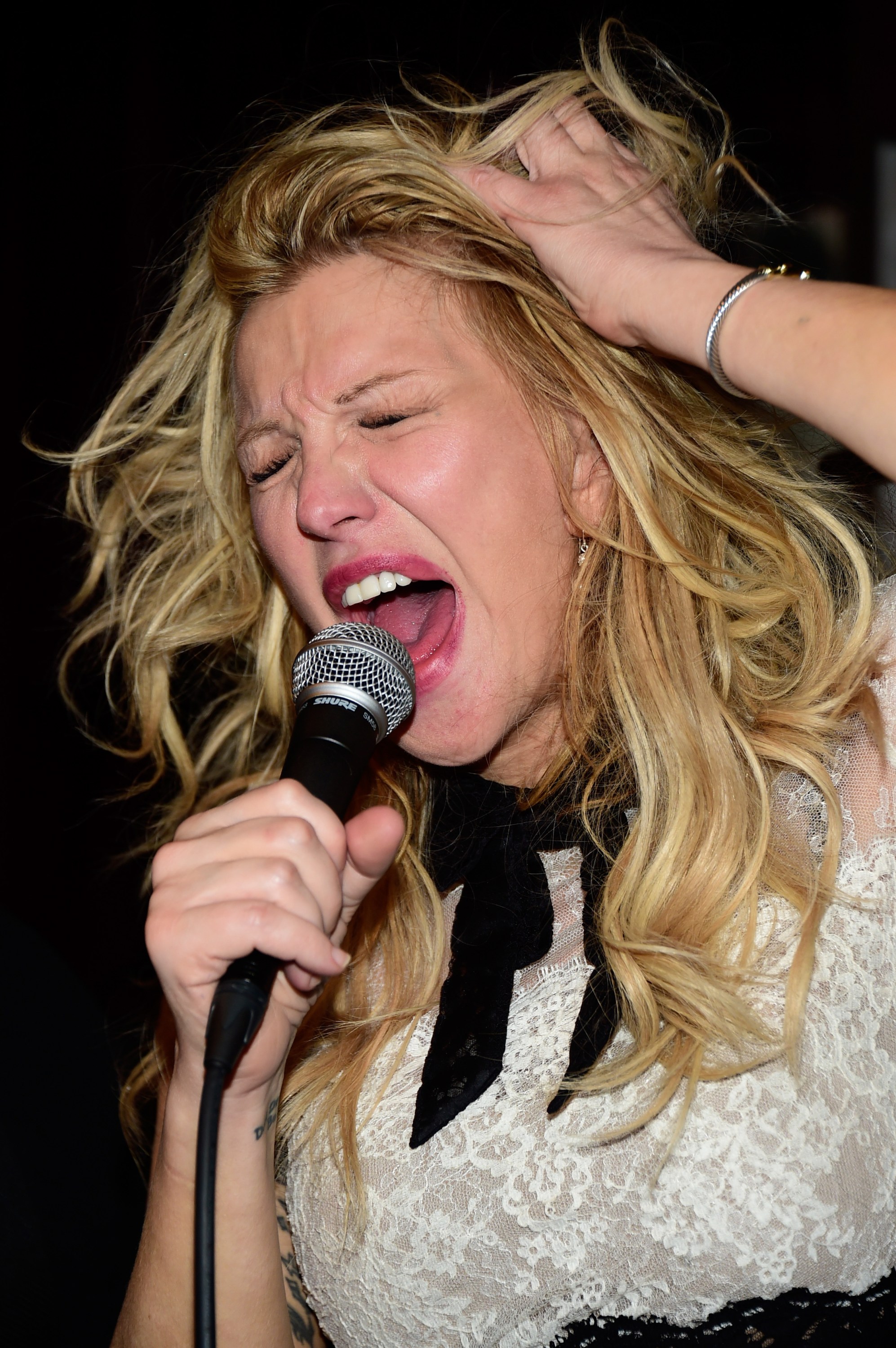
“My name is Courtney Love,” she declares while taking a stage inside London venue the Garage with Billie Joe Armstrong and his side-gig band The Coverups in February 2024. “You may not remember me.”
Though viewers don’t hear their surprise set, the doc does feature Armstrong’s loving praise to Love once it’s over: “Thank you, Courtney, I hope we see more of you singing. We need you.” Immediately after, Love wonders, “Maybe the world is ready for me again.”
The appetite for Love will soon be revealed now that the documentary has hit the big screen at Sundance (even if Love herself was a no-show at her own world premiere). But it’s clear from the doc that she hopes there are plenty of fans ready and eager to hear more about Love directly from her “unfiltered and unapologetic.” The doc covers where Love is today, the new music she’s working on and why she decided to relive her past — the good, the bad, the Hollywood and the heroin — by way of a tight 98-minute film. Below are highlights from the Sundance selection.
Where Has She Been?
The short answer is London. The longer answer is that Love decamped to England in 2019, with a new lease on life and little else. “I was two and a half years sober. I came over here with a winter wardrobe and a dog. I, like, removed myself from everybody. What I didn’t have was anything rational or grounded.” But she did have a troubled history, and it seems that Love left the U.S. as a way to find peace after years of people talking, writing and gossiping about her. In her words, “Everyone has a Courtney story [like] ‘she fucked my boyfriend’ or ‘she stole my grandmother’s ring — I’m not even kidding.’”
The time in London delivered “15 years out of the spotlight,” even if she’s not been entirely absent from pop culture. Love has made many public appearances in the last 10-plus years including stops at the Met Gala, LACMA’s Art+Film Gala, multiple fashion shows (Marchesa, Coach and Saint Laurent) and movie premieres like HBO’s Kurt Cobain: Montage Of Heck in 2015. But what she hasn’t done is sit for extensive interviews or release new music, which is what should make the doc so compelling for fans.
What Does She Say About Kurt Cobain?
The film dives into the fateful love story of Love and Nirvana frontman Kurt Cobain, whom she met when her band Hole crossed paths with his amid the crush of public attention and what later became the chaos of drug addictions.
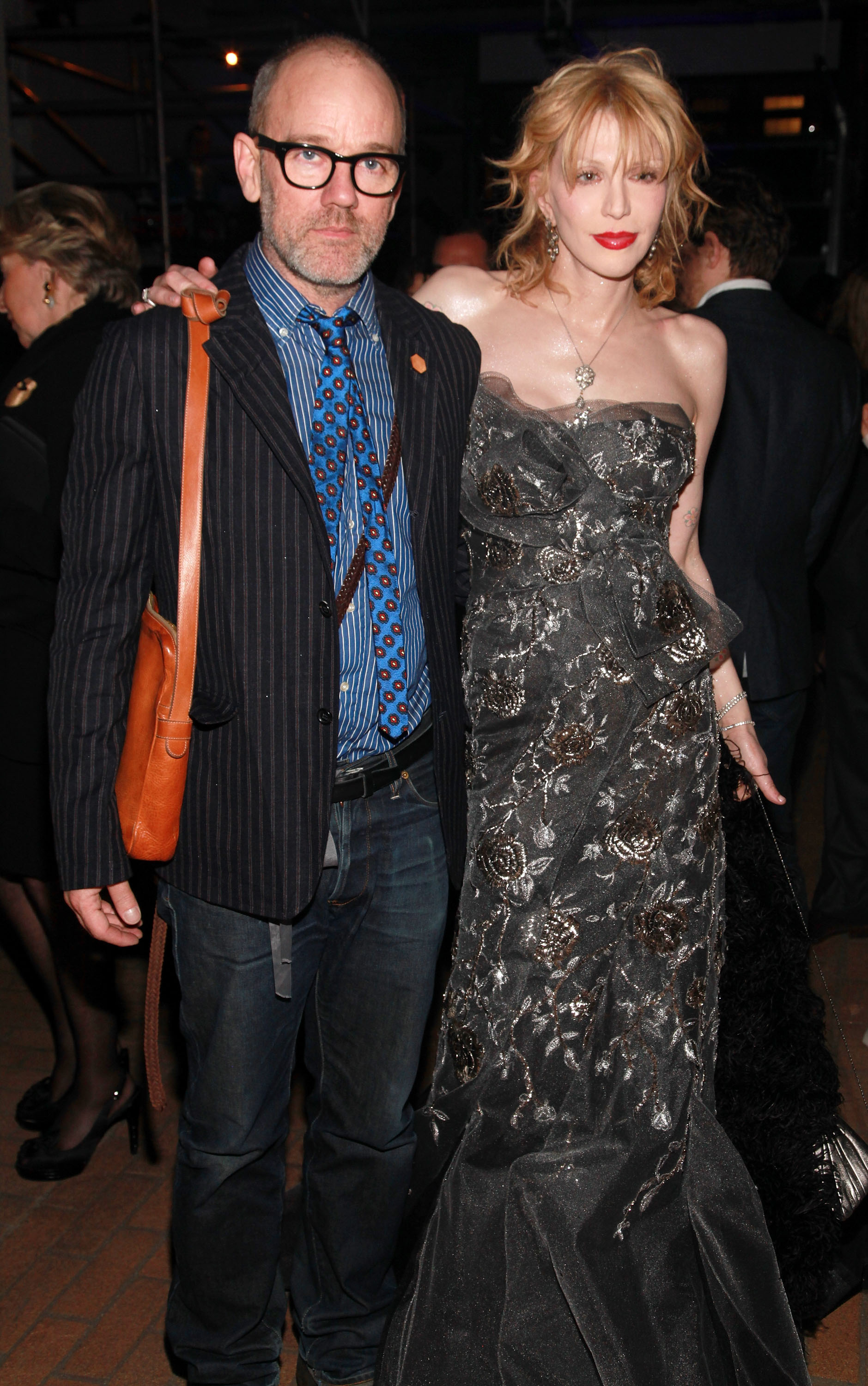
Offers good friend Michael Stipe, who appears in the doc, “The first time I saw them together, the love they had for each other, the respect that they had for each other was obvious,” he said, calling them “talented and raw” individuals. “So madly and crazy in love.” Says Love, “He was so beautiful. He had a really weird sense of humor. We were two designated scapegoats, rejected by our mothers and our fathers. We found each other and we were home. It was really instant. That honeymoon phase of it went on for what felt like a really long time because it was so rich.”
Their love story is captured in intimate home movies and archival footage, which also is used to detail how his addiction drove a wedge in their relationship. Cobain overdosed in Rome in March 1994, due to a nearly lethal combination of Rohypnol and alcohol that left him in a coma. After that, they lost contact and Cobain eventually decamped to his home in Seattle where he died from a self-inflicted gunshot wound at age 27 on April 5, 1994. “I thought he would call me,” she recalls of that month. “I’m staying at [Harvey Weinstein’s] brothel, the Peninsula. I was calling the front desk. I’m up all for 24 hours straight, “where is he, where is he?” I was straight panicking. He tried to call me, and they don’t put him through. I feel like that’s the moment [he died].”
Even now, more than 30 years later, she says that she knows there are still people out there who blame her for Cobain’s death. “Kurt Cobain walks into the fucking room before Courtney does. That’s just going to be my life. I had to tell my daughter, there will never be a time that I don’t leave a party or a dinner party of 20 people, and one or two of those people don’t crack a joke, ‘I bet she killed him.’ Right? That’s just my life. It will be my life.”
What Does She Say About Drugs?
There’s not just one moment that drugs come up, there’s many. Following a quick recap of some rollercoaster moments in her life — including one memorable Barbara Walters interview — Love recalls how she ended up with her current manager, Jonathan Daniel, who appears in the doc. He explains that she reached out by phone 15 years ago wanting to make a record but “she was not well,” he says, to which she replies, “Adderall is a very weird drug, man, wow. He just patiently waited.”
Another section covers her earliest days, born in San Francisco into what she calls a “counterculture family.” Her troubled home life included “a megalomaniac” father who had custody removed when she was 4 for allegedly giving her LSD. She had another shocking incident occur at age 10 when she took her first drink, claiming that her stepfather David “got me very drunk,” leaving her “physically ill for a week.”
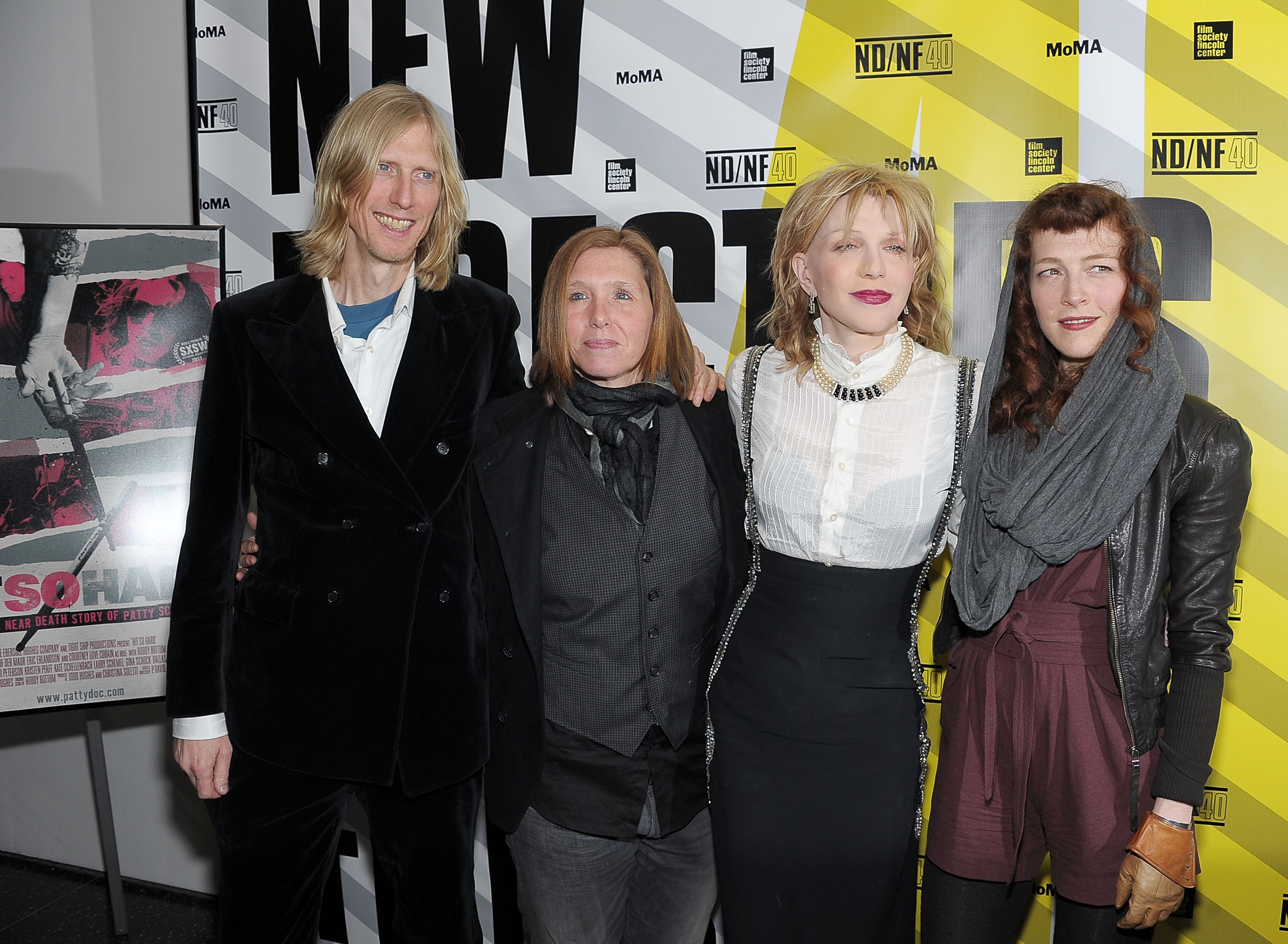
Later in the biographical section, Love says that she made it a goal while in Liverpool to “smoke heroin” around 1984. Heroin figures prominently in the documentary, especially in the sections involving Cobain. “It was very common to walk into a backstage room and see needles out with many people doing heroin, that was a very common thing in the 90s, not just Courtney and Kurt,” says Hole bassist Melissa Auf de Maur. In a clip recorded around that same time, Love is heard saying, “I love heroin. We do heroin all the time, if you didn’t you weren’t cool.”
In another memorable moment, she explains the impact her substance abuse issues have had on her life — from arrests and lawsuits to rifts with family and bandmantes — by saying, “Being a public drug addict, I normalized that behavior for so long. If you want to nuke your life, do crack.”
What Does She Say About Escaping Rape?
In the doc, Love details a harrowing moment in her life when she escaped nearly being raped in Los Angeles and how she turned the trauma into the lyrics of Hole’s 1997 single “Retard Girl.” “I needed to be a rock star by age 25. I only did heroin two days a month and I would strip at Jumbo’s Clown Room during the day to buy the band equipment. I was very good at saving money,” she says of that time period while reading diary entries from the era. Passing over one of the pages, she stops to tell the tale.
“This is the night that I got almost raped. After one of my shifts, my friend invited me to this guy’s house. I said no to a drink and then I was in handcuffs, and I was on the floor and there was a video camera on. I screamed my mother fucking ass off. I was disposable. Nobody would’ve missed me. The one shoe, the ripped clothes. I get into my little apartment and this is the magic part, I plugged in the fucking guitar and I wrote ‘Retard Girl.’”
What Nirvana Song Does She Sing at Karaoke?
Getting her voice back is an ongoing theme of Antiheroine. In one of the more intimate scenes, Love is seen in a karaoke room as she takes the microphone for a first. “I’ve never sang Kurt’s songs before — ever,” she says. “It’s been 36 years. It’s like, fuck this, I’m going to break through.” She tackles “Bloom,” a track penned by Cobain that appears as the second track on Nirvana’s second album Nevermind from September 1991. Once the inaugural performance is done, she describes the emotional impact. “Doing it was so fucking weird. It fucking hurt,” she says, still gathering her thoughts. “I don’t know. It was kinda cathartic.”
How Is Her Health?
In the spring of 2021, Love shocked the world when she revealed on Instagram that she had been battling serious health challenges that almost took her life. In the doc, she offers an update by saying that she goes in the sauna everyday to manage Crohn’s disease after being left with 17 ulcers in her colon. “I got so sick I almost died,” she says of a period when she lost nearly all her hair and weighed only 91-pounds. “It has affected my life in a very personal way. This is a really ongoing battle. The body keeps the score for anybody living in disassociation from another lifetime.”
What has helped, she says, is leaning on her Buddhism practice and chanting. “My world became rational, more rational than it had ever been,” she says of embracing Buddhism. Later, she describes her fragility like this: “I’ve gone from the heartiest flower in your garden to kind of a gardenia or an orchid that needs to be in a conservatory in terms of my physical and mental health. I’ve got to get my sea legs back.”
Music, for her, is an ultimate healer. “The minute I started singing, the pain just went away. The more I write these songs, the more I get further and further away from the shit. One song can change everything. if I can’t believe in that then I don’t believe in anything.”
What Does She Say About Fame?
Looking back on her life, Love jokes, “I’m a fucking household name stuck in 1994.” That’s not entirely true because Love enjoyed the rare crossover of being a superstar on stage only to become a star on screen with a critically acclaimed performance in Milos Foreman’s The People vs. Larry Flynt opposite Woody Harrelson and Edward Norton. She even presented at the Oscars.
“Milos Foreman saved my life. Period. There’s no doubt about it,” she says. “Milos believed in me that he got me the fuck out of there. He put on a fucking war to cast me. … I crawled on glass to get that role.” She also did more than that. “I had to kick Valium, I had to kick heroin,” she reveals. “He said lose 20 [pounds], and I lost 30 on Atkins in a month. All at once.”
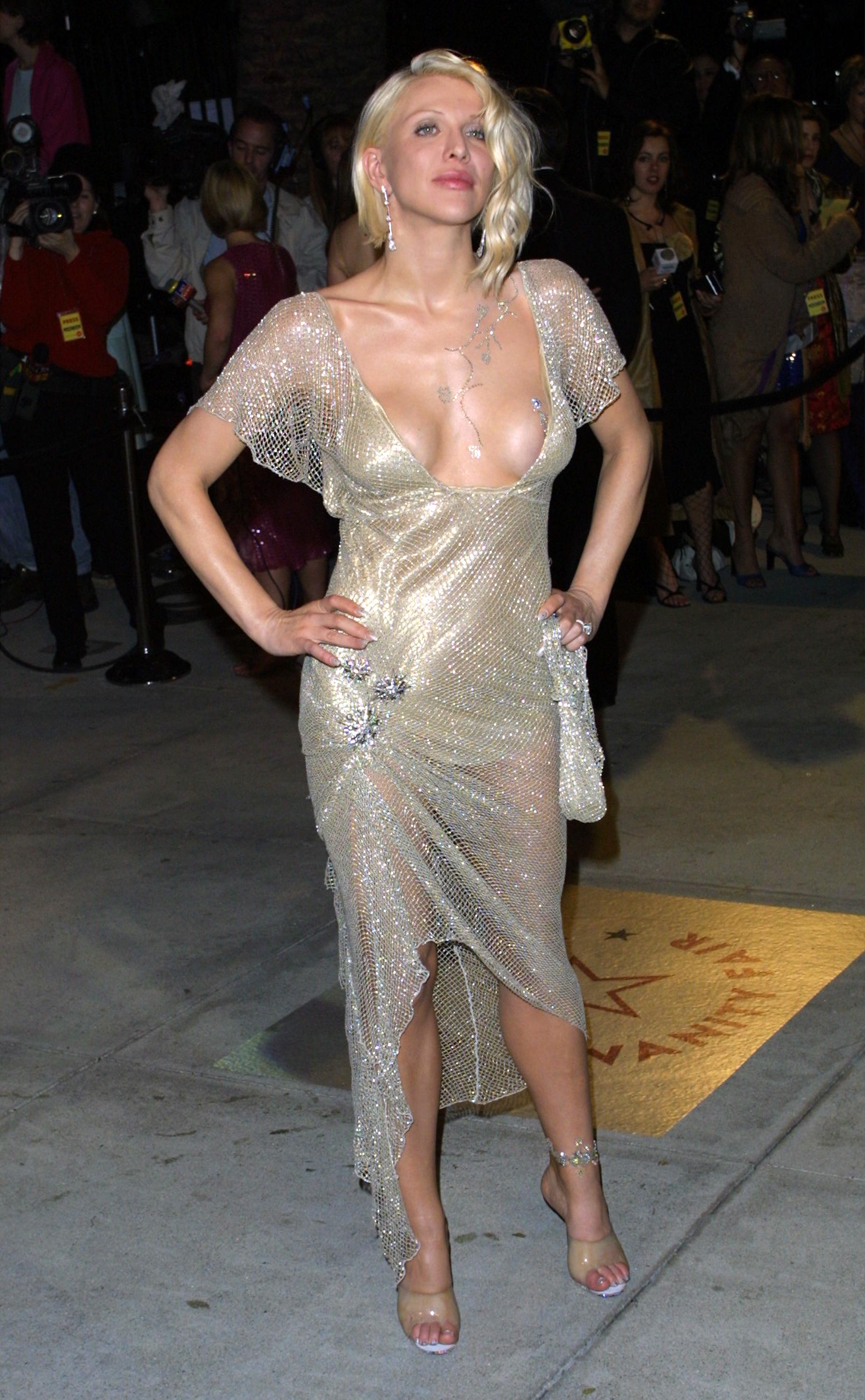
The rise in popularity also changed her life — for good and for worse. “After I got to be a movie star, I had a lot more agency,” she said. “I was Hollywood royalty — red carpets, the best gowns, I’m talking movie star with a capital fucking M.”
As for the worse, she started treating her Hole bandmates differently, a rift that eventually led to her walking off stage during a tour and never returning. “Fame is a terrible drug,” says Hole bandmate Eric Erlandson. “She’s a drug addict.” As Love explains, “You can’t just switch it off. You think given [that I’d been] around fame, I would’ve made a perfect movie star. … I thought I could do it on my own. I pushed everyone away, I had no one around me. Things got really dark.”
What Does She Say About Frances Bean Cobain?
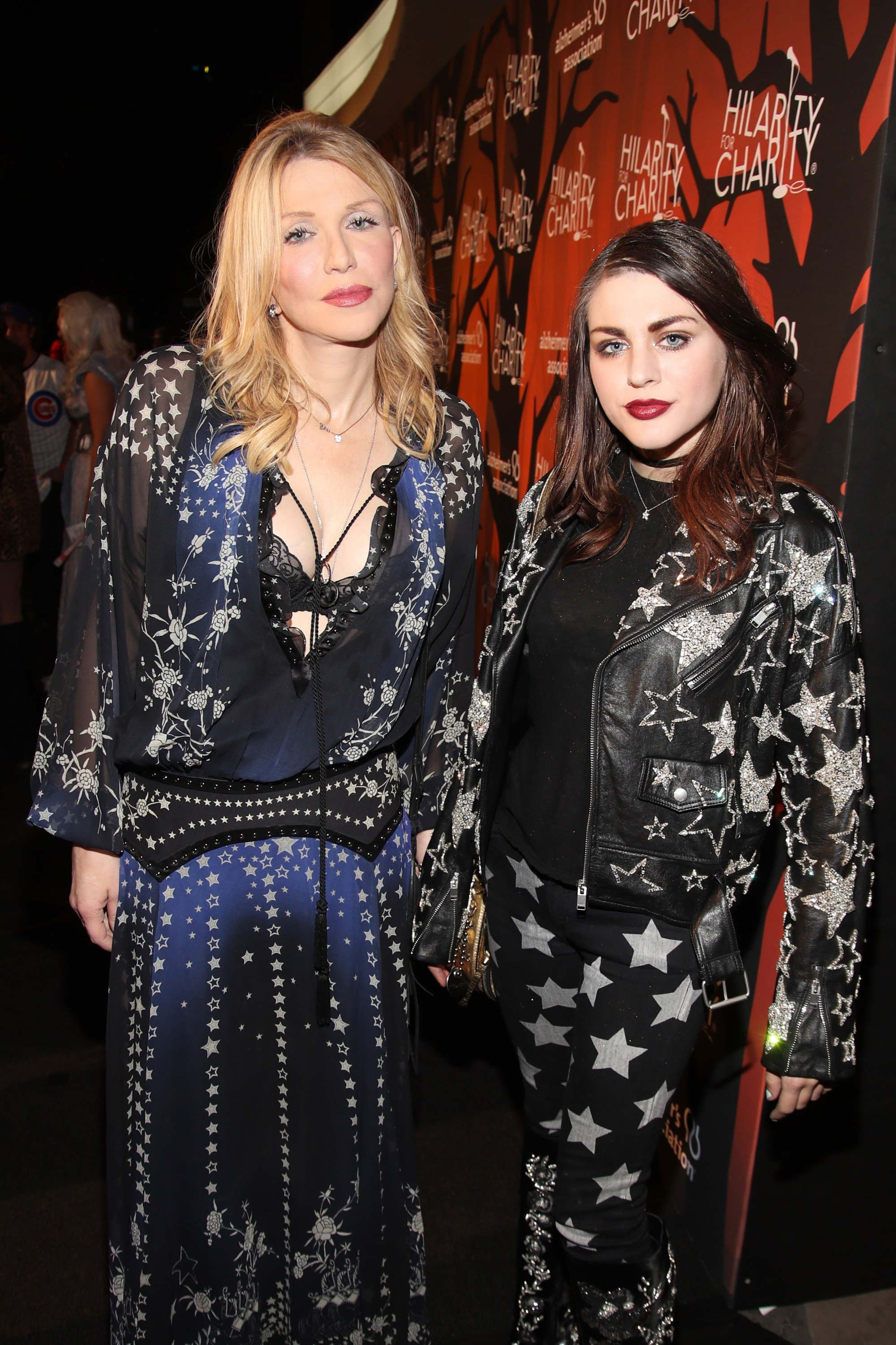
Frances Bean Cobain, the daughter of Love and the late Cobain, appears in a few archival shots but does not sit for an interview. She is referenced on multiple occasions by Love who recognizes the challenges her daughter has faced over the years. At one point, she addresses a claim she made in the aughts about having lost hundreds of millions of dollars in an embezzlement scandal. “I had a real breakdown,” she says. “There was a period when Frances couldn’t take it anymore. That’s when she went for emancipation.”
Later, she says that Frances grew sick of her mother. “I certainly was not the easiest mother, that’s the truth. I couldn’t focus on her at all. And then I disappeared for awhile. I upped my game on my buddhism and I got clean and sober. That’s a major deal.”
Also pretty major is that one of the new songs she’s been working on is a song dedicated to her daughter. Says Stipe: “The song is a classic pop song with great melodies and great lyrics.”
What’s Up With New Music?
The genesis of the film is revealed in its official festival description: “Now sober and set to release new music for the first time in over a decade.” And a chunk of it is dedicated to her creative mission of getting back to the microphone with original new music inspired by a rollercoaster journey and the place she finds herself these days. “This album is my way of taking back my story. No one gets to tell my story but me,” Love declares. “My songs, they’ve gotten me through a lot.”
Though she doesn’t reveal the release date or even the album’s title, she does say what she’s learned about the process of arriving at a place where she feels ready to lay down some tracks. “I think it’s a lesson of don’t do it until you’re called. You can call it ‘the recovery record’ or ‘the fucking almost died record’ or ‘the got granted a lease on life record.’ I got to remain alive.” Alive and well and ready to give it her all, despite not being 100 percent. During one scene in a London recording studio, she admits that she’s had some dental work done that left her with a lisp. “I don’t have full agency over my voice yet.”