The Huntress (La Cazadora), the first feature by writer-director Suzanne Andrews Correa, opens with a portentous tableau: women waiting in darkness by the side of an unlighted road. Passing headlights illuminate their anxious faces. They know that the buses they depend on to get to their assembly plant jobs can also be traps, making them prey to rapists and killers. And, in the border town where they live, their calls for justice have long been met with official indifference and obstruction. They wait.
Exploring trauma, rage and revenge from an intimate perspective, Andrews Correa’s gritty, well-observed drama is based on events that unfolded in Ciudad Juárez, a place that has become infamous for violence against women, many of whose remains have turned up in shallow graves in the Chihuahuan Desert on the outskirts of the city. It was in Juárez, in the summer of 2013 (20 years after victims’ bodies were first discovered), that a woman who called herself Diana, Hunter of Bus Drivers shot and killed two drivers at point-blank range. Her true identity remains unknown. The Huntress conjectures, affectingly, on who she might be.
The Huntress
Keenly observed and deeply unsettling.
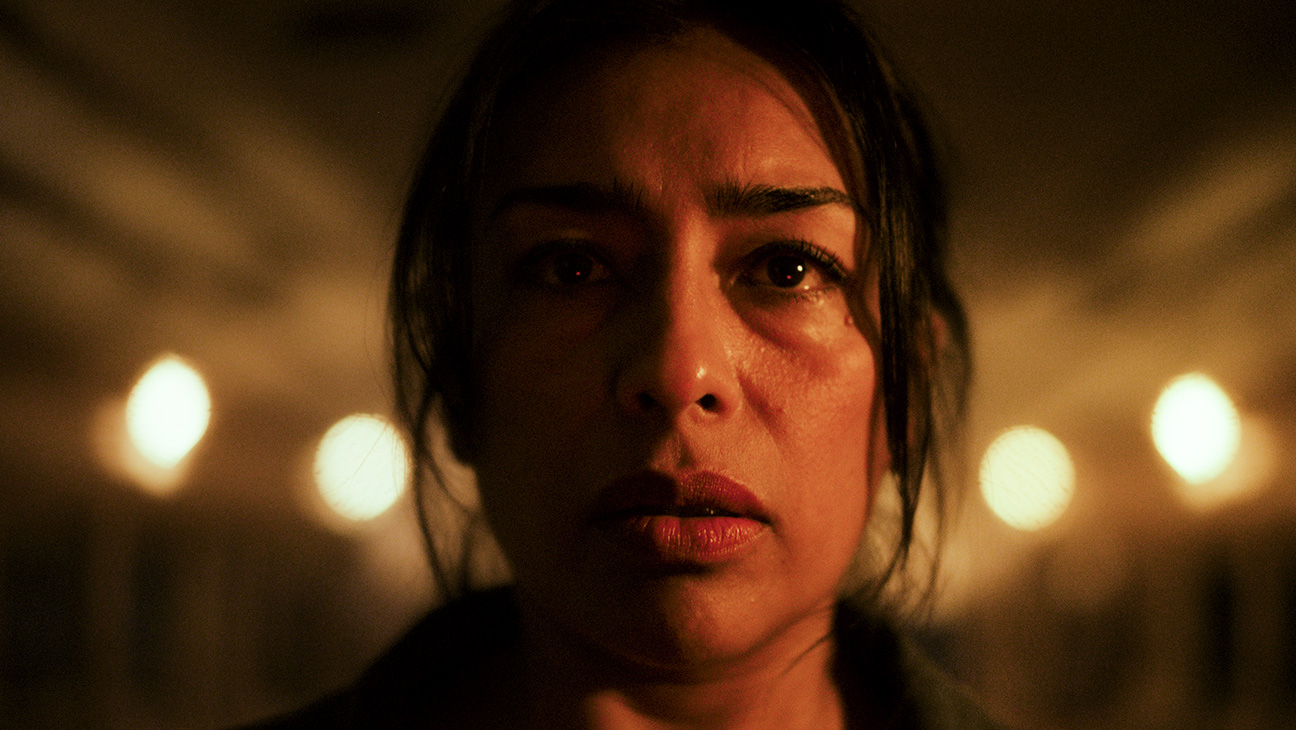
Set and filmed in and around Juárez, part of a U.S.-Mexico manufacturing hub, the movie imagines barely more than 24 hours, spread over two transformative days, in the life of Luz, a 40-something employee of one of the border town’s maquiladoras. The character is brought to vibrant, ferocious, conflicted life by a superb Adriana Paz (Emila Pérez).
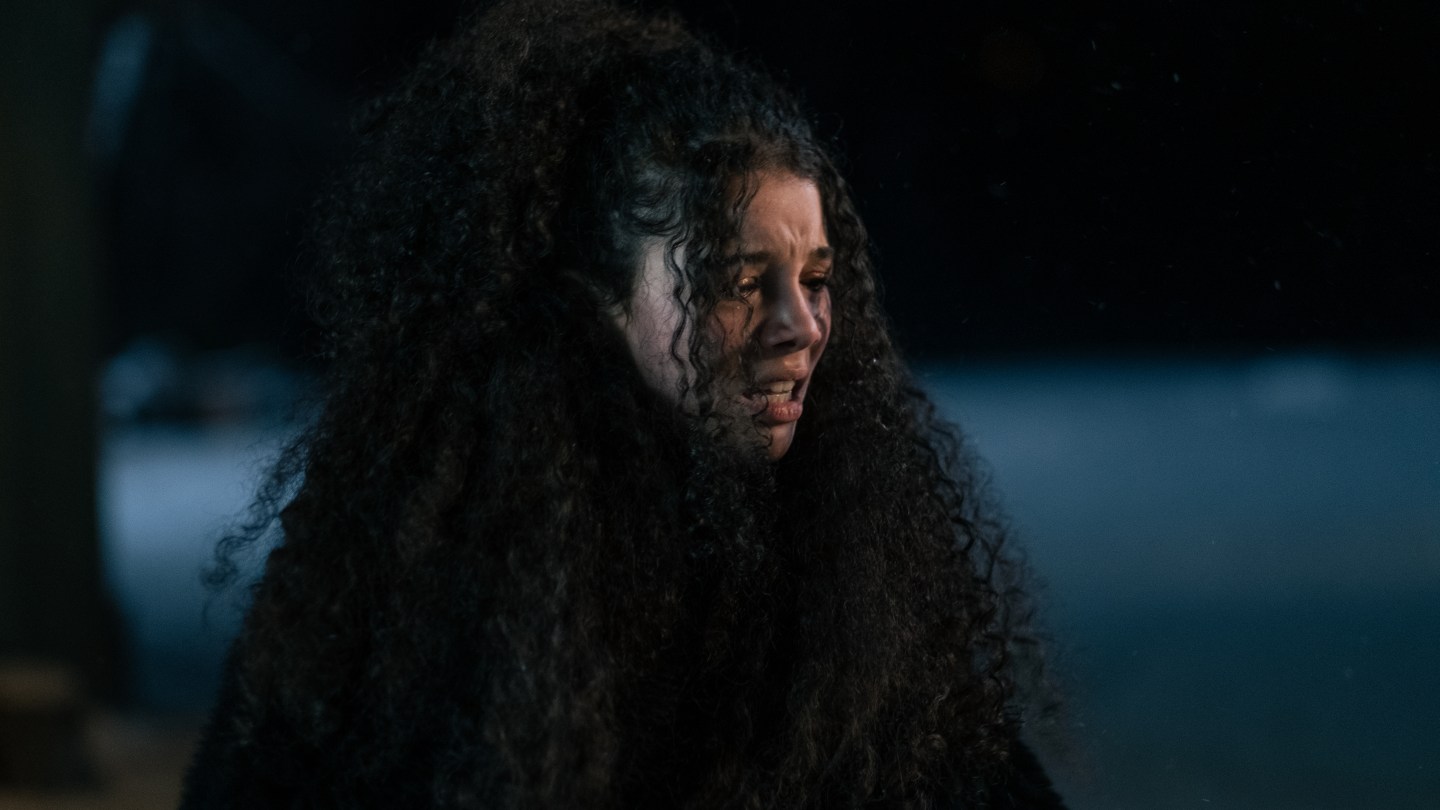
After the opening nighttime scene, the film jumps straight into the shocking daylight shooting. Instead of boarding the bus she usually takes to the appliance assembly plant, Luz, with a gun in her shaking hands and her only disguise a long platinum wig, plants herself in the entrance to the bus and takes aim. She flees to a public bathroom to throw up and scrub the spattered blood from her face. The man she killed recently raped one of her co-workers, 17-year-old Clara (Leidi Gutiérrez), whose face still bears the bruises from her attack. During a moment alone, Luz seems to breathe for the first time in hours, her satisfied smile signaling her sense of accomplishment and, perhaps, a course of no return.
The plant’s American managers arrange for a local police detective, Rosales (Guillermo Alonso), to question employees about the shooting. With his faux geniality, he’s almost a walking cliché of male entitlement. Alonso taps into this but also into how Rosales is posing, testing his power at every turn — from the menacing fashion in which he pours a glass of water to his maliciousness after nearly forcing his way into Luz’s house. With cops like these, it’s no wonder the investigation of crimes against poor women hasn’t been a priority. Newscasters, meanwhile, quickly begin spouting an official story about the bus driver’s killing that has nothing to do with the women.
Luz’s protective instincts have a particular focus: her 14-year-old daughter, Alejandra (Jennifer Trejo), first seen playing hooky with her bestie (Suri Gutiérrez) to shop for quinceañera dresses. It’s a quintessential teen-girl moment, complete with glittering layers of crinoline, a joyful vision of innocence on the cusp of experience. Alejandra’s innocence extends toward her mother’s trauma: As the screenplay gradually reveals, Luz’s assault happened a year earlier, and the truth of the matter has been kept from her daughter, who knows only that her mother was in an “accident.”
Luz’s boyfriend of three years, cabdriver Jaime (Eme Malafe), is a neighbor in their remote patch of Juárez. He’s a good-natured and dependable guy — and a long-suffering one, at the end of his patience with Luz, who apparently hasn’t slept with him since she was raped. Meaning well but hitting a flat note that signals he just doesn’t get the depth of her pain, he tells her of her ordeal, “It’s over. You’re okay.” Later, though, after Luz harshly reveals that she views even him as a potential abuser, his viewpoint abruptly shifts. “You’re really sick,” he tells her, understandably offended.
That Luz is damaged is one of the strengths of Andrews Correa’s screenplay, which doesn’t downplay the trap that grieving and outrage can turn into. When Luz crosses paths with Ximena (Teresa Sánchez), a tough local who has devoted herself to the memory of her long-missing daughter with an obsessive focus, it’s soon clear that they understand each other on a profound level — they are, as Ximena later puts, “two zombies.” Ximena, whose daughter worked at the same plant as Luz, leads groups of bereft parents of missing girls into the desert to search for evidence, people for whom any scrap of bone inspires hope. There’s barely room for her to sleep amid the boxes of evidence in her house, but her daughter’s room is pristine and carefully maintained. Hanging from the rearview mirror of her pickup is a figurine that intrigues Luz: the goddess Artemis, the hunter.
Andrews Correa, a writer-director on the Paramount+ series Minimum Wage (15 a la Hora), roots the story in an unforced working-class sensibility and a powerful sense of place. María Sarasvati Herrera’s widescreen camerawork captures an edge-of-the-world emptiness in the flat stretches of desert that surround the city, and a heartless chill in the horizontal grid of workstations stretching across the factory floor. The darkness of the night scenes is thick with danger, and the tension throughout the film, along with its sense of emotional unraveling, is ratcheted up by the sound design.
The high August temperatures referred to several times in the dialogue never quite come across, though it’s notable that Luz, averse to being touched by Jaime or anyone, wears long sleeves in the summer heat. Whether Luz’s pain will dissipate remains in doubt, but in Paz’s exceptionally compelling performance, it’s clear that she’s done waiting for justice. And she’s accepted the price.