Darren Aronofsky still remembers Robert Redford‘s skill in working a room at Sundance.
When the Pi filmmaker brought Requiem for a Dream to the workshop, he had a front-row seat. “He had someone walk him from person to person, prodding him with their name. When you got time, which was only a few minutes, it was yours. He completely locked in,” Aronofsky recalls. “He never looked over your shoulder. It was a short amount of time because he was hosting the whole thing but I was unbelievably impressed and inspired by his presence of mind.”
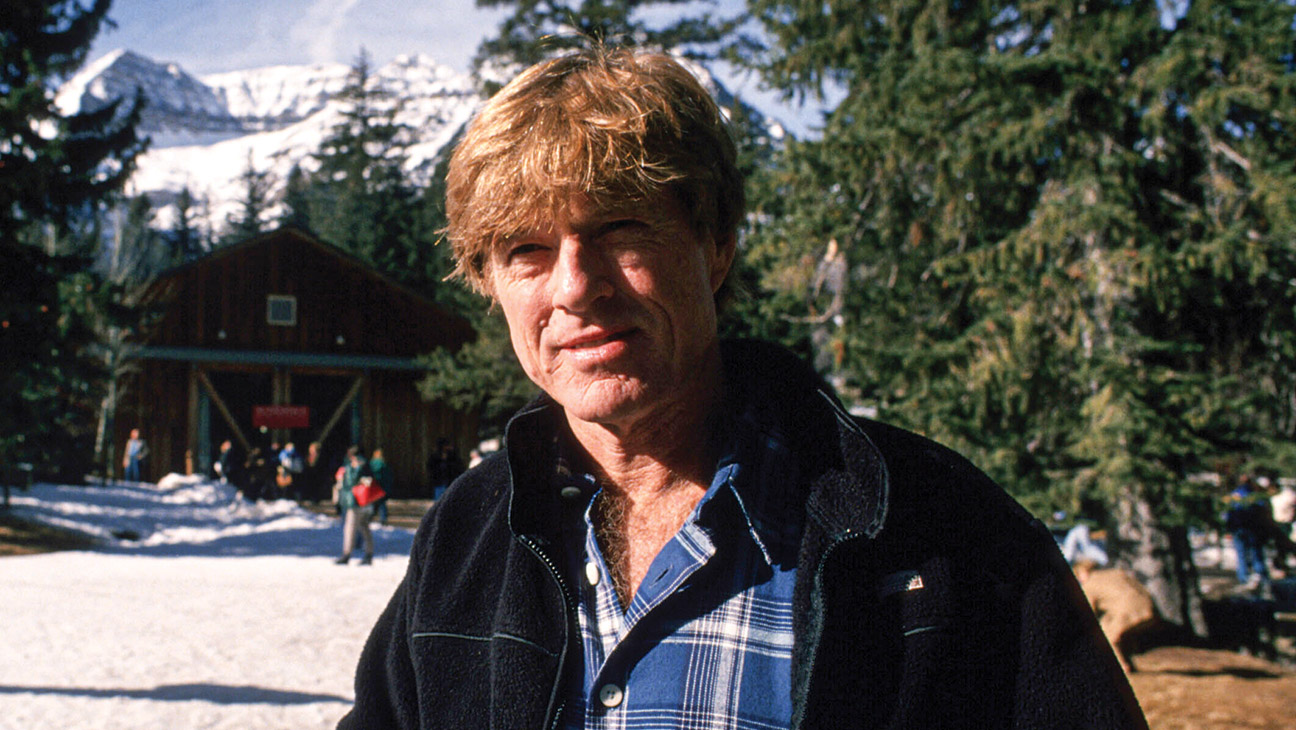
A lot of people will be talking about Redford’s presence at this month’s festival, the last before it moves to a new home in Boulder, Colorado as it will be the first without its beloved founder following his death at 89 on Sept. 16, 2025. Though his health kept him from participating in festival events in recent years, his spirit looms large over America’s most important gathering of indie film insiders. The filmmakers whose lives were changed by their Park City premieres and are clinging to their favorite memories of crossing paths with Redford in the snowy village over the past four decades-plus. Even if they only saw him afar.
“Matthew Broderick and I were walking down Main Street and suddenly there was an extra big crowd moving in one direction across the street as they all fell in line behind Robert Redford. It reminded me of seeing Bill Clinton in Greenwich Village with a huge contingent of people following him. This was after he was president but he was still quite the figure. It was a strange pattern of bodies moving uptown on Sixth Avenue with a gray head of hair in the center towering above. That’s what it was like to see the king on Main Street,” remembers Kenneth Lonergan about the year 2000, when he had You Can Count on Me at the fest.
Sundance icon Richard Linklater knew a more personal side of Redford thanks to his twin uncles, Tom and Jim, who once shared an apartment complex with him in L.A. in the 1950s before he became a Hollywood legend.
“My family would watch Butch Cassidy and the Sundance Kid and my dad would say, ‘Do you see that guy right there? Tom and Jim lived with him in an apartment in L.A.’ I had this Redford lore in my family long before Sundance, and got to hear these wonderful, beautiful, exuberant stories about him like how they used to go to the train station and throw the football around or they went to jazz shows together,” Linklater recalls. “They all had a crush on the same woman, Lola, but of course she fell for Redford. When I made it to Sundance and met Redford, I told him about my uncles and he knew right away. ‘How are they?’ he asked. I got to report back to them that ‘Bob said hi.’”
Craig Brewer, who broke out with Hustle & Flow at Sundance, once got the chance to say hello to Redford, who in turn introduced him to another hero. At a filmmaker’s breakfast, Redford pulled him over to say, “’Have you met Thomas Vinterberg?’ To meet him and be able to say how much his movie The Celebration meant to me, how it rescued me and gave me permission to make The Poor & Hungry, which started my film career. His movie is the most important movie in my filmmaking life. It started my journey and allowed me to think of filmmaking as something as not a privileged art form where you had to have money, you just had to have the drive and some passion.”
It was just that type of energy, encouragement and mentorship that Redford cultivated through the Institute, labs and workshops. “Robert Redford has been such an iconic and important figure. He always really tried to be there for the filmmakers in a grounded way, whether inviting all the filmmakers to brunch at his place in the mountain or at the lab. It wasn’t like you would get to have long brainstorming sessions with him but he remained a touchpoint for independent film history. If you were in the labs, you knew that they really cared about you and your film,” praises documentarian Lauren Greenfield, who took Thin and The Queen of Versailles to Sundance.
Redford sometimes offered more outside of the labs, shares early Sundance auteur John Sayles. “I only met Robert Redford once in passing, before some presentation at the festival, and was able to tell him how much I’d liked his Quiz Show. Later he was generous enough to lend his name to our effort to make a movie of my screenplay To Save the Man. We never raised the money but I eventually adapted it into a novel of the same name.”
His support extended to all artists, Linklater confirms. “There was no one else like Redford because he was a guy just so clearly in love with storytelling, actors, writers and directors and he used his position to accentuate that. Way back when, there were probably 50 to 100 films made a year and now there are thousands. He expanded the field and made it bigger by bringing attention to independent filmmaking. It was bigger than one person — he had a lot of partners — but he set something in motion like a great discoverer who finds new land. He followed an impulse to get this thing going and he kept it going by putting his lifeblood into it,” he says.
Speaking of impulses, it might be that nobody has a better Redford story than Ed Burns. The writer, actor and filmmaker had spent a year sending his debut The Brothers McMullen to every distribution company, festival, agent, manager and potential representative. He struck out every time. That was until he found himself at the same press junket as Redford (promoting Quiz Show) while he worked as a production assistant at Entertainment Tonight.
“We were in a hotel and when he and his publicist exited one door of the suite, I slipped out the other to meet him at the elevator. I gave him my spiel about the film and handed him a rough cut on VHS. He said, “Alright, we’ll take a look.” Two or three months later, I got the call that we were in,” says Burns, who experienced a festival feat by premiering in Park City, selling the film to Fox Searchlight and emerging triumphant at the closing ceremony. “The night of the awards fell on Jan. 29, which was also my 27th birthday. … My parents had flown in for the awards. I got my mom there and she loves Robert Redford so I said, “Mom, come on over here. I want you to meet somebody.” I introduced her to Robert Redford. There’s no greater gift you can give your mom than 10 minutes with Bob Redford.”
This story appeared in the Jan. 15 issue of The Hollywood Reporter magazine. Click here to subscribe.