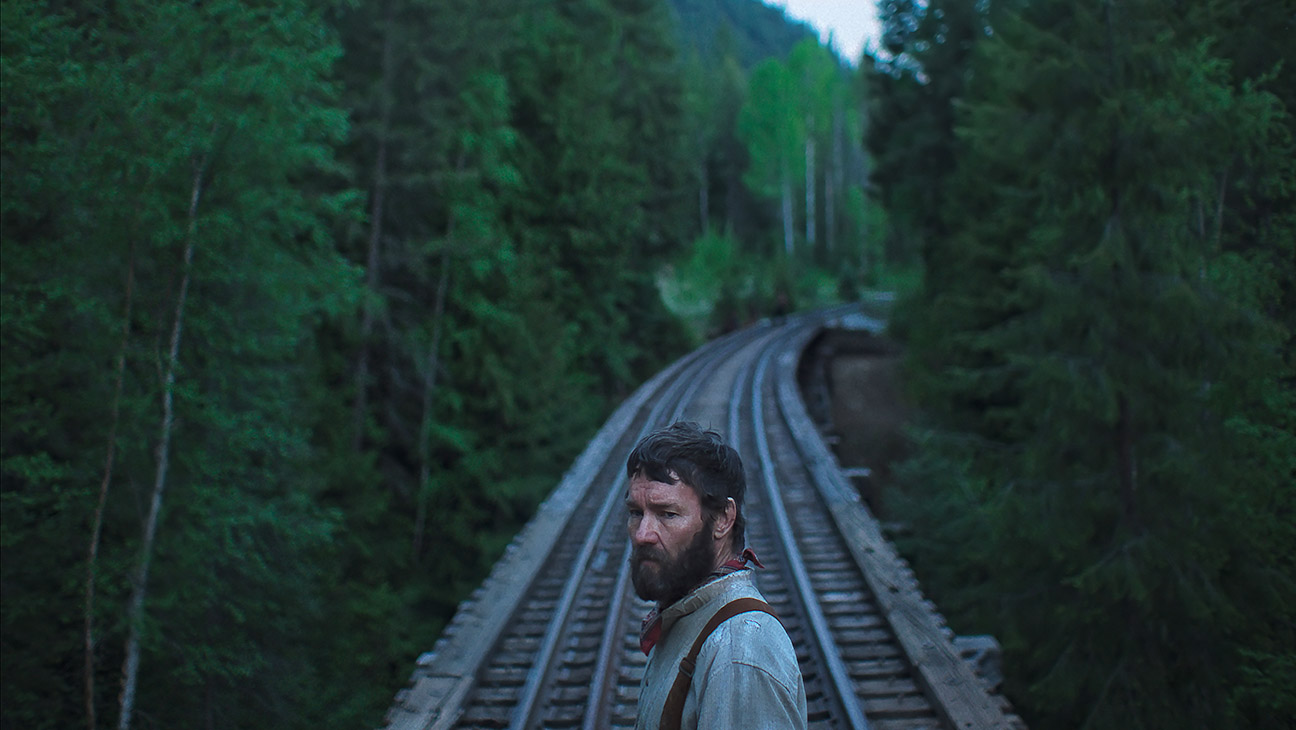
Clint Bentley’s Train Dreams is a quiet film — a meditative frontier portrait defined as much by its silences as by its sweeping Northwest landscapes and its attention to the everyday rhythms of a working man’s life. For star Joel Edgerton and cinematographer Adolpho Veloso, that quiet is where the truth of Denis Johnson’s 2011 novella lived, where the dignity, terror, humor and memory of a man’s journey reside.
“It kind of shows the majesty of a regular life, in a way,” says Edgerton of the film, which follows Robert Grainier, a logger living in the early 20th century, from early adulthood to his final years. “We’re used to going to the cinema to watch the lives of characters that save the world. … This is a different kind of cinema experience. The majesty of ordinariness, I think, and … you know, the dignity in living, in life itself.”
The adaptation had long resonated with Edgerton — he originally tried to acquire the rights to Johnson’s book to adapt and direct himself — but by the time Bentley approached him to star, the material struck with a new force. “What changed for me was the fact that I’d sort of in my life become like the central character,” he says. “I built a family with my wife, I had children that were very young, like the character in the movie. Now my biggest fear is the stuff that happens to Robert in the film.” Had he made the film five or seven years earlier, he says, he would have needed to imagine those anxieties. Now “they were all stuff I could say that I had experience in.”
Set against classic Western iconography — loggers, railway bosses, migrant laborers, forests stretching to the horizon — Train Dreams avoids the genre’s familiar tropes. “It’s not a Clint Eastwood-style Western,” Edgerton says. “It’s a Western about life itself and what it means to be here on this planet … the journey of a person’s life through love and family and a tragedy and the regrowth, or the rebuilding and rejoining of the world after you’ve been knocked to your knees.”
For Veloso, the challenge was adapting Johnson’s spare, poetic prose into images that felt intimate and literary without slipping into artifice. From the outset, he and Bentley rooted the film in the concept of memory. “We wanted to make the movie look like you’re going through someone’s memories,” he says. “Like you found that box full of pictures, and then you try to put those pictures together, and they’re out of order … but it’s like pictures of someone’s life.”
That idea inspired the choice of a 3:2 aspect ratio. “It’s an aspect ratio you find in older pictures, or even your pictures on your phone nowadays,” says Veloso. “Whenever you’re going through your old albums, this is the aspect ratio you find, so it just felt right [to represent memories]. It also helped a lot with the trees and nature, because it’s a taller aspect ratio.”
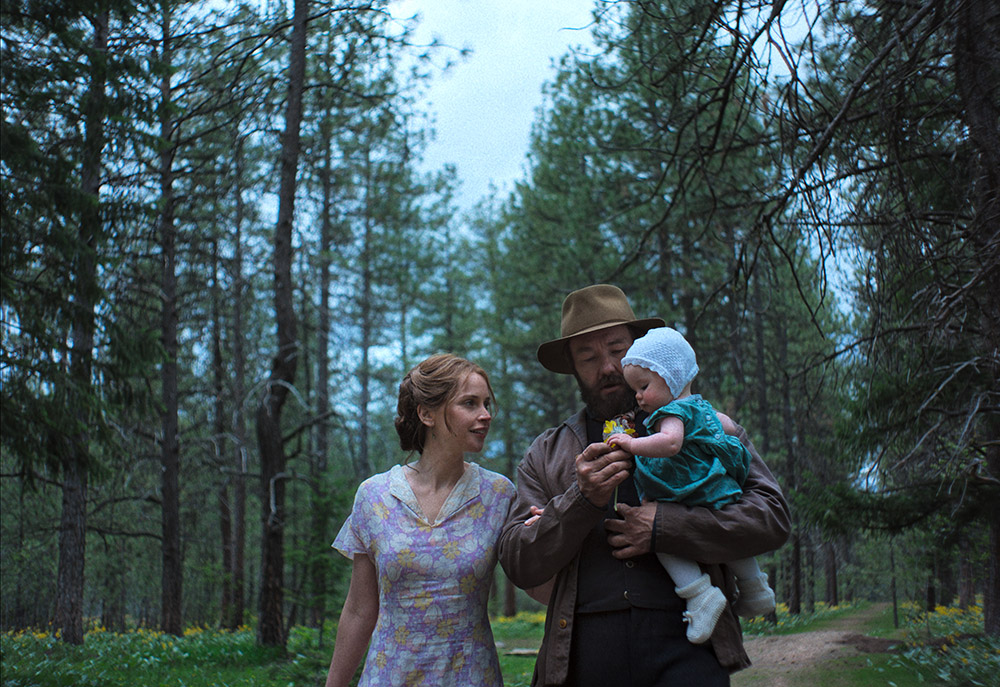
Filming took place entirely on location in and around Spokane, Washington — the landscape Johnson wrote about. “Everything was on location,” Veloso says. “The cabin was built from scratch, the fire tower, everything… Having the sets built on location allowed us to move around a lot and also to give them space to do whatever they wanted.”
Veloso mapped out visual “rules” for different periods of Robert’s life. Childhood memories are static, like still photographs. “For those scenes we don’t move the camera at all,” he notes. Adulthood becomes more fluid: long handheld shots, moments glimpsed through windows, impressions that fade at the edges. Later life settles into a calmer, more stable gaze. “We don’t want it to be obvious about it, like okay, now we’re going to a flashback,” he says.
For Edgerton, Grainier’s near-wordlessness posed a unique challenge. “It becomes a real focusing exercise to go, OK, well, I don’t have many words to express myself here,” he says, “but the story looks after so much of that.”
Two lines in the script served as emotional anchors. One comes as Robert plays with his infant daughter: “Do you think she knows that I’m her daddy?” Edgerton says the line captured “this sort of anxiety. … Are you a good father? What does it mean to be connected to each other?” The second arrives when Robert finally breaks down. “The next thing he says is, ‘I’m sorry. I don’t know what came over me.’ And, to me, it said so much about the men that I’ve known in Australia [who] just keep it all inside, and when they show emotion, they feel embarrassed. It has to stop. This movie is an intervention. Men need to show emotions.”
Yet Edgerton’s task in Train Dreams involved less accessing emotion than containing it. “It was: How do I be the stoic version of myself?” he asks. “Robert’s not a guy who wants to show you his feelings.” The role was also deeply physical, requiring him to inhabit a body shaped by decades of labor. “What is an old logger walking around a town? How does he walk? I really love the physical aspects of movie [because] the whole performance has to live everywhere your body in every part of it.”
Through all his hardship, Grainier retains moments of humor and warmth. “He’s not life of the party, he’s a listener and an observer, but he’s got a few dad jokes, and he thinks he’s pretty funny,” says Edgerton. “We can see that joy with him, with [his wife] Gladys. And of course, we know when terrible things happen to us, people’s joy ebbs away.”
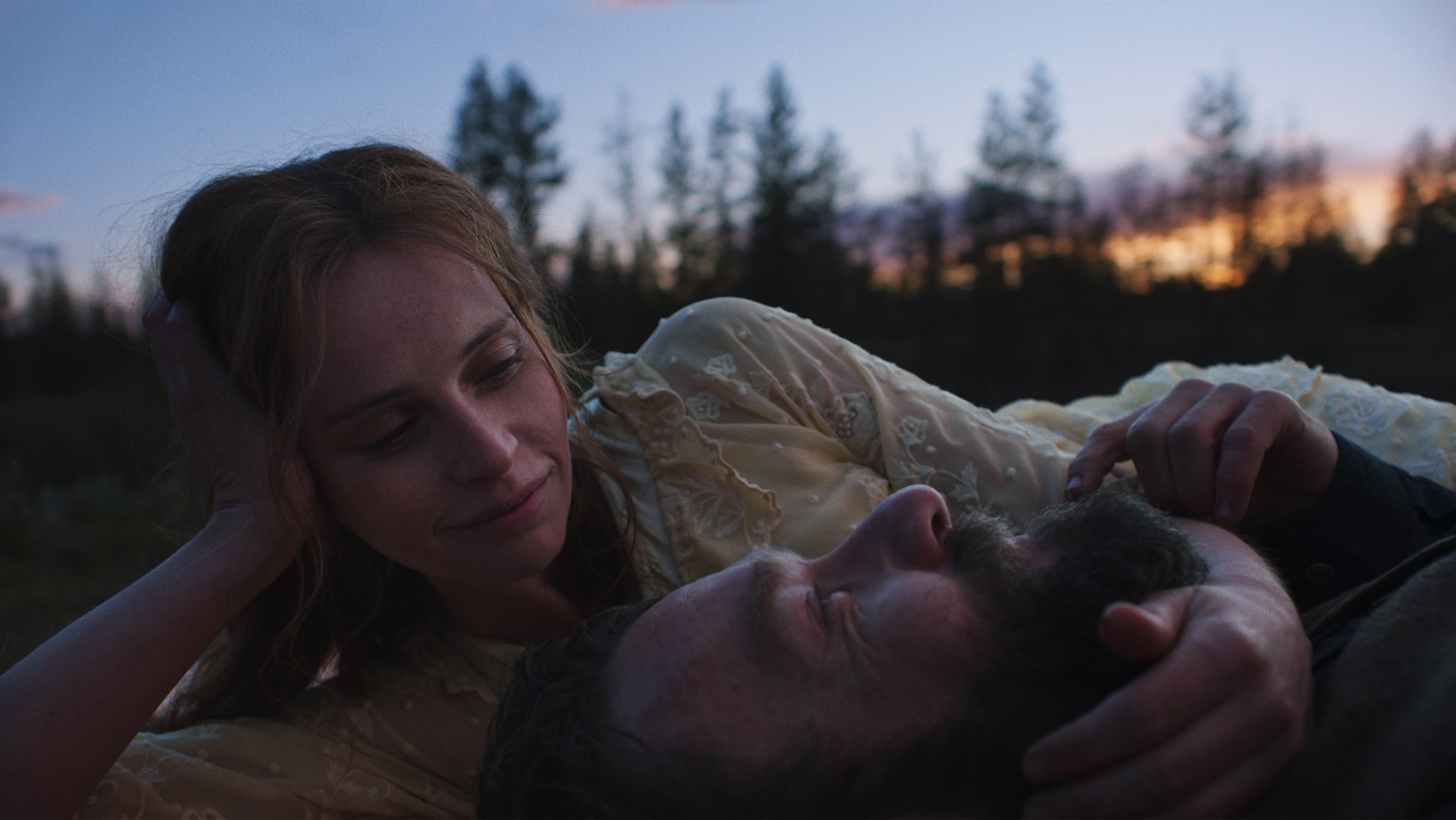
One of Edgerton’s favorite moments from the shoot emerged spontaneously, as he and his onscreen daughter released chickens from a coop. “Katie just started saying ‘chicken’ … and this chicken runs back, and Adolpho follows the chicken. It’s like one of my favorite moments in the film [and shows] the beauty of what Clint allowed him to do and us to do.”
Fire shapes much of Train Dreams, from the glow of cabin candles to the devastating forest blaze. Veloso insisted on using real flames whenever possible. “Whenever you see a fire, it’s a real fire.” The one exception is the film’s major set piece — the massive forest fire — which required a wall of lights designed to mimic flame, shot in a landscape that had burned months earlier.
Bentley threads through these elements themes of ecological strain, displacement and technological change: the mechanization of logging, the abuse and expulsion of Chinese migrant workers, the uneasy harvesting of the natural world. Edgerton sees the film as open to many interpretations, depending on what viewers bring to it.
“And I think some people reach into the movie and go, this movie reminds me of my grief. Some people going this movie resonates for me on a way that I connect to the environment. I’ve heard someone say they came out of the cinema, and it’s like I could hear every bird, and I was listening to every sound. And some people come out and they said, want to go home and hug all the people that I love the most. It’s kind of a mirror for you to reach and look at yourself, or look at the world you live in. Look at your place in it and wonder about things.”
This edition of THR Presents was brought to you by Netflix.