It begins with a most Sundance-y premise: A frustrated middle-school drama teacher has been rejected by his girlfriend in favor of their boss, the smarmy principal, and thus the teacher decides to get his revenge via the power of theater. Such a set-up has all the makings of the sort of arch dark comedy long favored by the cineratti of Park City. But as the festival packs up in preparation for departure from its longtime home, perhaps it is best if such a premise, the foundation of the film The Musical, is left behind.
There’s a dated quality to director Giselle Bonilla’s film — or, more so, to its script by Alexander Heller. Its attempts at satire and subversion — making the prosaic world of suburban education a locus of noir obsession and operatic machination — feel imported from a cultural era long past, when it seemed novel to upend the outwardly banal and mainstream and reveal its squalid underbelly. The housewives were proven desperate long ago, squirmy and selfish teachers have been interfering with student activities — like, say, elections — since at least 1999.
The Musical
Those who can’t do make bad movies about teachers.
Though The Musical may lack a feeling of modernity, it could make up for that elsewhere: with tart humor, with unexpected plot developments, with compelling performances. But, alas, Bonilla and her actors can’t do much to leaven the leaden script they’ve been handed. This is a show that needed much more tweaking before rehearsals even began.
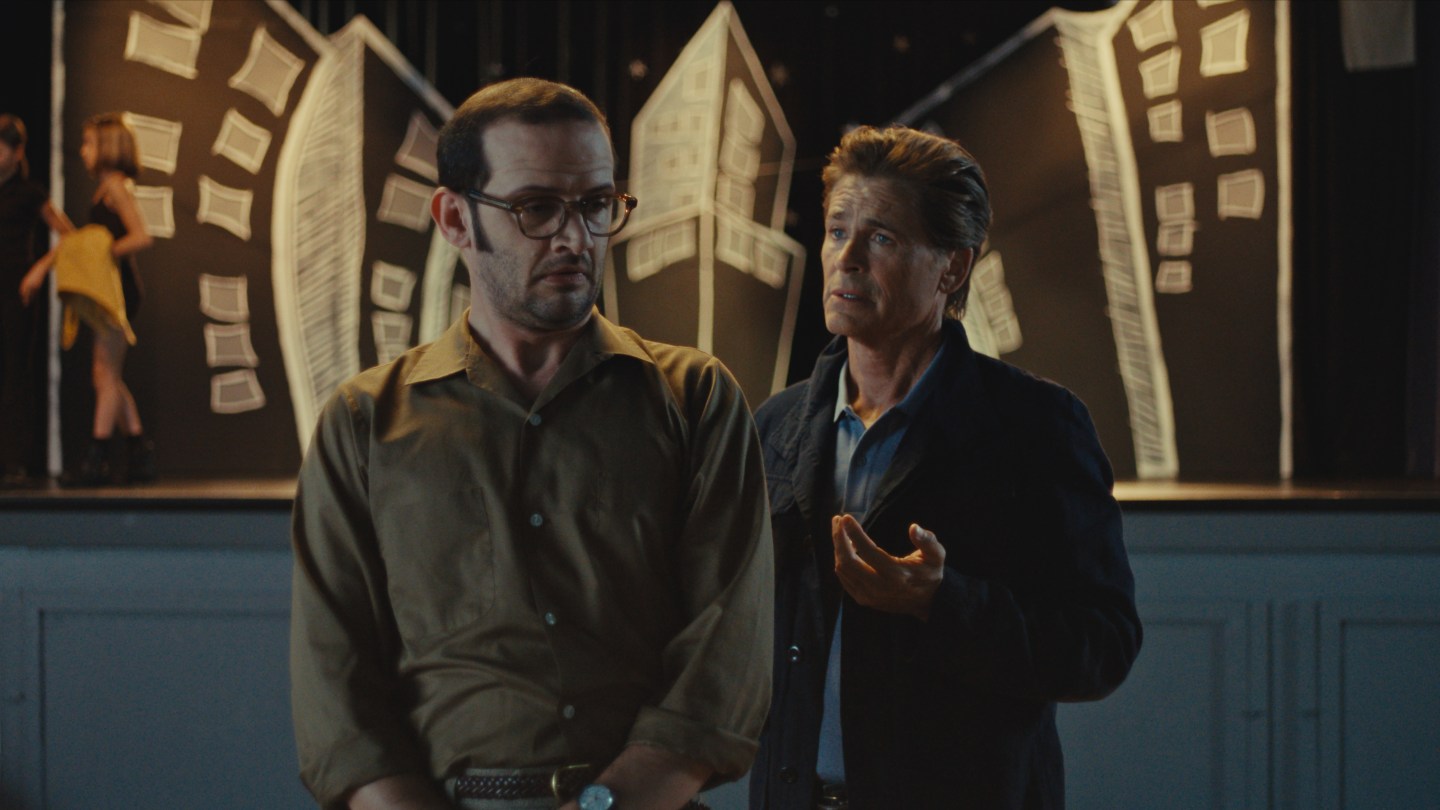
Stereophonic Tony winner Will Brill plays Doug, who teaches theater and directs the school plays but is, as is required of a character such as this, preoccupied by a desire to move to New York and realize his calling as a serious playwright. He’s thwarted, the film suggests, by both his own intensity — though prone to sturm und drang, he nonetheless prizes intellect over emotion, to his detriment — and by the diversity initiatives that bar straight white men like him from access to cultural institutions. That latter bit is introduced satirically, but one also detects a hint of sincerity in there. Why else would other pointed gripes about woke culture be peppered throughout the film?
Satirizing that piousness and potential overreach is all well and good. We have arrived at a point in our current social justice discourse when it’s probably fair to do some reassessing. (Though I guess the government is sort of doing that for us.) But there’s an acridness to the way Heller goes about it — not to mention the sense that he’s a few years too late to the punchline.
Which only makes Doug’s characterization all the more off-putting, already made plenty so by Brill’s aggressive, overstated performance. We can plainly see why Doug’s fellow teacher, Abigail (Gillian Jacobs), dumped him at the end of the last school year. He’s a bitter, selfish pill, and not in a funny anti-hero way. But it’s not terribly believable that Abigail would then take up with his total opposite, Principal Brady, played by Rob Lowe in what is essentially just an indie-film version of his Parks & Recreation character.
Such is the cramped and schematic world of The Musical: If the woman isn’t with the one guy, she’s with the other one over there. This love triangle, if you can call it that, is a hoary device clunkily deployed to propel Doug toward his act of rebellion. Rather than stage West Side Story as promised (don’t worry, there are plenty of tired jokes about color-blind casting), Doug decides to secretly rehearse a musical he’s written about 9/11.
Yes, The Musical ultimately devolves into an elaborate September 11 joke for some reason (a juvenile stab at provocation is my best guess). It’s unclear if this is supposed to be a genuine act of creative passion on Doug’s part, or just a way to mess with Brady and his chances of snagging a coveted award he’s trying to secure for the school.
It doesn’t much matter either way. The Musical plods toward pretty much exactly the ending we expect, making all the jokes we know are coming, while also trying to affix a dark-sided Dead Poets-y bit onto the narrative, in which Doug imparts radical anti-authority sentiment onto his cohort of wide-eyed, innocent Gen Alphas. That might be parody too? It’s hard to parse from the film’s muddled construction.
Not all is lost, though. Occasionally, The Musical lifts off into a flight of grim absurdity that works: I must say that I did chuckle at slo-mo images of little kids dressed up as Rudy Giuliani and George W. Bush (enormous fake ears and all), so strange is the idea that these kids born way after the events of 9/11 are now re-enacting them in pageant form. Credit to Bonilla for managing to add some art and energy to this lumbering story. Otherwise, I might not have made it to curtain call.