Amid climate change, devastating floods have hit various parts of the world in recent years. Photos and TV news images have given people around the globe a sense of the loss and pain they bring. But for those of us who are lucky enough to have never experienced a flood first-hand, it remains hard to really grasp the human and social impact of such natural disasters.
Maybe you are now thinking, “If there were only an engaging way for people who have seen their homes destroyed by a flood share their experiences of loss and how they overcame the resulting trauma?!” Well, there is. It comes in the form of an immersive virtual reality documentary with extended reality installation entitled The World Came Flooding in and created, in painstaking and loving work, by Australian creators Isobel Knowles and Van Sowerwine.
“Embark on a journey where people’s experiences of floods highlight how we all embody objects with meaning, feelings, and memories,” reads a synopsis of the project, inviting you to “explore the rich inner world that remains when everything is washed away.” Indeed, The World Came Flooding in is as much about hope as it is about tragedy.
The unusual experience is part of the Art Directions program of installations and immersive works housed at Katoenhuis in Rotterdam as part of the 55th edition of the International Film Festival Rotterdam (IFFR), which runs through Feb. 8. The creatives’ goal was to reconstruct memories of the Eastern Australia floods in 2022 and collect reflections on community and overcoming.
But what to expect from The World Came Flooding in? The writer of these lines just went through the experience, which grabs you and gets you thinking about things you never expected to worry about. “A house is never the same after a river runs through it” is one of the memorable lines that may stick with you.
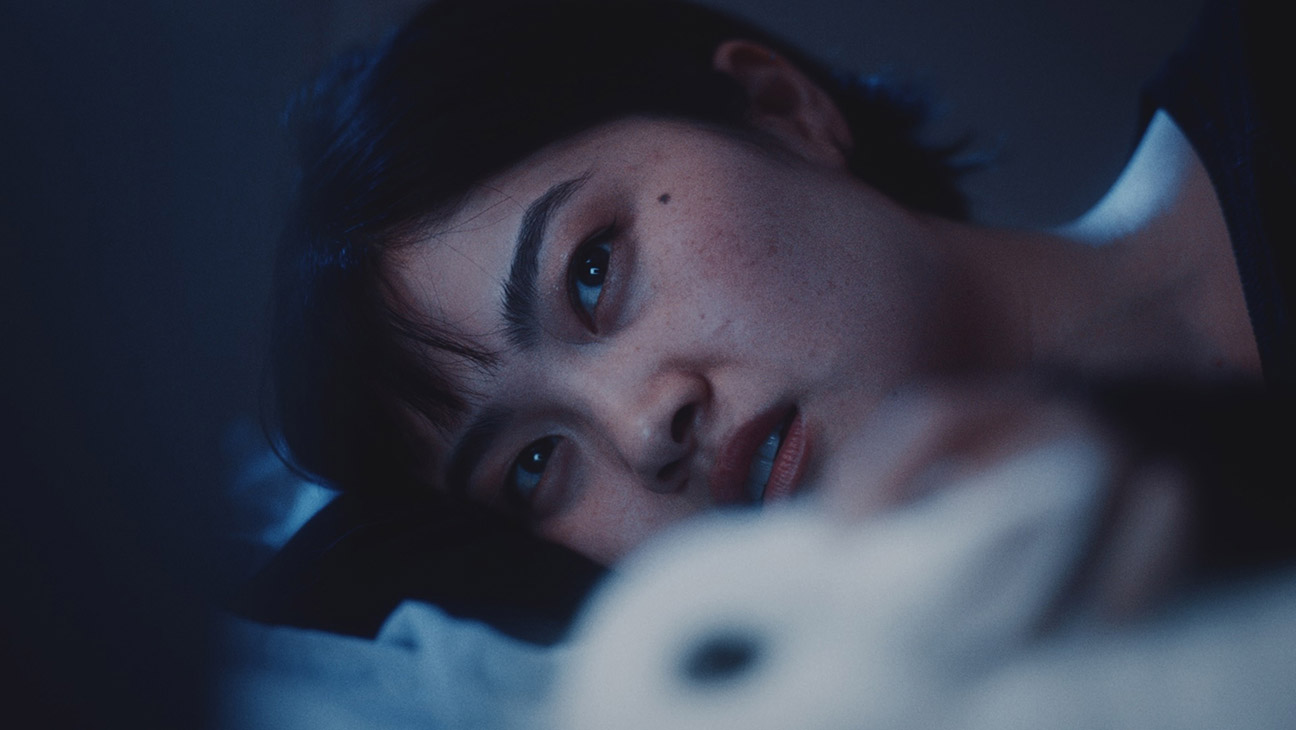
A roughly 20-minute VR doc allows you to put on a VR headset and go inside three main storytellers’ homes, which were flooded. They share their experience and point out certain items or views, but you can also walk and navigate around the room to find such details as a haiku posted on a refrigerator. The three storytellers are Antoinette, Marina, and Tom. They may live thousands of kilometres apart, but they are united in their experience and willingness to share it to create a collective narrative.
You may love the records, the furniture or special items they had in their homes, and you will wonder how you would feel to lose things and spaces you love. You will, however, most likely not expect those flying birds that are among the surprises of the VR experience.
At one point, you experience the water rising in a room, with the power of nature truly coming into focus. Unlike the real people affected by the flood, though, The World Came Flooding in gives you a chance to move on when things get too scary for you.
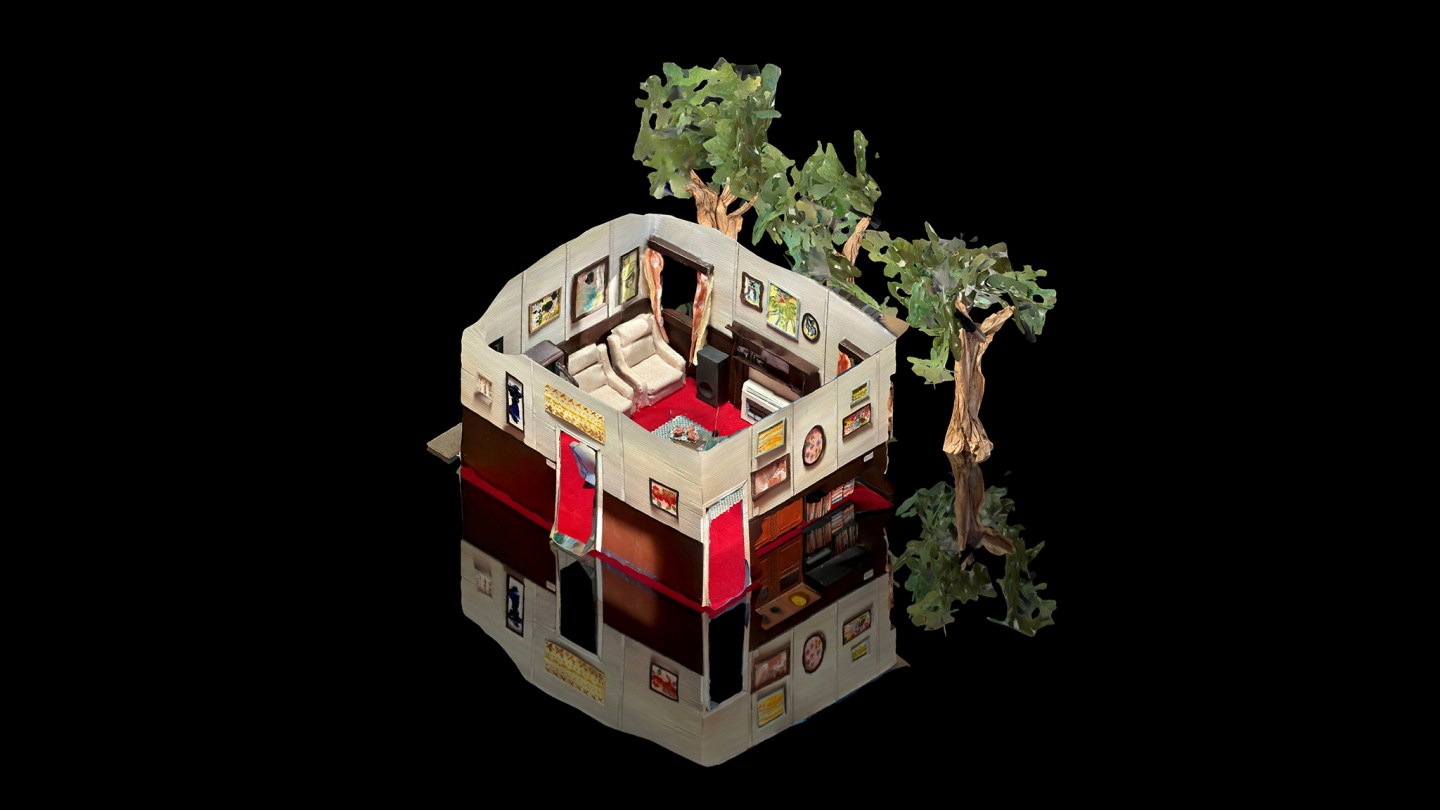
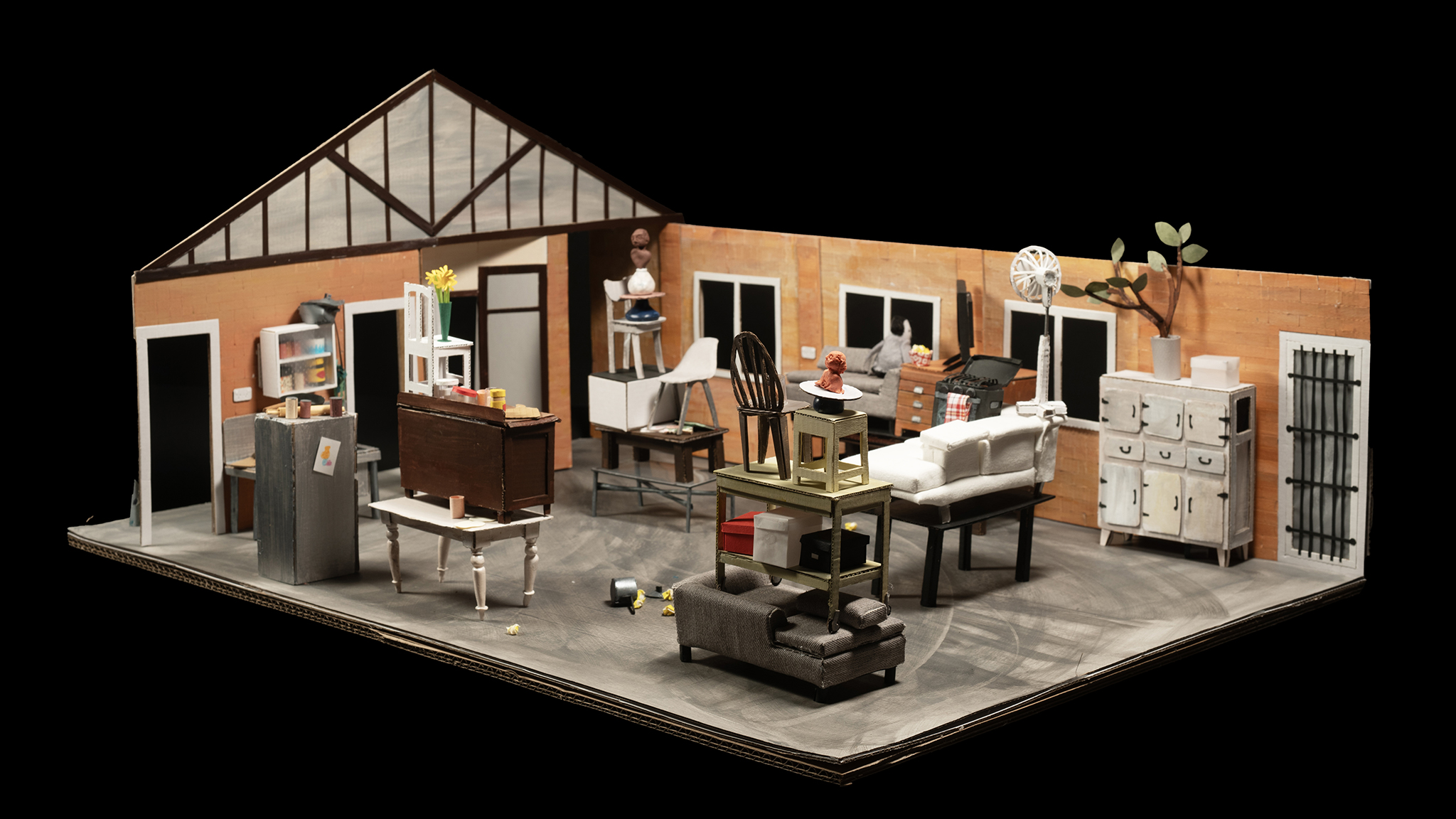
After you finish and remove your headset, you can explore further, thanks to miniature sets of the three homes with QR codes that allow you to look at the items in the home again and also listen to short audio commentary from the respective storyteller, who you can actually see as a small hologram. Plus, “memory postcards” give you a chance to hear from additional flood survivors who share brief anecdotes about certain pieces of furniture.
Check out a trailer for The World Came Flooding in here.
Sowerwine and Knowles developed and wrote the screenplay, directed and handled the production design, while Philippa Campey served as the producer on the project. Film Camp is the production company that is also handling sales on The World Came Flooding in.
The creative duo’s past work includes Passenger (2019), a 360-degree VR stop-motion film, and Night Creatures (2022), an augmented reality stop-motion animation.
“Three years ago, Eastern Australia began to flood,” the creators highlight in a directors’ statement. “We traveled to Byron Bay in March for work. It didn’t stop raining. We woke up surrounded by water. Throughout the year, we watched as river after river broke and caused a ‘100 year flood’ event. Water makes life on Earth sustainable. Humans have built ways of controlling it, but water has the underlying power to overwhelm and destroy. Our close call with a strong coastal undercurrent connected us to the sensory experience of destructive water and created in us a sense of disquiet as river after river broke its banks in 2022.”
And they share: “The merciless force of raging water changes your life in an instant. What do we find within us afterwards? The World Came Flooding in is our response to the sense of urgency we feel around the climate emergency, as little by little it floods into all of our lives.”
How much work went into creating this world of memories? A lot! But how did they do it? Knowles and Sowerwine began the project with a series of community creative workshops for flood-affected people to come together and remember things they had lost via paper craft and photography. The project grew from there and allowed the creatives to identify storytellers.
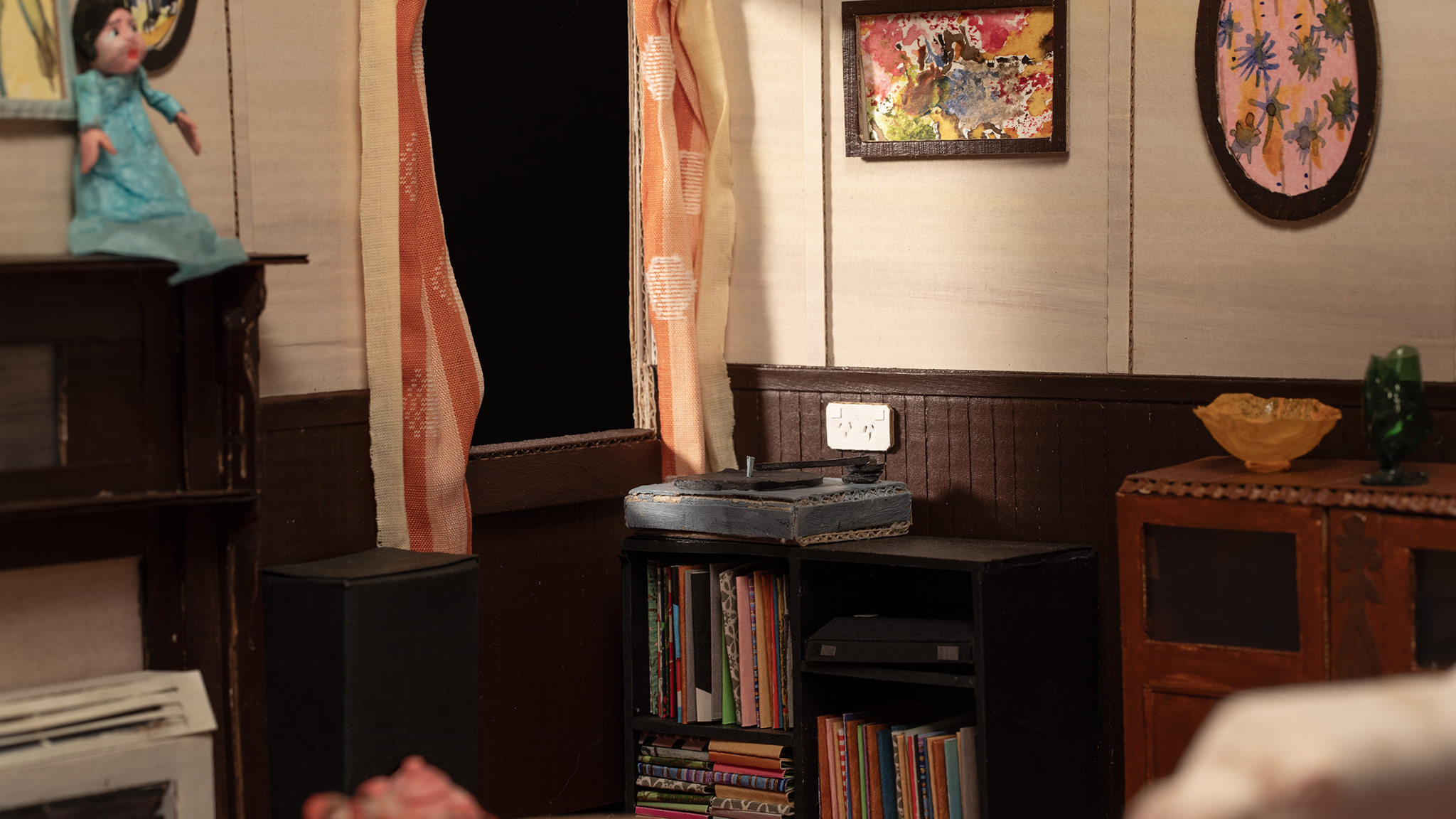
The two artists then recreated the flooded homes of each storyteller in miniature form based on floor plans and other input from them, translated them into virtual reality through photogrammetry to transport you there and allow you to physically move through life-sized digital scans of these rooms, guided by the voice of the person who used to live there.
Knowles recalls how interactive the creative process was to fully involve the storytellers. “After we built the miniatures, we took them back to the people, who are all in different places in Australia, and presented them with the miniature version of their house,” she tells THR. “We had also scanned them and put them into virtual reality, so they could walk around inside and do a sort of tactile storytelling, where you’ve got the props there to kind of jog memories.” And she adds: “We also wanted to make sure that when we tell their story, it’s related to the things that you can see as an experience.”
Asked about the script, Sowerwine shares: “We very much had to condense everything. It was an interesting process, because we heard the stories, but then ended up writing the script for the documentary subjects based on their words, but in a very concise way.” And she explains to THR: “With VR, you can’t keep people in it for too long. Otherwise, it’s too much, it’s too intense.”
So, the scripts were purposely crafted, also to make sure that the storytellers’ scripts guide you through the experience.
How did holograms of the three storytellers get created? Well, it was not the real people who stood model. “When we presented the project at CineMart here at the Rotterdam festival, we won a prize, which was a day of filming at a volumetric capture studio in Eindhoven,” Knowles recalls. “So we got three people that we knew in the Netherlands to go in there and act, and we told them what to wear.”
Adds Sowerwine: “They went into this big green room with 48 cameras all around, and they were recorded from all sides. So it’s three dimensional video. It’s quite amazing technology.” Marina and Antoinette have seen their hologram selves and were “quite blown away,” she also shares.
The work on the project took around two years. “It’s very time-consuming but worth it,” concludes Sowerwine. Adds Knowles: “We always wanted to make something immersive, because we are very interested in putting people into an experience, creating a physical and emotional experience that is transformative. And when that works, it’s just incredible.”