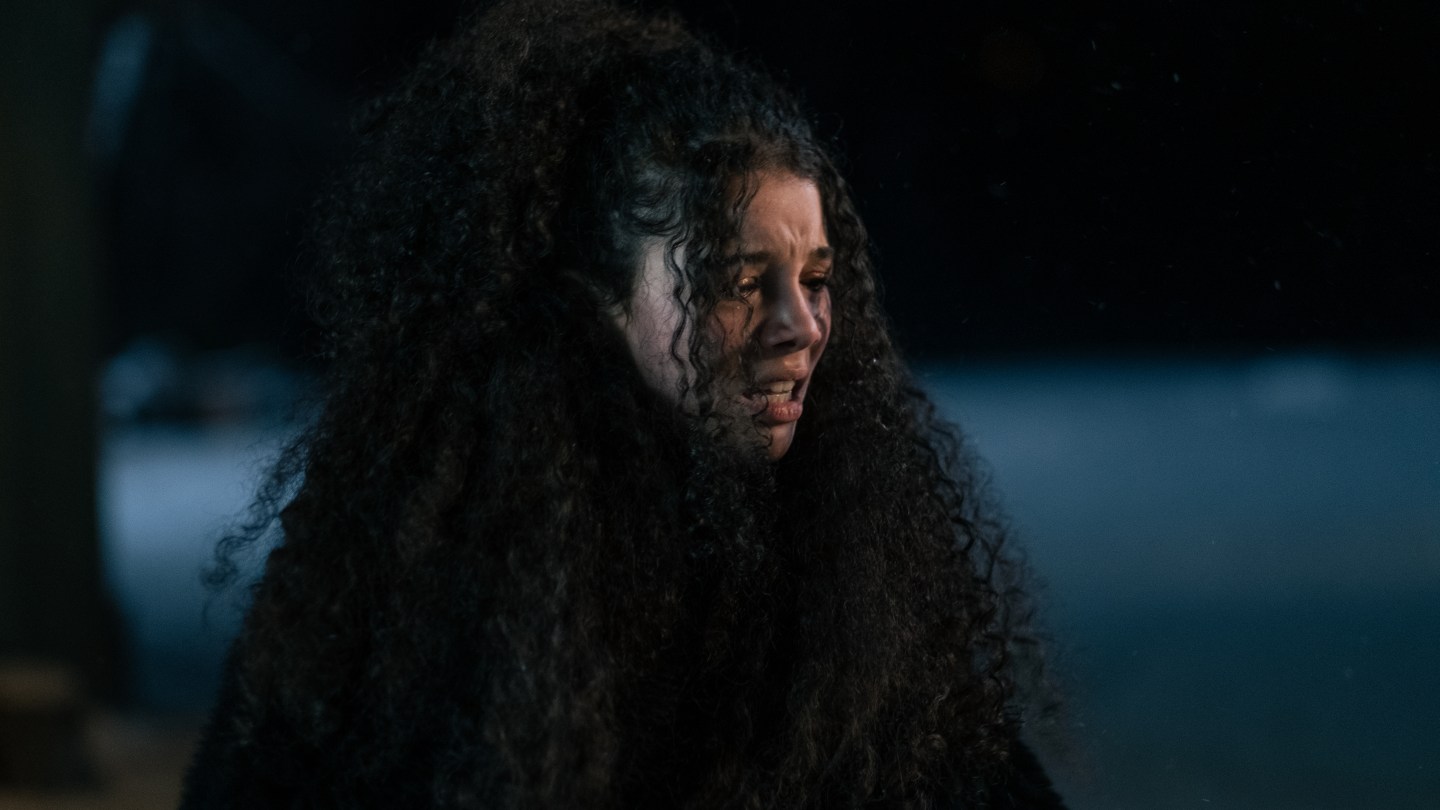
Why Do I See You in Everything? That is the question that Syrian writer-director Rand Abou Fakher (short films Braided Love and So We Live) explores in her feature film debut, which just received its world premiere in the Bright Future program of the 55th edition of the International Film Festival Rotterdam (IFFR).
The hybrid film weaves together dreams, archival footage and present-day events to dive into the shared history of two lifelong friends from Syria, Qusay and Nabil, who are living in exile. They marched together in the Syrian revolution when they were 16 years old. Years later, we see them taking to the streets of Berlin to demand justice for Palestine.
“When the Assad regime falls in Syria, only Nabil is able to travel home, where he encounters what a film synopsis describes as “a precarious new order, where danger still looms.”
Why Do I See You in Everything?, produced by Fakher and Rosa Galguera Ortega for Belgium’s Hilife Cinematography, shows tenderness and intimate moments as radical forms of resistance. Hans Bruch served as the cinematographer on the film, for which Hilife Cinematography is handling sales.
“I really wanted to show the experience of being displaced,” Fakher tells THR. “And I wanted to explore how the present is linked to the past and to the future, and how dream and imagination and memory become one.”
She also discussed her inspirations for the film, such elements as olive trees, which recur as a visual theme, and what is next for her after Why Do I See You in Everything?
Was there any special inspiration for this film?
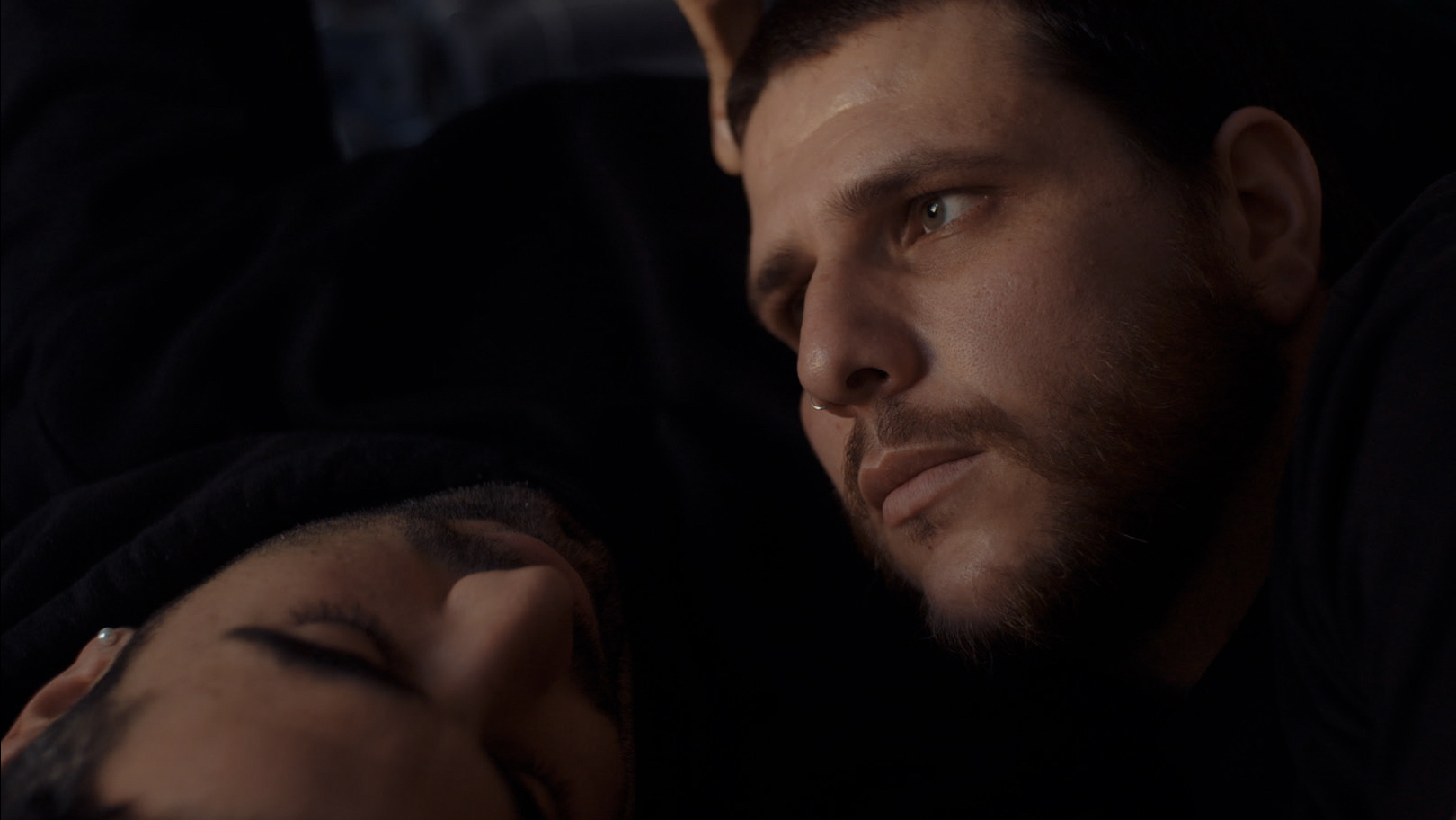
What filmmakers do is to abstract our perception of the world. So a lot of the perception in the film has come from different moments. But these two people, one of them is my partner, and the other is our best friend, are best friends, and I met them together.
In the first demonstration that happened for Palestine in Berlin in 2023, Nabil was arrested and brutally hit by the police, and we spent one week together basically taking care of each other, because it was a very shocking moment. And that week was also the first time that I really witnessed Qusay and Nabil opening and uncovering their archive in front of me.
I was also understanding their friendship and that a lot of this friendship, or a lot of the strength of this friendship, was really based on the revolution that they lived through together [in Syria]. And in the meantime, I was observing the news and seeing the dehumanization that’s happening globally. And I saw these two Arab males around me who are a contrast to all of this. And I observed all the very small touches happening between us. And somehow the touch itself felt to me as an act of resistance.
You know, there is this evil energy, and it was almost like a decision to counter this evil energy by holding onto something that’s very soft and very tender. So observing the touch was a very big start of this idea. I also realized later on that even in Syrian literature, the observation of touch, the observation of body, is an act of looking at one’s existence, when political powers are basically trying to break this very intimate relationship between you and your own body.
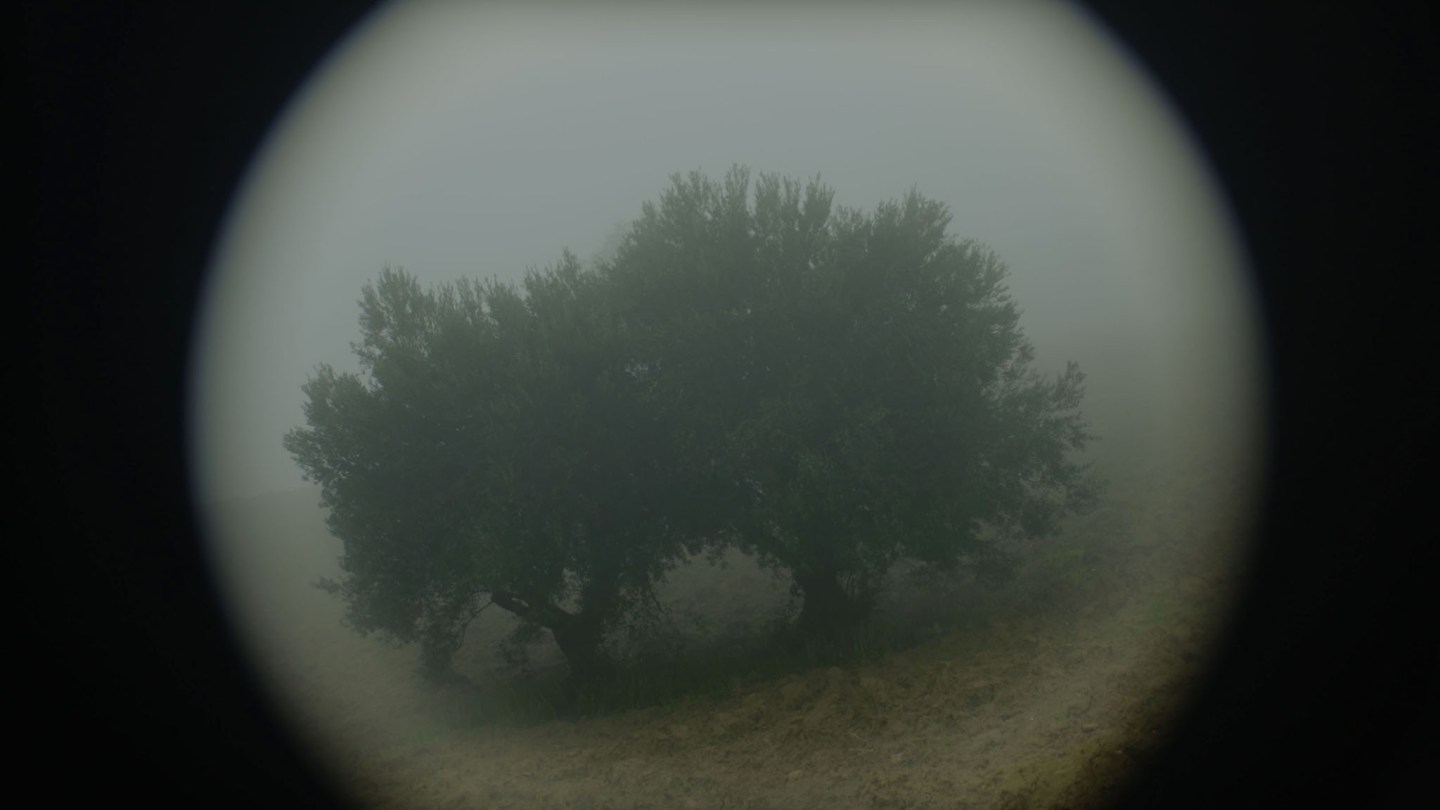
Olive trees are a recurring visual theme in the film. Can you explain that to me?
Work on this film started [after the Gaza war began] during the genocide. That was also during a very sad olive season. And there have just been very sad olive seasons [since then]. Basically, the trees and the humans in this land are suffering the same thing.
The olive tree is really important in and for your part of the world, right?
It’s a very old tree, and it has always been a symbol of resistance. Autumn also begins with the harvest of the olives. And so in that time, we could not put the olive season out of our heads. I remember even going and looking for olives somewhere to just try to connect my reality here to home.
You currently live and work in Brussels? Do you have hopes of returning to Syria any time soon?
I feel that my soul is screaming to be there. I don’t know how to explain it, but I have lived a third of my life forcedly outside of Syria. I have a lot of dreams to create in the country right now. These dreams are challenged dreams. We wanted to bring our expertise and build bridges between us and the people in our hometown, or in Syria in general, to create more.
But we’re facing the biggest defeat in our Syrian history by the colonial power in the region [– Israel]. Because there is no possibility for a revolution when there is a colonial power that’s actually ruling the region. In my hometown, we have two choices. We have the choice of being massacred by an extremist regime, or we have the choice of asking a colonial power to colonize us. That is why I try to show in this film this bond and how strong this bond is between these two males.
How excited were you to get to world premiere Why Do I See You in Everything? at Rotterdam?
I’m very, very happy about it, because I really think it’s the best place to bring such a film. I really like the edginess of the festival. I have attended three times.
Are you working on any other films?
Before this film, I was also developing another film. It’s about a character who’s looking for herself, but in a place where she’s exiled. And in order to remember her wildness, she goes on a fantastical journey through her dreams and through the dreams of her ancestors to understand the archetype, the woman archetypes that made her become herself. It’s also a story of reincarnation, because I come from a community that believes in that. It’s a story of reincarnation and of an old soul trying to find the wild woman, the wildness inside. It’s called On the Way to Forgive, I Forgot Myself.