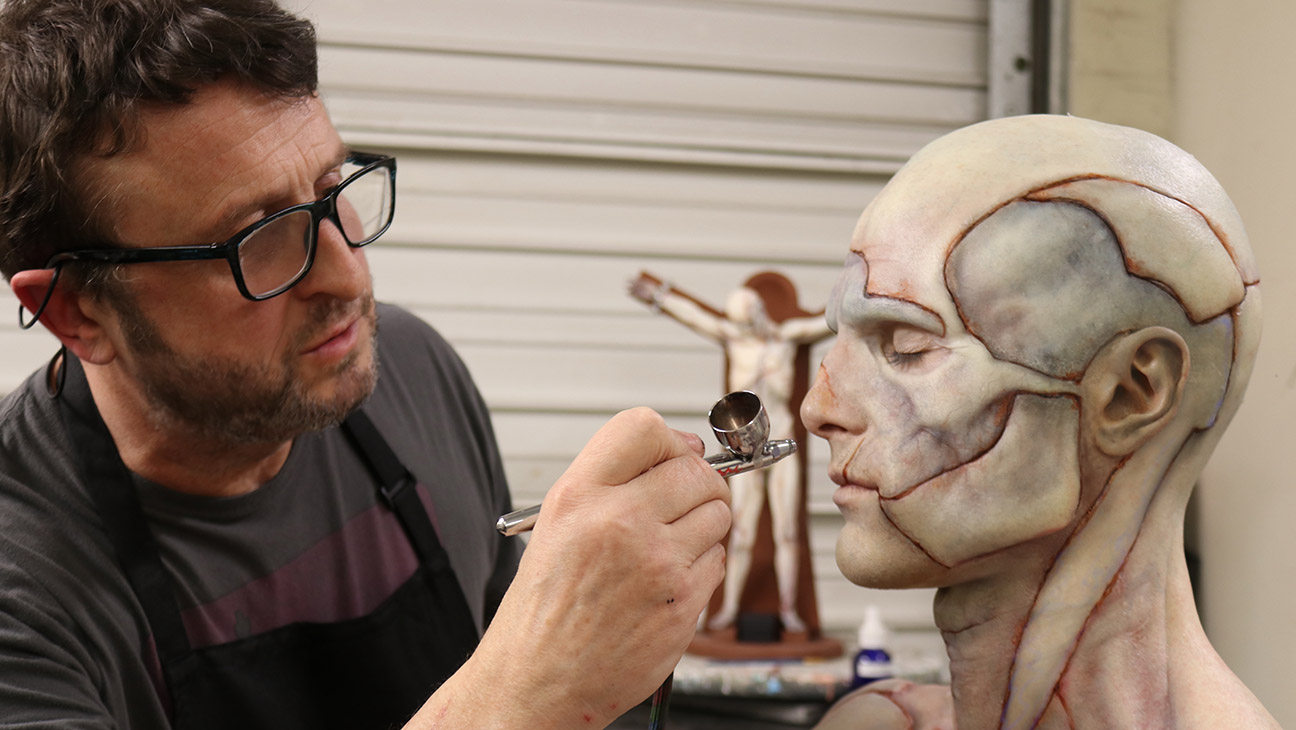
In the middle of a random phone call several years back, Guillermo del Toro told Mike Hill — his longtime concept artist and prosthetic makeup designer — that his next movie would be Frankenstein. No timetable, no official offer, no follow-up for weeks. “I hung up and I’m like, ‘What? Wait!’ He kind of dangled the carrot a little bit,” Hill tells The Hollywood Reporter. A few weeks later, del Toro invited Hill to breakfast — and there, the Oscar-winning director cut right to the chase: “Look, if you don’t do this movie, Mike, I’m not doing this movie. So if we’re making Frankenstein, it’s your decision.” Hill recalls this, then muses with a boyish grin, “So that was kind of flattering.”
Maybe so, but del Toro’s conditions didn’t come out of nowhere. Hill has played an instrumental role in the filmmaker’s most signature projects, from his creature design on the best picture-winning The Shape of Water — for which he received a BAFTA nomination for visual effects — to his wildly diverse Emmy-nominated work on the anthology series Guillermo del Toro’s Cabinet of Curiosities. Del Toro has long called Frankenstein the project he’s wanted to make his whole career. It only makes sense he’d need to feel support from his trusted designer in freshly interpreting one of fiction’s most iconic creations.
Del Toro’s Frankenstein (now streaming on Netflix) honors the original Mary Shelley novel in several ways, from the 19th century setting to a relatively nuanced image of the creature that Dr. Victor Frankenstein (Oscar Isaac) brings to life in a fit of scientific obsession.
“With a lot of the Frankenstein versions we’ve seen, it looks like this person had been in an accident and someone had repaired them,” Hill says. “I didn’t want that look. I wanted him to have these geometric shapes, almost mechanically stitched together, so when you saw him, you’d think, ‘Oh, no, this is not an accident. Somebody put this man together.’
“I didn’t want him to look like a monster,” Hill adds.
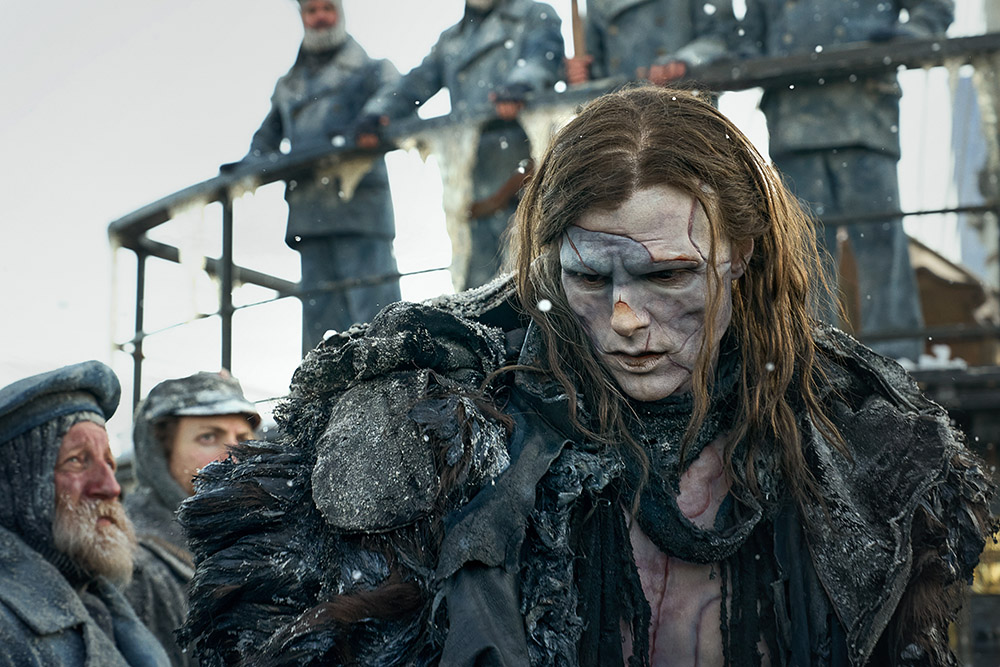
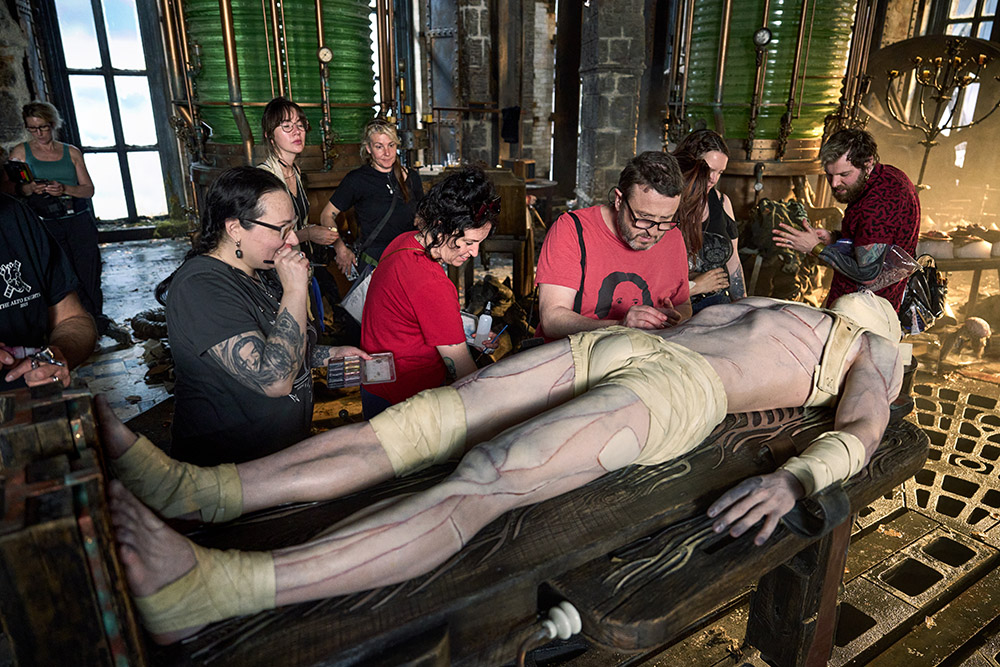
Hill approached the design of the Creature, movingly portrayed by Jacob Elordi, by sticking to the realities of the period: He wanted the initial animation to look as if he’d “stepped out of an 1800s textbook on medical anatomy.” This meant there would be visible mistakes in the construction. “They’d make cuts in very awkward places that you wouldn’t bother with nowadays, and I thought Dr. Frankenstein would do the same thing as well,” Hill says. “He would’ve made cuts in areas that he didn’t need to cut, and then repair them 2 inches to the left of where he’d screwed up.” All in all, Hill’s vision resulted in 42 textured pieces of silicon rubber, including about 14 for the head and neck alone. Elordi performed in all that for 56 days in total.
For call time, Hill’s alarm would go off as late as 9:30 — and, yes, that’s p.m. Elordi would sit in the makeup chair for up to 10 hours a day, with Hill needing assistance from four other makeup artists. “It was extremely grueling — I think it was a worse time than Victor had,” Hill laughingly says of Shelley’s tormented doctor. “But all I could tell myself when the alarm did go off at 9:30 p.m. was, ‘If I wasn’t doing this, then somebody else would, and I’d be sick as a dog about it.’ ”
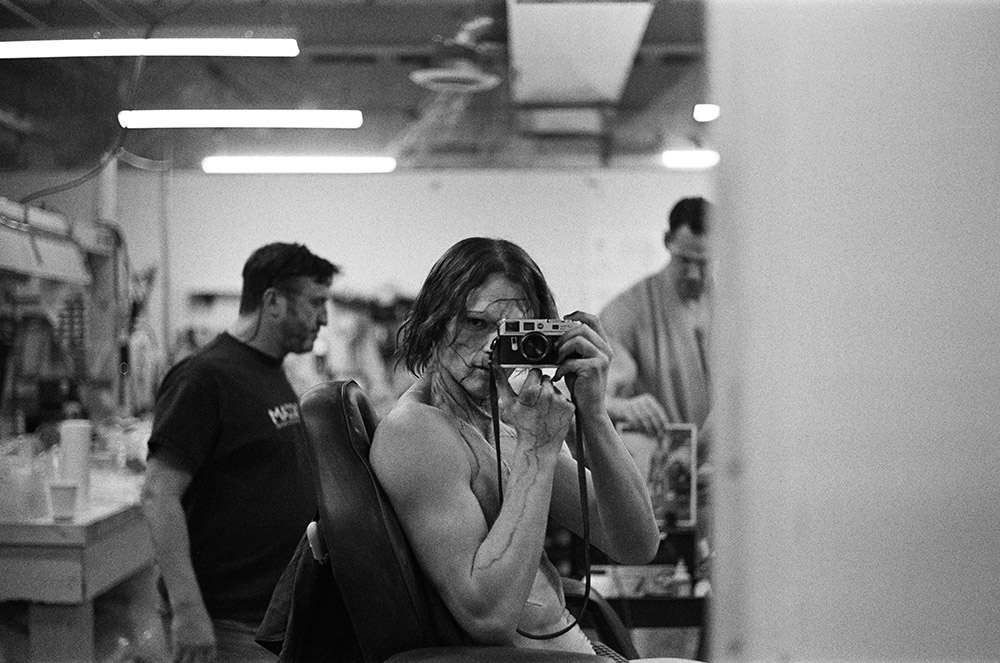
Elordi’s commitment inspired Hill: “He never flickered once. He was a consummate professional. He never complained, ever.” This, despite the sprint to production: del Toro had originally cast Andrew Garfield, but after the actor exited because of scheduling, he needed to find a replacement fast. “Once Andrew was out, I was so concerned with who we were going to get and that it wouldn’t just be a rush job. Time was short,” Hill says. Del Toro asked Hill if Elordi fit the structure in mind. “When I saw his physicality, the length of his limbs, the way he held his wrists and those big doe eyes that look a lot like Boris Karloff [who starred as Frankenstein’s monster in the 1931 film], I texted Guillermo almost right away and said, ‘I think this is our guy.’ “
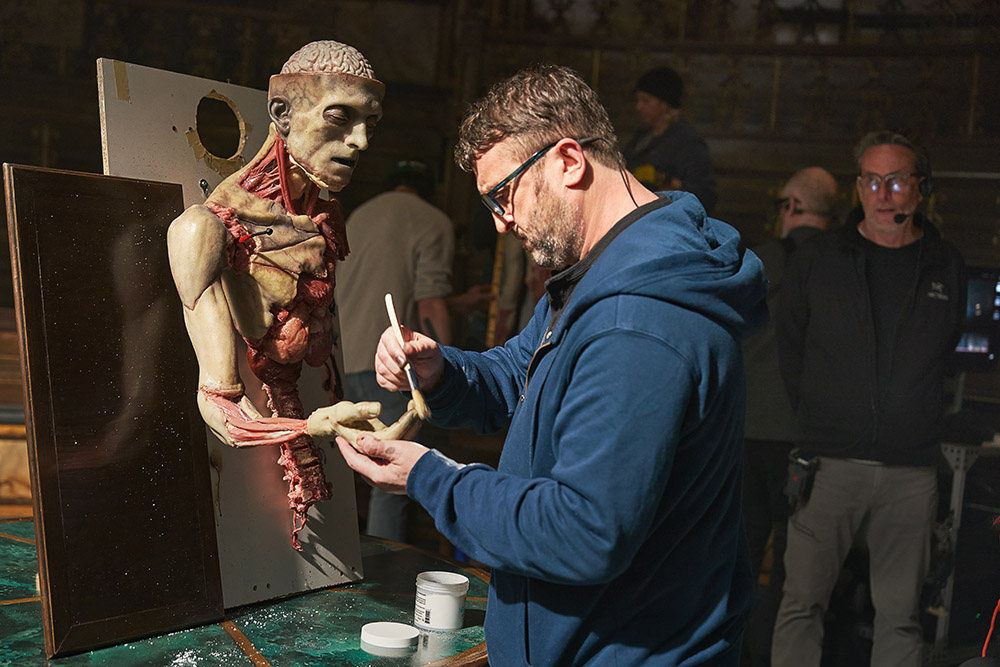
In a recent THR Awards Chatter podcast, Elordi said of his transformation: “It was an incredibly cathartic process. By the time I got out of the chair, it felt like the way that my blood flowed had changed direction because I’d been sitting for so long or standing for so long and sort of going in and out of these trances. You end up coming out in a monastic kind of state by the time you get to set.”
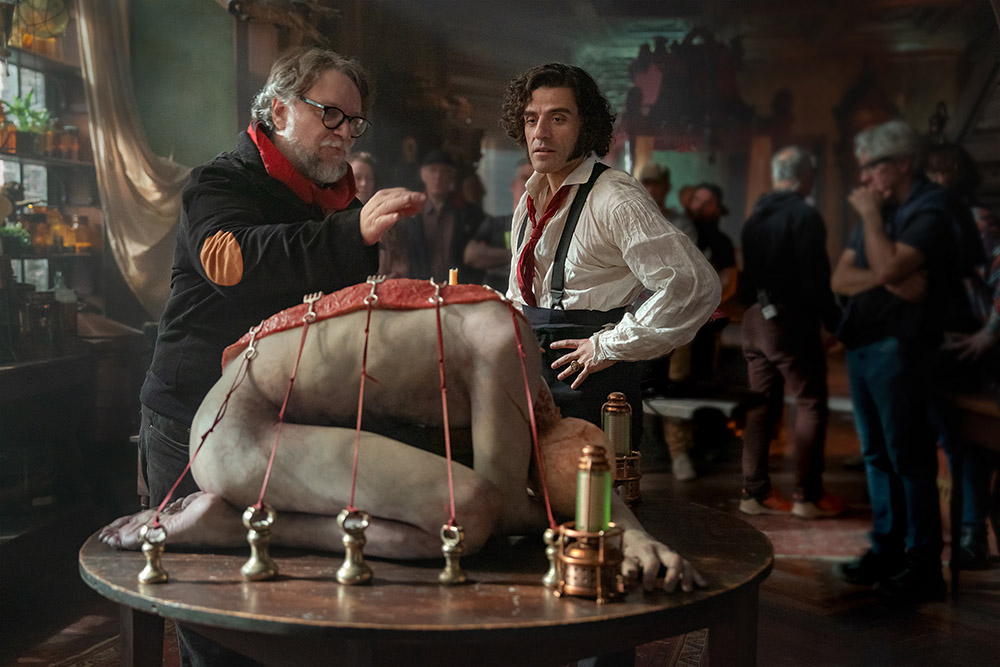
In their collaboration, Hill and Elordi depicted the Creature through several phases of life, culminating in an “adult look,” with long, flowing hair. This hair growth saw Hill working with “mainly brown hair, a little bit of black hair and then this kind of blondie-gray streak.” Why the chaotic styling? “I wanted it to not make any sense,” Hill says. Though there is a statement within the chaos: “The creature has now learned the errors of man — and knows how crappy our world can be.” And as this film’s daring artistry manages to convey, a little rebellion can go a long way.
This story first appeared in a November stand-alone issue of The Hollywood Reporter magazine. To receive the magazine, click here to subscribe.