The South Korean-born video essayist turned filmmaker who goes by the mononym Kogonada emerged in 2017 as an assured new voice with the exquisite contemplation of physical and emotional architecture, Columbus. He confirmed that promise four years later with After Yang, a soulful reflection on identity and connectedness, not to mention a refreshingly open-minded view of the potential for A.I. to enrich rather than intrude on our lives. Kogonada continued sharpening his craft directing episodes of Pachinko and The Acolyte, before stumbling last year with A Big Bold Beautiful Journey, a high-concept romantic odyssey too precious and contrived to strike authentic chords.
As a first step into larger-scale, star-driven (Colin Farrell and Margot Robbie) studio filmmaking, the movie’s critical and commercial failure must have stung. It’s understandable that Kogonada might crave a radical creative reset by going back to basics with an intimate, shoestring-budget film made on the fly without binding structures or complicated logistics. Such throat-clearing purification makes sense. But the resulting project, Zi, sad to say, is too wispy to be compelling as a narrative or even enveloping as a vibe.
Zi
An adventurous experiment that doesn’t pay off.
The film came together when Kogonada invited six of his closest friends — actors Michelle Mao, Haley Lu Richardson and Jin Ha, regular cinematographer Benjamin Loeb and producers Chung An and Christopher Radcliff — to fly to Hong Kong on their own dime. With only a slender outline for a movie, they started shooting almost immediately, developing the idea as they went along. They came away three weeks later with Zi.
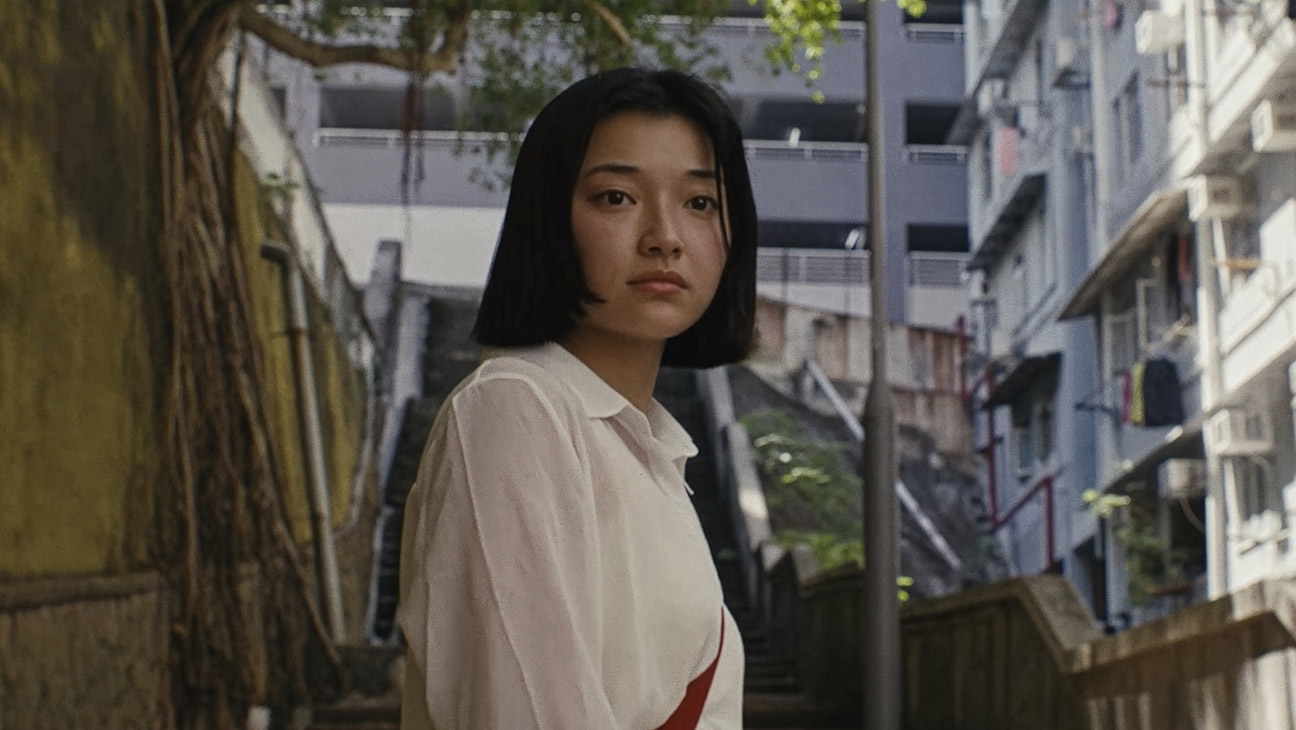
Mao plays the accomplished young violinist of the title, who has undergone tests at the Center for Neurology and must wait for what she’s certain will be distressing results the following morning. She ambles around the densely built-up city in what seems an alienated state, visiting her parents’ graves and getting emotional as she berates herself for not doing more to look after them.
As she sits weeping on concrete steps, convinced she’s losing her mind, Zi is approached by Elle (Richardson), a concerned American transplant from Missouri. What’s disturbing though is that Zi has already seen Elle in the visions of her future that haunt her; the most frequently recurring of them is an image of her being embraced by an older woman whose face is obscured. With each vision, Zi feels herself slipping farther away.
The affable Elle insists on walking her home all the way across town, and as Zi slowly opens up about herself, the American says she knows someone who might be able to help her. They go to find Min (Ha), who has been living abroad, and despite bad memories of Hong Kong followed Elle back there even though she broke his heart when she called off their engagement. It’s also revealed that Min works at the Center for Neurology and has been observing Zi from a distance, anticipating her troubled state.
They spend the night drifting through the city — watching fireworks over the bay, singing Alanis Morissette at an outdoor karaoke bar, the two women exchanging necklaces, Min scaring off Elle again by coming on too strong. There’s a soothing rhythm to their wanderings, with Loeb frequently shooting Zi from behind, in the unfussy, handheld style of the Dardenne brothers. But the movie also becomes draggy and repetitive, unformed in its intentions and as inarticulate as Zi about her untethered feelings.
Poetry in cinema is a tricky thing; it must happen organically, not be studied or molded, no matter how loosely. Kogonada’s film suffers by comparison with another recent drama partially built around walking-and-talking sequences, in which a city teeming with life becomes an outsize presence: Bing Liu’s Preparation for the Next Life, which also featured Mao.
The customary warmth and gentleness of Kogonada’s approach and the corresponding delicacy of the three actors makes you keep wishing Zi would build more substance, more lingering poignancy instead of wafting along on its cloud of melancholy with characters that lack dimension. But it only acquires life intermittently, and sometimes in the wrong ways, like the cloying earnestness of Min singing a plaintive “Leaving on a Jet Plane” to Elle.
With Columbus, Kogonada showed a lovely facility for exploring the ways in which people’s inner lives and connections can be shaped by the private and public spaces they inhabit. He seems to be moving back in that direction here, but the effect is unpersuasive, at times almost inert. Here’s hoping the director can manage to keep hold of his creative freedom while finding his way back to more emotionally robust storytelling.